DATE ARCHIVE
2026-10-01
Articles published on 2026-10-01.
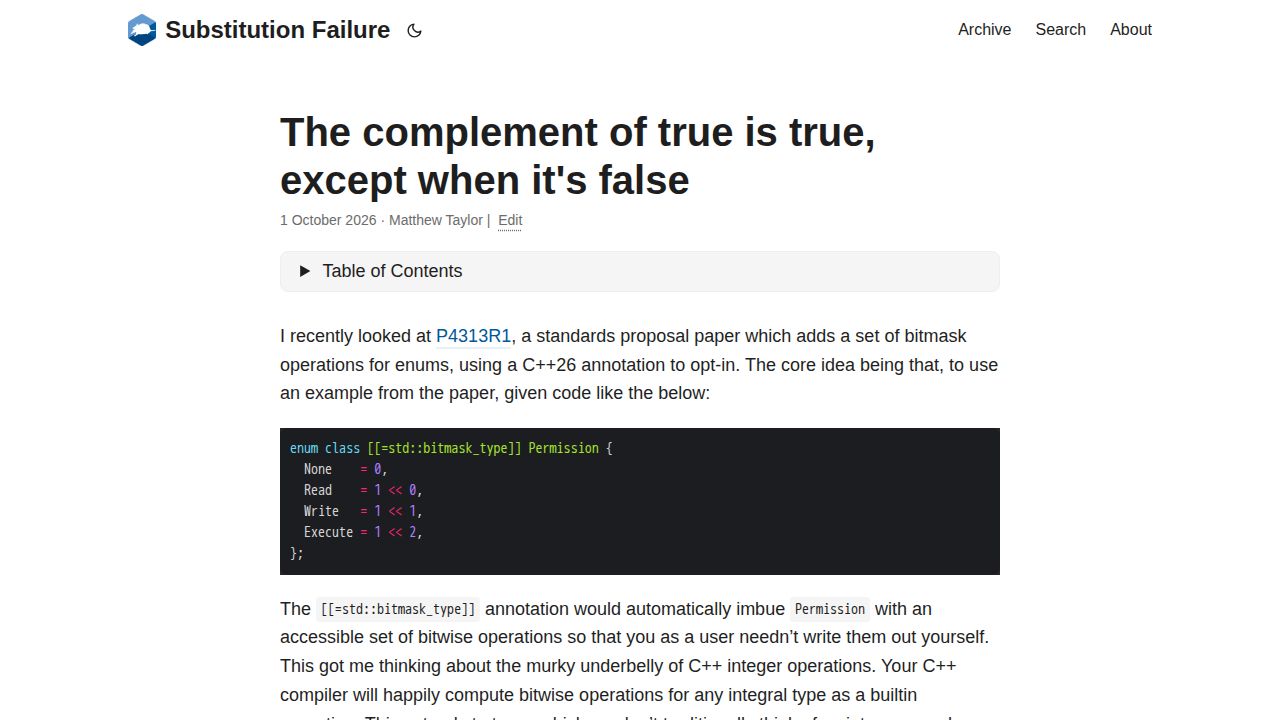
Why ~true Evaluates to true in C++—and Where Compilers Disagree
The bitwise complement of C++'s true evaluates to true because bool is first promoted to int, complemented to –2, and then converted back to bool via boolean conversion. This straightforward rule breaks down for scoped enums with an underlying bool type, where gcc incorrectly truncates the result instead of applying boolean conversion, while Clang and MSVC follow the standard. Additionally, unscoped enums without a fixed underlying type can encounter undefined behaviour when the complemented value is cast back to the enum type.
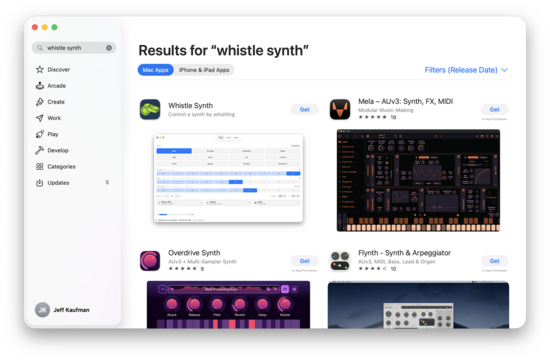
Whistle Synth Brings AI-Assisted Whistle-Controlled Synthesis to the Mac App Store
Jeff Kaufman's Whistle Synth app lets Mac users control a synthesizer by whistling, featuring low-latency pitch detection, twelve voices, and an App Store release aided by AI tools like Claude and Gemini.
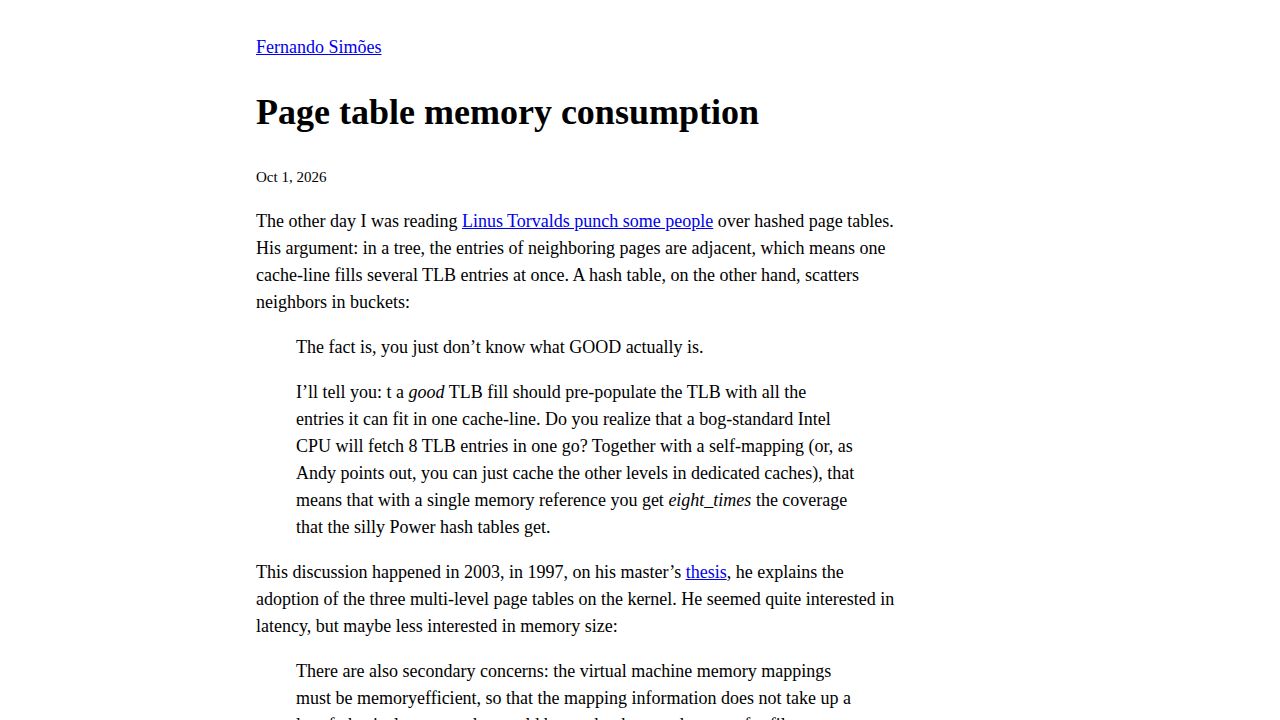
Understanding Page Table Memory Consumption
Page tables, while essential for virtual memory management, can consume significant physical memory - sometimes exceeding the actual data memory usage - particularly when many processes map the same shared memory regions. This article examines how page table overhead scales with process count, real-world cases where it becomes problematic, and mitigation approaches.

The Shimano Bicycle Museum Puts the Bike Before the Brand
A review of the Shimano Bicycle Museum in Sakai, Japan: a spacious, hands-on celebration of bicycle evolution that puts the machine first and keeps the company's own corporate history in the background. The account rests on a single first-hand visitor report and leaves a few things unresolved, including the current admission price and the question of how Shimano entered European racing.
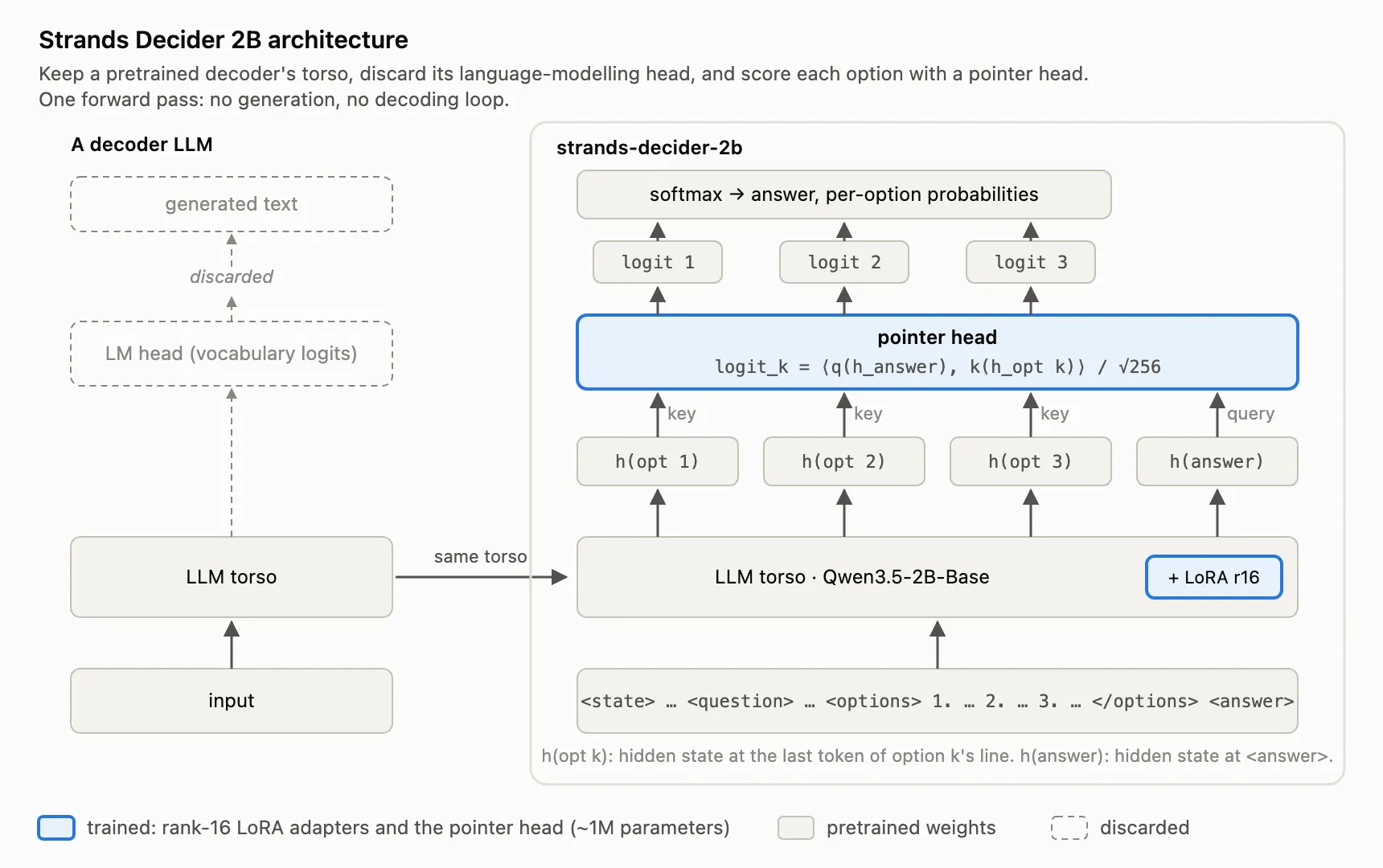
Strands Decider 2B: A Compact Open‑Source Decision Model for Fast Agentic Workflows
Strands Agents has released Strands Decider 2B, a 2‑billion‑parameter decision model that replaces the language model head with a pointer head to score predefined options. The model delivers low‑latency decisions, confidence scores, and is positioned for tasks like routing, tool selection, and guardrails in agentic systems.

Renewed Fighting Shatters Ethiopia's Peace Accord
Large-scale hostilities resumed in northern Ethiopia on September 23, 2026, between Tigrayan rebels and Amhara militias against federal forces, collapsing the 2022 Pretoria peace agreement. The conflict reflects deeper structural issues: Ethiopia's ethno-federalist system intensifies ethnic divisions, political elites repeatedly choose war over peace, and state institutions fail to prevent violence despite public desire for peace.

Pi Durable: A Framework for Building Long-Running, Resilient Agentic Applications
Earendil Engineering has released Pi Durable, an experimental framework designed to create durable AI agents capable of surviving crashes, running infinitely long conversations, and supporting multiple concurrent users. Built as a harness for agentic applications, Pi Durable combines storage with execution environments to enable resilient LLM-powered tools that can operate across different surfaces while maintaining minimalism and malleability principles.

Pi 1.0 Release: Earendil Unveils Agent Harness with Codemode and Durable Package
Earendil has released Pi 1.0, a major update to its minimal agent harness Pi, adding features like Codemode for MCP and non‑LLM model support, mid‑conversation system messages, deferred tool loading, cache warming for Anthropic models, a new TUI theme, full‑screen mode by default, and extension support for virtual models, alongside an experimental Pi Durable package for long‑running agentic applications.

OpenAI's Agents API turns the Codex harness into a hosted service
OpenAI has launched an Agents API that lets applications run AI agents through a managed Codex harness, with OpenAI handling sessions, orchestration, context compaction, and recovery while the caller supplies tools and chooses the execution environment. Agents can run in OpenAI-hosted sandboxes or self-hosted ones, where they execute code, edit files, connect to MCP servers, and produce artifacts. The product is documented only by OpenAI's own API documentation, so the article covers what the docs establish and flags the limits.

On Social Reality in China: A Chinese-American Perspective on Cultural Differences
A first-generation Chinese-American writer outlines four cultural axes—social media consumption, shame-based social enforcement, cynical 'Dark World' thinking, and nationalism rooted in historical insecurity—that he argues create communication barriers for Western rationalist and AI-safety ideas in China. The piece draws on personal experience and media observation rather than systematic research, and the author explicitly flags its limitations.
Norwegian Wealth Tax Reforms Show Limited Economic Impact Despite Some Wealthy Departures
Analysis of Norwegian tax reforms from 2021-2024 finds that while some wealthy individuals left the country, the exodus was small and did not significantly reduce expected tax revenues or harm business investment, suggesting wealth taxation may have lower economic costs than critics claim.

"Miller's Monster": A Physical Model of Geometry's Most Complex Uniform Polyhedron
Robert Webb built a physical model of the great dirhombicosidodecahedron — a degenerate nonconvex uniform polyhedron with 124 faces, 240 edges, and 60 vertices, the only uniform polyhedron where eight faces meet at each vertex and the only one with square snub faces.

Mike Tomlin's 12-Year Minecraft City: A Super Bowl Coach's Virtual Urban Masterpiece
Former Pittsburgh Steelers head coach Mike Tomlin has revealed a sprawling Minecraft city he built over 12 years, featuring stadiums, skyscrapers, a central lake, and meticulous attention to urban detail — a creative outlet he describes as therapeutic during his high-pressure NFL tenure.
Micron CEO Warns of Tighter Memory Supply Through 2028
Micron CEO Sanjay Mehrotra said memory and storage supply will be significantly tighter in 2027 and 2028 compared to 2026, citing strong AI-driven demand and limited near-term relief despite new factory plans.

Meta's Muse Turns Out to Be a Capable Web Scraper—And Websites Are Pushing Back
In a first-person account, a developer describes finding Meta's Muse AI agent far more useful for large-scale web scraping than for the consumer tasks it was designed for. He uses it to harvest concert data from Reddit and YouTube for a side project, at a cost of $80 a month. But the same browsing capability that makes Muse attractive is already provoking resistance: Amazon has blocked the agent from its platform, and the author expects more sites to follow. This article explains how the agent works, what it can and cannot do, and where the evidence about its future runs out.
Mathematicians Grieve AI's Advance: Denial, Anger, Bargaining, Depression and a Call for Transparency
Kevin Buzzard’s blog post describes how the mathematical community is reacting to AI’s ability to solve hard problems, mapping those reactions onto the Kübler‑Ross grief stages, contrasting views on whether mathematics is about human understanding or theorem tally, and urging AI labs to release their results for communal scrutiny.

Magnet Forensics Claims It Can Freeze iPhones to Bypass Apple's Inactivity Reboot
A leaked Magnet Forensics training video shows the company behind the GrayKey phone-unlocking tool has developed "GrayKey Preserve" and an "Evidence Preservation Mode" designed to keep seized iPhones in an After First Unlock state—defeating Apple's 72-hour automatic reboot that was meant to lock forensic tools out. The technique appears to disable all radios and manipulate the device's sense of time so the AFU state survives reboots. Apple has not commented; a security researcher says the method likely involves stopping the iPhone's internal clock or disabling data-expiration tasks.
Japan's Tuna King Claims His Fishing Program Helped End Somali Piracy
Kiyoshi Kimura, owner of Tokyo's Sushi Zanmai chain, says he traveled to Somalia around 2012 to combat piracy by offering local fishermen an alternative livelihood through tuna fishing, providing boats, training, and a guaranteed market for their catch.
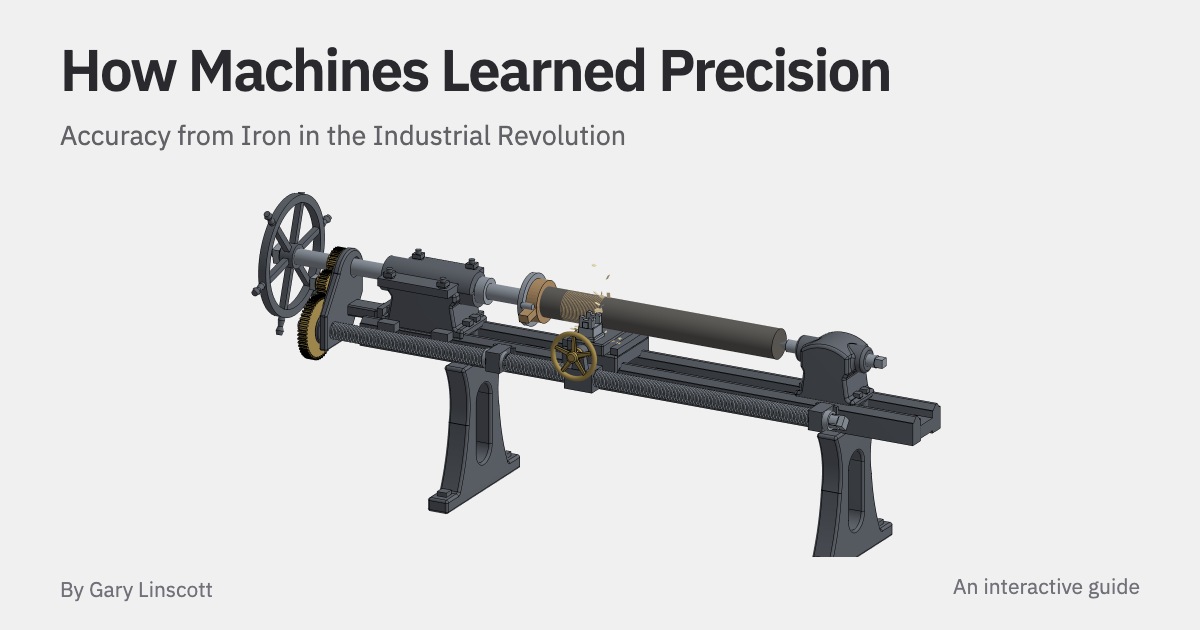
How Machines Learned Precision
The article traces the development of precision engineering during the Industrial Revolution, highlighting key innovations such as John Wilkinson's boring mill, Henry Maudslay's slide rest and screw‑cutting lathe, and Joseph Whitworth's millionth‑of‑inch measurement and three‑plate method, showing how each step enabled increasingly accurate mechanical parts.
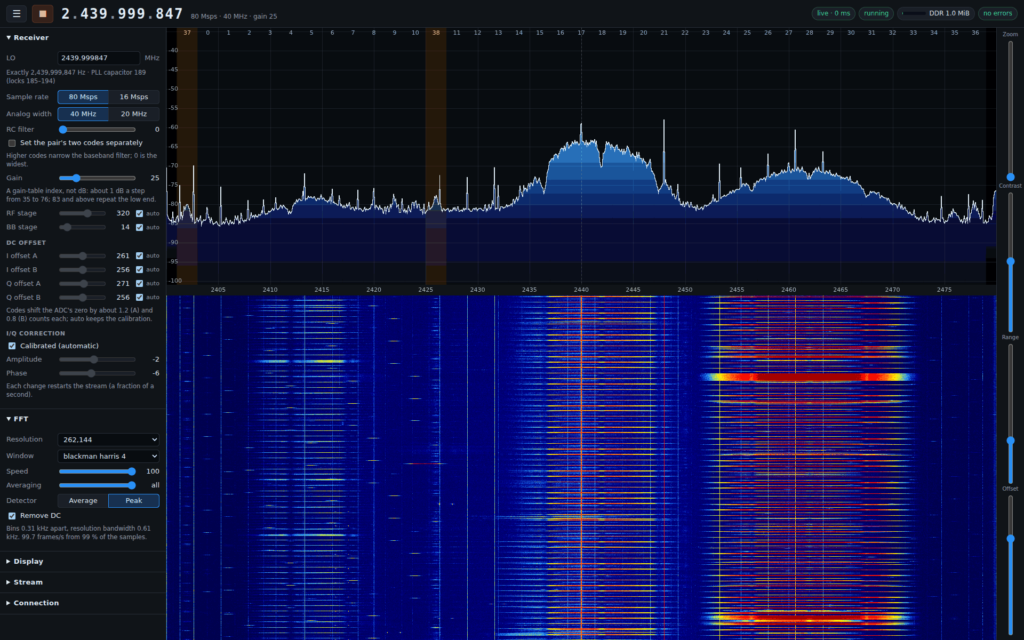
Hidden SDR Capabilities Discovered in ESP32 Microcontrollers Enable Low-Cost Software-Defined Radio
Multiple independent projects have uncovered undocumented features in ESP32 WiFi microcontrollers that allow them to function as software-defined radios (SDRs), capturing raw IQ baseband samples across multiple frequency bands with impressive sample rates, though most models face bandwidth limitations for continuous PC-connected operation.
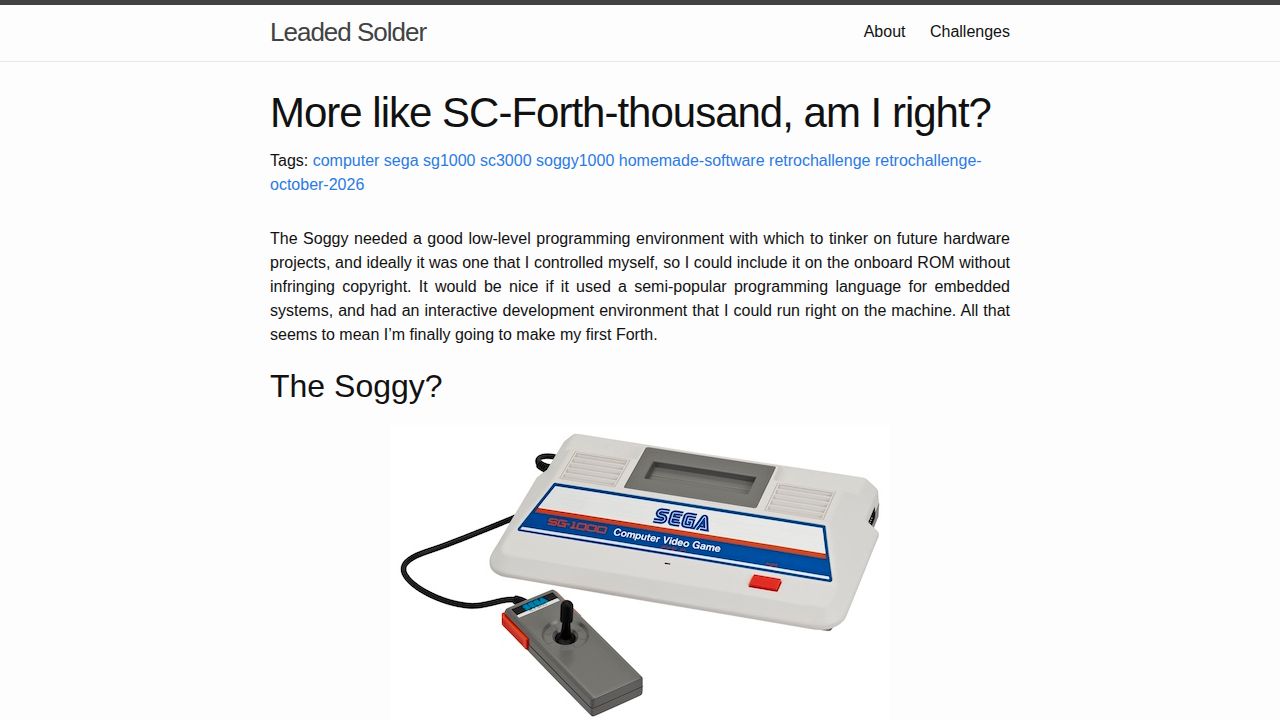
Hacker News user ports Forth to Sega SG-1000 clone for RetroChallenge
A retrocomputing enthusiast has successfully ported the CamelForth-80 interpreter to their SG-1000 hardware clone (dubbed 'Soggy-1000'), overcoming assembler compatibility issues and hardware-specific implementation challenges to create a functional Forth development environment for the 1980s Sega console.

GitHub Makes New Dashboard Experience Default for All Users
GitHub has enabled its redesigned dashboard as the default view for every user, moving it out of feature preview. The update centralizes active agent sessions, issues, and pull requests, adds a dedicated Feed tab, and lets users start work directly from the dashboard via Copilot integrations.

Git 3.0's Planned Shift to SHA-256 Hashing Faces Criticism Over Cost and Necessity
A GitButler blog post argues that making SHA-256 the default hash algorithm in Git 3.0 will create unnecessary complexity and costs while providing minimal security benefits, claiming SHA-1 remains practically secure for version control purposes.

Firefox 157's Nova UI Brings macOS-Style Rounded Corners - Here's How to Adjust or Disable Them
Firefox version 157 introduces the 'Nova' UI redesign featuring extremely rounded corners inspired by macOS Tahoe. Users who prefer sharper edges can disable the effect via about:config or customize the roundness using userChrome.css.

Fervo Energy’s Enhanced Geothermal Plant Begins Power Delivery After 23‑Month Build
Fervo Energy announced that its Cape Station enhanced geothermal power plant in Utah has started supplying electricity to the grid, marking the first commercial milestone for the technology. The initial phase, completed in 23 months from groundbreaking, delivers a third of the planned 100‑megawatt capacity, with commitments from Google and Southern California Edison and a potential expansion to up to 4 gigawatts.
Court Blocks Utah's VPN Law, Ruling It Demands Technical Impossibility
A federal judge issued a preliminary injunction against Utah SB 73, finding that the law's VPN-enforcement mechanism requires geolocation perfection that does not exist. The ruling pauses enforcement of provisions that would have forced adult websites to detect and block VPN users nationwide or withdraw access from Utah entirely.
Cloudflare Launches K2: A Serverless Event Streaming Service Built on R2 Storage
Cloudflare has announced K2, a new serverless event streaming primitive designed to decouple producers and consumers in data pipelines. Built on top of Cloudflare's R2 object storage, K2 implements a durable partitioned log that scales to handle vast quantities of data while preventing data loss during consumer downtime.

Cloudflare Launches Competition to Build Next-Generation Git Platform for AI Agents
Cloudflare invites developers to create the future of source control for AI agent collaboration using its Artifacts versioned filesystem, offering $25,000 in credits and a trip to Cloudflare Connect for winning submissions.

Clef: Open-weight decision models, and new RL fine-tuning platform
Cloudflare introduces Clef and Clef-flash, open-weight decision models that output structured decisions quickly and cheaply, featuring a vision encoder and 64k token context, and announces a reinforcement‑learning fine‑tuning service built on its AI platform.

Retail is moving to QR codes, but barcodes will not vanish in 2027
GS1's Sunrise 2027 initiative encourages retailers to scan QR and other 2D codes at checkout; it does not set a government-mandated end date for UPCs. QR codes can carry richer product information, while brands and retailers update labels, scanners, and traceability systems and use both codes during the transition.

arXiv Imposes New Submission Limits Amid AI‑Driven Surge
Effective October 1 2026, arXiv limits each submitter to two papers per month and three active submissions at once to curb a doubling of monthly volumes over two years that has strained volunteer moderation and increased low‑value, AI‑assisted submissions.

Apple's Reported Smart Home Camera Would Analyze Scenes Without Recording Video
Bloomberg's Mark Gurman says Apple's first dedicated home camera, codenamed J450, will use on-device AI to interpret activity and drive automations—lighting, music, climate—based on who is present, but will not store video footage for later review. The design prioritizes privacy over traditional security-camera functions, raising questions about how it would handle incidents like break-ins or package theft.
Anatomy of a Lean Proof: Verifying Regular Language Recognition Through Finite Automata
This article explains how a theoretical computer science proof demonstrating that a specific language is regular was formalized in the Lean theorem prover. It details the construction of a finite automaton that tracks carry during binary addition, and how this was encoded in Lean using Mathlib to verify the connection between language recognition and program verification.

Amazon Unveils Redesigned Kindle Lineup with Thinner, Lighter Design and Edge-to-Edge Color
Amazon has introduced a completely redesigned Kindle family, featuring thinner and lighter devices with a flush-front display, edge-to-edge color across the lineup, improved battery life, and faster book opening, alongside new accessories and updated Kindle Paperwhite and Kindle Colorsoft models.

AI Finally Masters Stratego, Beating Top Human Player on Modest Hardware
Researchers from Carnegie Mellon, MIT, NYU, and Stanford developed Ataraxos, an AI that defeated world‑class Stratego player Pim Niemeijer 15 games to one with four draws, using only 16 GPUs and a few thousand dollars. The system combines self‑play reinforcement learning with a belief‑model lookahead to cope with the game’s immense hidden information and long horizons, marking the first time AI has surpassed human experts in the classic board game.
AI-Assisted Research Uncovers a 1615 Dutch Log Entry Describing Dodo Hunting on Mauritius
Historian Benjamin Breen reports that Anthropic's Opus 5.5 identified a previously overlooked 1615 Dutch East India Company ship's log mentioning the hunting of dodos on Mauritius, found through semantic search of the GLOBALISE archive. The same search yielded a probable new reference to the extinct red rail, correcting an 1890 mistranslation. Breen frames the findings as publishable but modest, and uses them to illustrate both the promise and the epistemological limits of frontier AI models as historical research tools.