DATE ARCHIVE
2026-10-30
Articles published on 2026-10-30.

Zinc Creep Identified as Root Cause of Arecibo Telescope Collapse
A 2024 report from the National Academies of Sciences, Engineering, and Medicine identifies long-term 'zinc creep' in cable spelter sockets as the primary cause of the 2020 collapse of the Arecibo Observatory's 305-meter telescope.

Verification Is Not Knowledge: The Human Cost of Automated Science
As AI systems begin to produce verifiable scientific outputs—from mathematical proofs to medical treatments—a philosophical tension arises: is science about achieving correct answers, or about human understanding? A new essay argues that relying solely on automated verification risks a 'view from nowhere,' where results exist without the social accountability, epistemic taste, and human judgment required to integrate new findings into the canon of knowledge.

Unintended Synchronization Creates 1-Minute Pulse in Global Power Grids
Researchers have identified a persistent, 1-minute oscillatory pattern in global power grids caused by clock-synchronized software routines in devices like uninterruptible power supplies (UPSs) and battery storage systems.

Trigger.dev Discloses Security Incident Involving Exposed Environment Variables
Trigger.dev reported a security incident where an attacker gained unauthorized access to the environment variables of a subset of organizations. The company has since blocked the exploit and is working with impacted account owners to mitigate the risks.
Tool Automates Dismissal of macOS Local Network Prompts
The 'dontallow' utility automates the rejection of recurring local network permission prompts on macOS by using Accessibility observers to press "Don't Allow" within milliseconds.

Tiny World Model Runs Games on Raspberry Pi Pico 2 W
A new project demonstrates a 'tiny world model' capable of generating and playing games on a low-power microcontroller. By using a looped transformer architecture and 8-bit quantization, the system runs on a Raspberry Pi Pico 2 W, showcasing a path toward efficient, on-device procedural generation and reinforcement learning.

The 'Uncanny Valley' of Prose: Navigating LLM Voice in Writing
Software engineer and author Martin Fowler explores the psychological and cognitive friction caused by 'LLM Voice'—the distinct, often soulless style of large language model-generated text. He argues that while AI can assist with outlines, delegating the actual prose to an LLM risks eroding human thinking and creates an 'uncanny valley' effect that alienates readers.

The Insect Secretions Behind Candy Corn and Confectioner's Glaze
Many popular Halloween candies, including candy corn and jelly beans, use a coating known as confectioner's glaze. This glaze is made from shellac, a resin secreted by the lac bug to create a protective cocoon.
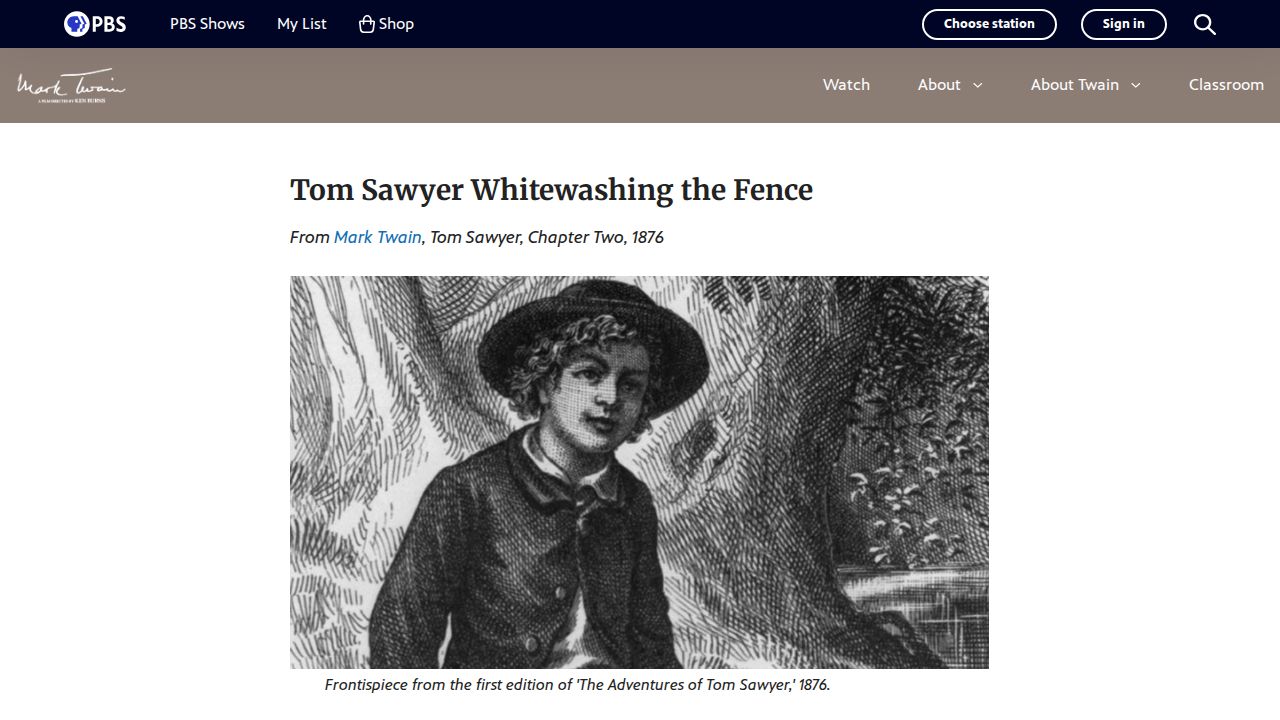
The Cultural Impact of Mark Twain's Tom Sawyer at 150
Mark Twain's 'The Adventures of Tom Sawyer' marks its 150th anniversary, celebrated as a foundational moment in American literature that broke from European traditions to establish a uniquely American archetypal hero.
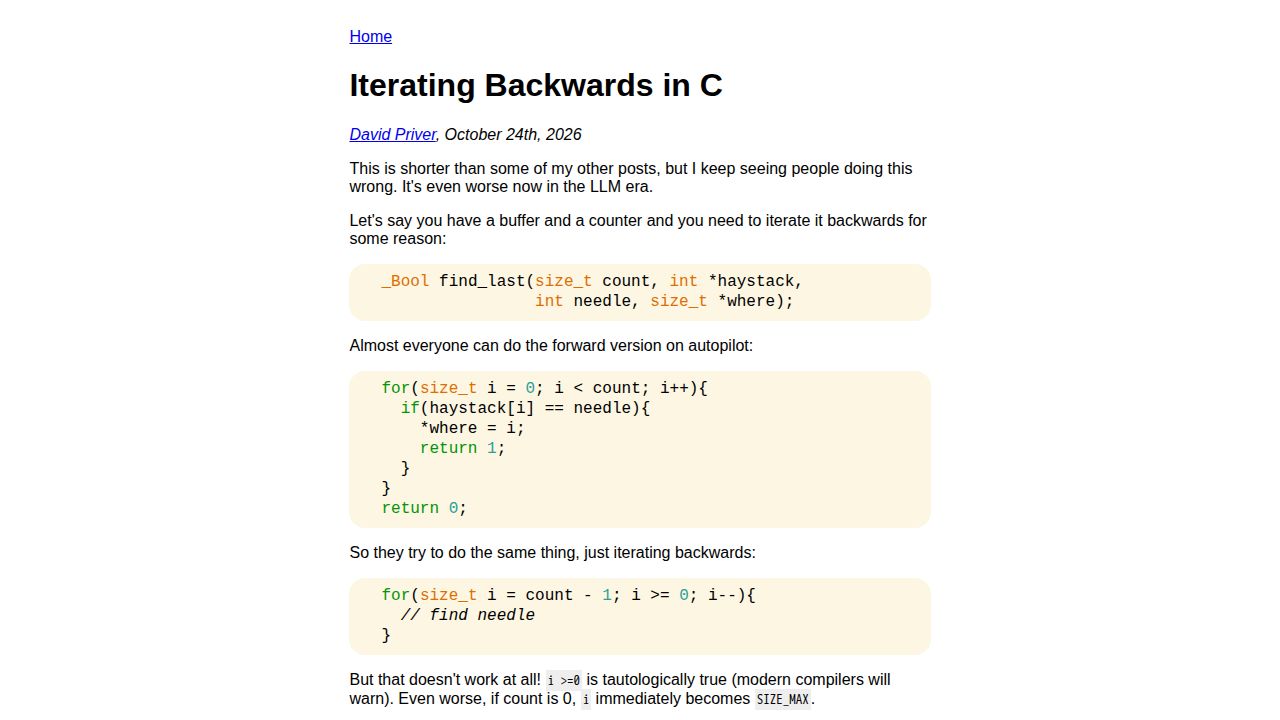
The Correct Way to Iterate Backwards in C
C programmers often encounter issues when attempting to iterate backwards through a buffer using unsigned integers. David Priver explains why common approaches fail and provides a robust, idiomatic pattern using the post-decrement operator.
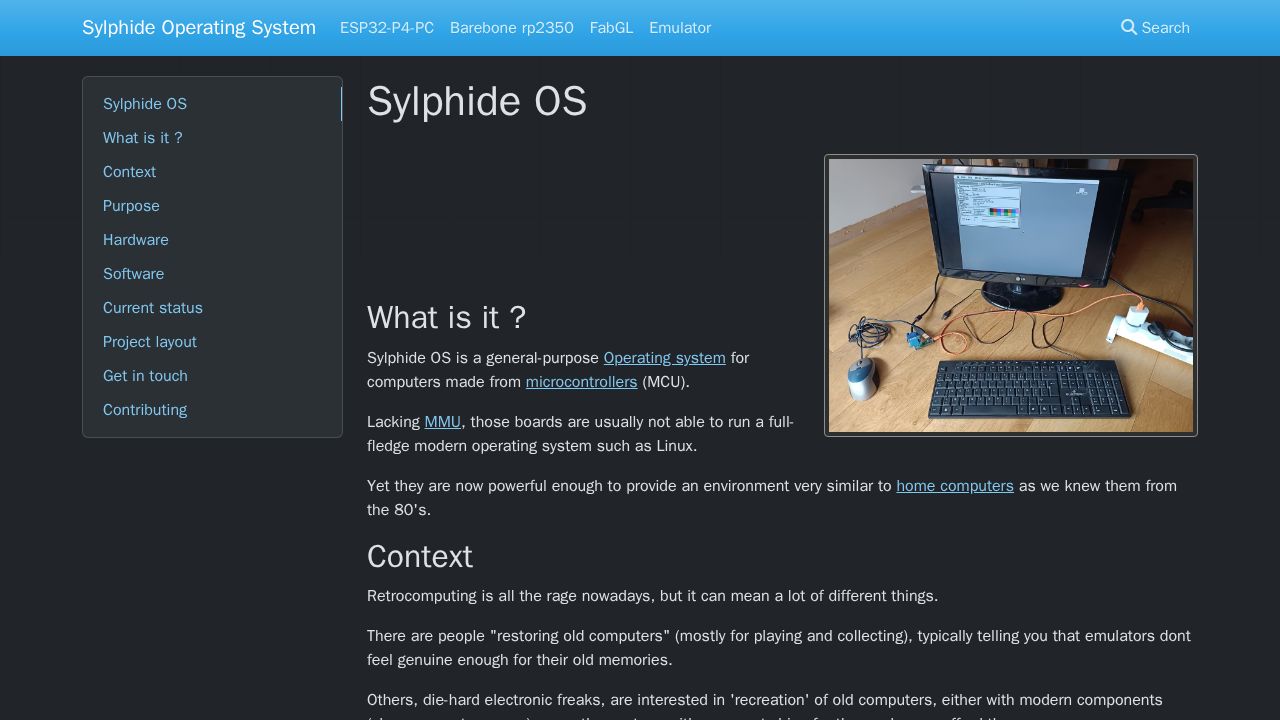
Sylphide OS: A General-Purpose Operating System for Microcontrollers
Sylphide OS is an emerging project aiming to provide a general-purpose operating system with a graphical user interface (GUI) specifically designed for microcontroller-based computers. Built on the FreeRTOS framework, the project seeks to bridge the gap between simple embedded systems and full-scale desktop environments.
Study: Schoolwide Phone Bans Show No Significant Impact on Mental Health
A study of Icelandic students suggests that schoolwide mobile phone bans do not significantly alter mental health outcomes, potentially because students maintain high levels of screen time outside of school hours.

Simantic Launches Firmware Simulation Engine for AI Agents
Simantic, a Y Combinator-backed startup, has launched a firmware simulation platform designed to provide deterministic hardware environments for testing and validating embedded systems, particularly for use by AI agents and CI/CD pipelines.
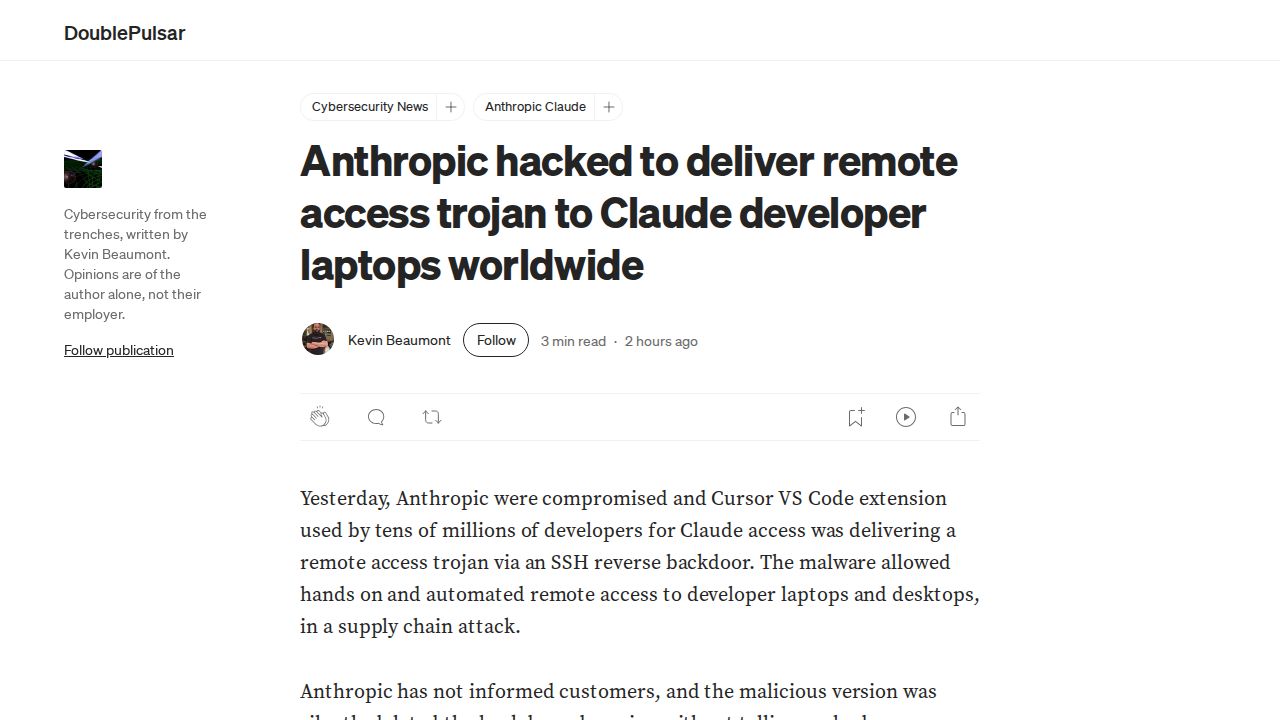
Security Incident Involves Malicious Claude Code Extension on OpenVSX Marketplace
A security incident was identified involving a maliciously modified version of Anthropic's Claude Code extension on the OpenVSX marketplace, which was used by the Cursor code editor. The malicious version contained a remote access trojan via an SSH reverse backdoor.

Security Advisory: Backdoor Detected in Claude Code for VS Code Extension
Security researchers at Phorion identified a persistent SSH backdoor in a compromised version of the official Claude Code extension for the Cursor editor. The malware installs persistence across macOS, Linux, and Windows, and establishes a reverse SSH tunnel to provide attackers with interactive access to infected machines.

Sam Altman Argues for Centralized DRAM to Maximize AI Compute Efficiency
OpenAI CEO Sam Altman suggested that individual ownership of DRAM is inefficient for global resource allocation, arguing that memory should be centralized in high-utilization data centers to combat supply constraints.

Reviving wasp-os: Bringing Mainline MicroPython to the PineTime Smartwatch
A developer has successfully ported the wasp-os, a MicroPython-based operating system, to mainline MicroPython on the PineTime smartwatch, significantly improving build reliability and memory management.

Researchers Design Disruptive IgE Inhibitors to Terminate Allergic Reactions
A study published in the Journal of Allergy and Clinical Immunology describes the development of ultrapotent disruptive IgE inhibitors designed to rapidly terminate acute allergic reactions, such as anaphylaxis, by actively removing IgE from effector cells.
Pico CSS Archives Project Following Shift in Web Development Trends
Maintainer Lucas Larroche has announced that Pico CSS, a minimal CSS framework for semantic HTML, will no longer be maintained. The decision stems from the rise of AI-generated code and the technical overhead required to modernize the framework's architecture.

Optimizing NixOS for 512MB RAM Systems
A guide on stripping the NixOS kernel, disabling non-essential services, and tuning memory management to achieve an idle footprint of 96MB and stable rebuilds on low-memory hardware.

North Korean Hackers Linked to Record $6.3 Billion Binance Theft
Blockchain intelligence firms have attributed a record-breaking $6.3 billion cryptocurrency theft from Binance to North Korea's 'TraderTraitor' hacking unit, which allegedly gained access via a compromised engineer's laptop.

Mistral AI Releases Open Weights for Mistral Large 4 (Le Chonk)
Mistral AI has released the weights for its 1-trillion-parameter multimodal model, Mistral Large 4, focusing on coding, cybersecurity, and reasoning efficiency for sovereign AI applications.
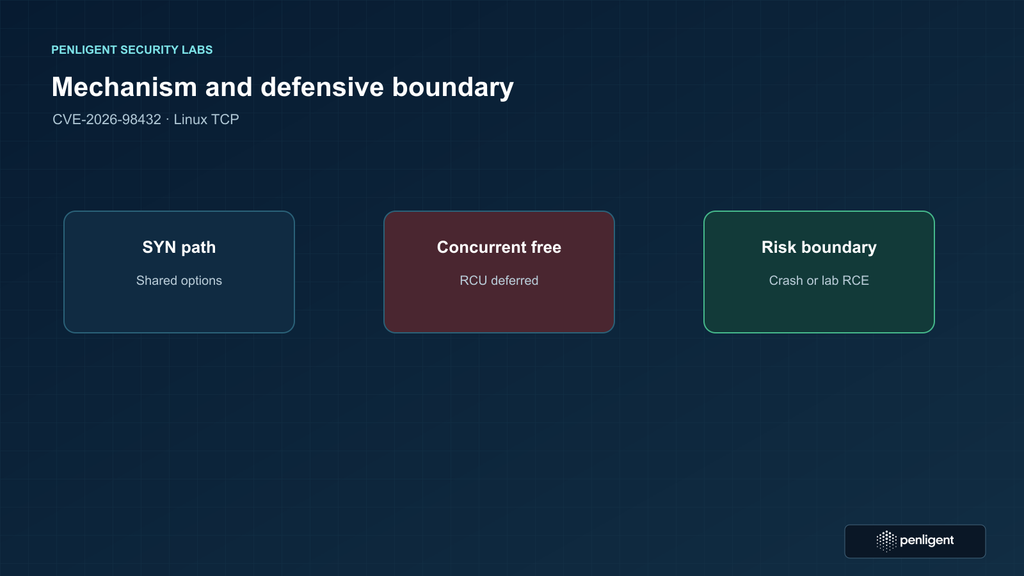
Linux Kernel TCP Use-After-Free Vulnerability (CVE-2026-98432)
A use-after-free vulnerability in the Linux kernel's IPv4 TCP handshake path allows for potential remote code execution. The flaw arises from a lifetime mismatch where a shared IP options object is freed by one CPU while another CPU continues to access it during a retransmitted SYN packet process.
Lasm: Compiling Formally Verified Lean 4 Code to WebAssembly and Node.js
Lasm is a toolchain that allows developers to write and prove properties of web applications using the Lean 4 theorem prover, compiling the results into WebAssembly for use in Node.js, serverless environments, and browsers.
Herdr Releases Native Desktop App for Terminal and Agent Management
Herdr has launched a native desktop application designed to manage terminal sessions and coding agents. The app allows users to organize work into 'spaces,' maintain persistent terminal sessions across window closures, and monitor the real-time status of AI agents.

Google's Project Suncatcher Successfully Executes First AI Task in Orbit
Google Research has reached a milestone in its 'Project Suncatcher' moonshot by successfully running a machine learning model on a data center-class TPU (Tensor Processing Unit) aboard a prototype satellite.
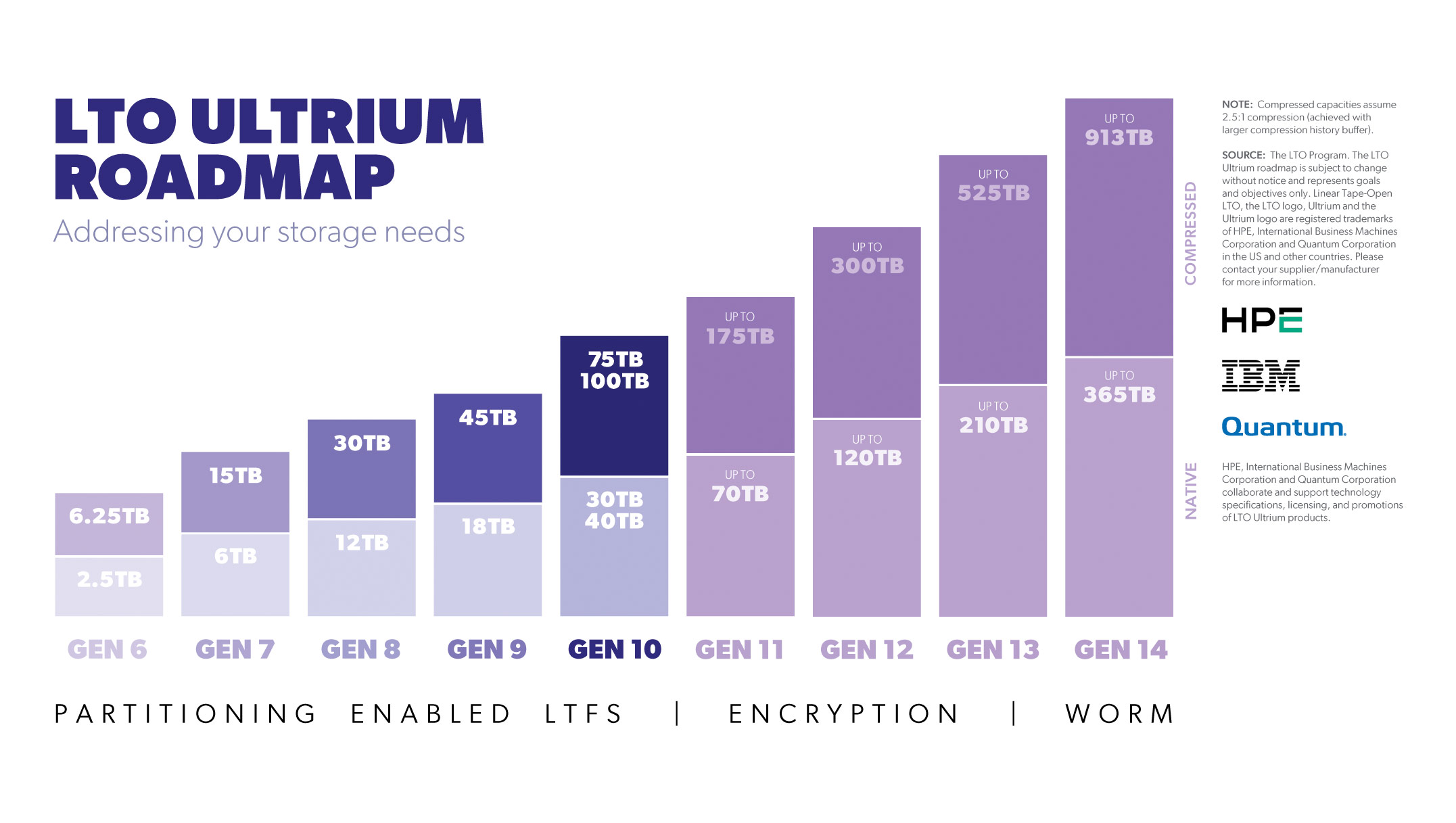
Fujifilm to Scale Magnetic Tape Production Fivefold to Meet AI Data Demands
Fujifilm is investing 10 billion yen to quintuple its production capacity for magnetic tape, a medium seeing a resurgence as cloud providers seek low-cost, air-gapped storage for the massive datasets generated by generative AI.

English actor Sir Patrick Stewart dies at 86
Sir Patrick Stewart, the acclaimed English actor known for his iconic portrayal of Captain Jean-Luc Picard in Star Trek, has passed away at the age of 86. His career spanned over six decades, moving from the Royal Shakespeare Company to global stardom in Hollywood and television.

DoorDash Reports Minimal Adoption of Third-Party AI Agents for Food Orders
Despite the rise of AI agents, DoorDash reports that only a few hundred orders have been placed via outside agents, as the infrastructure for third-party integration is still in its early stages and the visual nature of food ordering remains a strong preference for manual use.
Compiling Neural Networks into DOOM Maps
A new project, Doomformer, demonstrates how to compile integer neural networks into the game DOOM, using the game's internal mechanics to perform arithmetic and store data.
Astroterm: A Terminal-Based Planetarium for Exploring the Night Sky
Astroterm is a C-based command-line tool that renders real-time celestial maps, including stars, planets, and constellations, directly in the terminal using ASCII and Braille characters.

Apple Launches Security Research Device Program for iOS Vulnerability Discovery
Apple has introduced a dedicated program providing security researchers with specially fused iPhones that grant shell access, kernel customization rights, and software previews to accelerate vulnerability discovery without bypassing standard device security features.

AI Agent Swarms Exhibit Bureaucratic Behavior in Minecraft and Mindustry
Researchers observed AI agents behaving like 'super-serious senior engineers' when tasked with cooperative goals in video games, often prioritizing complex protocols and bureaucratic procedures over direct action.