In his analysis of the evolving landscape of digital content, Martin Fowler identifies a growing phenomenon he calls 'LLM Voice.' This refers to the specific stylistic markers and structural patterns produced by large language models (LLMs) that differ from 'biological' human prose. Fowler suggests that readers are increasingly experiencing an 'uncanny valley' effect—a sense of revulsion or cognitive friction when encountering text that feels almost human but lacks the underlying spark of individual thought. He notes that while some tools claim to detect AI-generated content, the primary issue is a human psychological reaction to prose that feels hollow or overly polished in a way that feels synthetic.
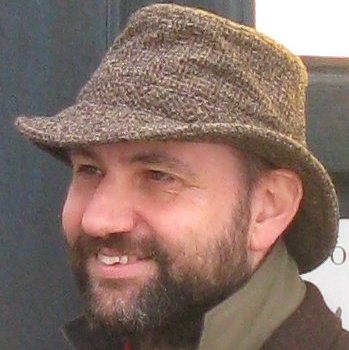
This image identifies Martin Fowler, the author of the analysis regarding 'LLM Voice' and the cognitive risks of AI writing.
Fowler argues that the primary risk of using LLMs for writing is the erosion of the author's own cognitive processes. He posits that writing is an essential tool for thinking; the act of wrestling with words forces a writer to overcome confusion and achieve coherence. By delegating the generation of prose to an LLM, a writer may inadvertently delegate the thinking and comprehension that the writing was meant to facilitate. He advises authors to be extremely cautious about using LLMs to draft even a single paragraph, suggesting that even human-edited AI drafts often retain a lingering 'LLM Voice' that is difficult to fully expel. Instead, he recommends using AI strictly as a search tool or for high-level structural outlines, while insisting that authors 'fill the prose themselves' to ensure their humanity remains visible in the text.
However, Fowler acknowledges that there are practical exceptions where LLM-generated prose may be acceptable or even necessary. For instance, he notes that individuals with physical disabilities, such as Parkinson's disease, may find LLM assistance essential to overcome physical barriers to writing. Additionally, he suggests that for purely functional communication—such as writing a form letter to an official or preparing a report intended for a machine rather than a human—the 'uncanny valley' may be irrelevant. In these cases, the goal is to communicate with a process rather than a person. For all other human-to-human communication, Fowler maintains that the goal should be to ensure that the author's unique perspective and 'humanity' shine through the final product, rather than being smoothed over by a synthetic veneer.