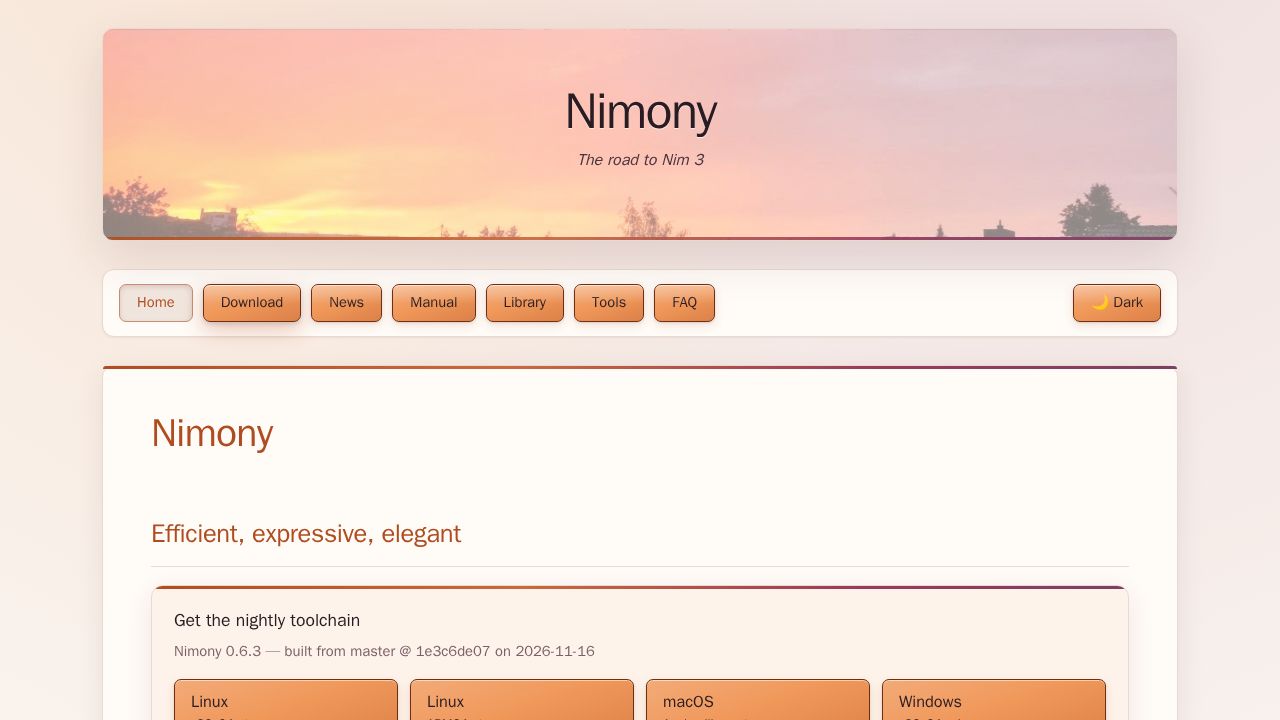
The Nimony project has launched a new compiler for the Nim programming language, introducing Nim 3 as a significant leap forward in the language's evolution. By integrating advanced features such as sum-types and borrow-checking, the project seeks to provide a more robust and modern development experience for the Nim community.
Core Features of Nim 3
The Nimony project highlights Nim 3 as a major milestone for the language, specifically noting the inclusion of sum-types and borrow-checking. These features are intended to provide more sophisticated memory management and type safety, aligning Nim with modern systems programming trends.
One commenter on Hacker News, writing as polotics, described the update as 'beautiful' and praised the Nim team for maintaining high development momentum. The goal is to refine the language's core mechanics to better serve complex software engineering needs.
Developer Experience and Adoption
A primary concern for the community involves the 'adoption curve' necessitated by the breaking changes inherent in the move to Nim 3. While the new features offer long-term benefits, they require existing codebases to be refactored to remain compatible with the new compiler.
Users have also questioned how these changes impact the developer experience, specifically regarding error messages and debugging workflows. There is a particular interest in whether the new compiler simplifies the use of dictionaries and objects, which some users previously found less intuitive than those in Python or JavaScript.
Community Reception and Design
The project's public presentation has received mixed feedback from the community. Some users, such as lobf, criticized the website's aesthetic as being poorly designed, while others, like badsectoracula, defended the 'late 2000s' style as a matter of personal taste.
Technical critiques were also leveled at the site's implementation; one commenter, heavensteeth, pointed out that the navigation functionality used basic JavaScript that could negatively impact accessibility and compatibility. Despite these critiques, others noted that the project's success depends on its ability to be user-friendly enough to attract a wider following.