Skydio has expanded its autonomous drone lineup with the F10 Lightrunner, a fixed-wing flying robot designed to bridge the gap between short-range multirotors and long-range aerial surveillance. By utilizing a fixed-wing configuration, the F10 can perform rapid-response missions that exceed the operational range of traditional multirotor drones, providing a scalable solution for critical infrastructure and national security.
Fixed-Wing Design for Extended Range
Unlike multirotor drones that rely on multiple rotors for lift, the F10 Lightrunner utilizes a fixed-wing configuration. This design allows the aircraft to travel significantly farther and faster, making it suitable for missions where the target is outside the immediate coverage area of standard drones.
The F10 is built to be 'mission-ready' in various conditions, including day or night and in rain or shine. It is specifically marketed for scenarios where speed and distance are the primary requirements for situational awareness.
“F10 Lightrunner is an autonomous, dock-based fixed-wing flying robot built for long-range, rapid-response missions that reach well beyond the coverage of a multirotor aircraft.”
— Skydio autonomous drones for DFR, inspection, national security
Autonomous Docking and Infrastructure
To support autonomous operations at scale, the F10 Lightrunner is paired with the MegaDock. This dock-based system allows the robot to be deployed for repeatable, automated missions without requiring constant manual intervention.
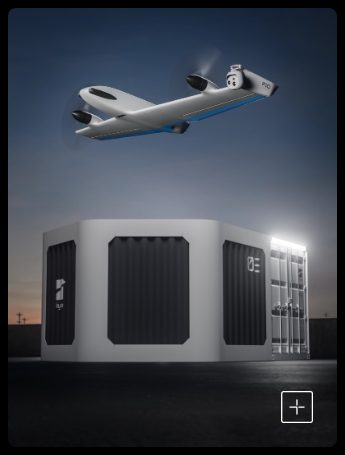
This image illustrates the primary hardware components of the F10 Lightrunner system, including the fixed-wing aircraft and the dock-based infrastructure.
By connecting the aircraft to a docking station, Skydio enables 'decision-grade' data collection that can be repeated over time. This infrastructure is particularly useful for monitoring large-scale assets like flare sites or bridges.
Target Industries and Operational Use Cases
Skydio has tailored the F10 for several critical sectors. In Disaster First Response (DFR), it aims to put eyes on a scene in under two minutes. In the realm of national security, it is designed to gather data faster and more safely than traditional methods.
The platform also serves industrial needs, such as asset inspection and mapping. For example, it can be used to capture every detail of physical infrastructure to catch issues before they lead to outages or safety incidents.
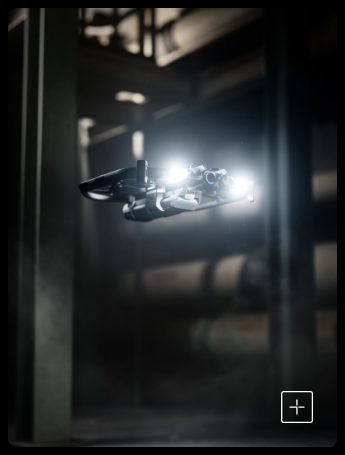
This image provides a visual example of the industrial asset inspection use case mentioned in the article.
Fleet Positioning and Limitations
The F10 Lightrunner occupies a specific niche in Skydio's product lineup. While the X10 is a versatile robot for urban canyons and the R10 is a compact robot for indoor or zero-light spaces, the F10 is the dedicated long-range solution.
While the primary source confirms the F10's superior range over multirotors, it does not provide specific flight distance metrics or the exact aerodynamic specifications of the 'asymmetrical' wing design mentioned in the news coverage.