Tech companies are increasingly deploying 'ambient' surveillance devices—such as smart glasses and wearable pendants—that record, transcribe, and summarize the physical world in the background. Unlike traditional recording methods that require active user effort, these products are designed to look as normal as possible, effectively moving the consequences of a single person's privacy choices onto every stranger, colleague, and family member nearby.
The Rise of Passive Surveillance
A new wave of wearable technology is shifting how privacy functions in public and private spaces. Products like Meta and Google's smart glasses can record surroundings or use artificial intelligence to describe what the owner sees, while Apple’s Audio Intelligence turns the Apple Watch into a transcription machine.
Amazon’s Bee devices and various pendants and rings are designed to record and summarize everything a user says and does all day long. These tools are intended to work in the background, making them less obvious than a handheld camera or a dedicated recording device.
“There is no technical protection for you as a non-user of these devices, the person who finds yourself captured by them.”
— Tech Companies Are Trying to Shift the Entire Concept of Privacy (Again)
Corporate Promises vs. Bystander Reality
Tech companies offer different technical justifications for these products: Apple points to white papers on technical barriers, Meta highlights customizable controls and face blurring, and Amazon emphasizes that no audio is stored. However, these protections are designed for the consumer using the device.
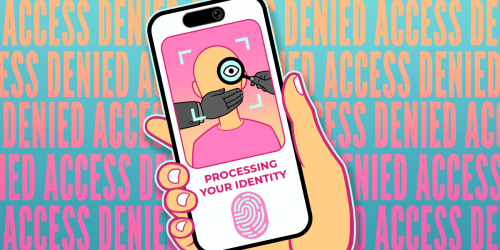
This image illustrates the concept of technical barriers and access controls mentioned in the discussion of corporate privacy promises.
For bystanders, there is no technical protection or way to opt out of being captured by these ambient devices. While companies may include 'responsible use' terms in their service agreements, these do not provide a mechanism for a non-user to prevent their data from being processed or summarized.
The Erosion of Social Norms
The primary concern is the breakdown of longstanding social agreements regarding spontaneous conversation. While recording a meeting with a phone is a clear, actionable step, passive surveillance is designed to hide its use, making every private interaction potentially less open.
Google acknowledged the difficulty of this issue during a conversation with CNN, noting that simply alerting bystanders via phone notifications might feel 'weirdly disempowering' because it leaves the bystander unsure of how to react. This creates an 'unacceptable burden' on conversational privacy that technical fixes cannot fully resolve.
Limits of Legal and Technical Fixes
While some products are engineered to make law enforcement access difficult, the existence of data remains a target for government compulsion. History suggests that when data exists, governments will seek access to it, regardless of the specific brand's privacy claims.
The Electronic Frontier Foundation suggests that the public should treat these tools as always-recording microphones. Because these products can capture raw audio to create summaries, they still rely on the initial capture of private conversations, even if the raw audio is discarded afterward.
What Hacker News readers are saying
- Alternative: One commenter suggested that a large-scale public awareness campaign by governments or media outlets could help people understand the current state of privacy and make better personal choices. comment ↗
- Skeptical: Another user argued that these devices might eventually be seen as less intrusive by future generations who grew up with a normalized culture of sharing personal information online. comment ↗
- Skeptical: One commenter expressed the view that privacy protections need to be enshrined in the constitution to effectively counter the actions of large technology companies. comment ↗
Summarized opinions from the Hacker News thread, not verified facts. Read the full discussion ↗