Unlike standard clocks that only track linear time, a new 'Daylight Clock' project uses a 24-hour analog movement to visualize the sun's progress across the sky. By placing noon at the top of the dial and midnight at the bottom, the device provides a constant, ambient reminder of how much daylight remains in a given day, shifting dynamically based on the user's latitude and longitude.
Mechanism of the Daylight Visualization
The clock's primary feature is an LED strip containing 48 neopixels around its circumference. These lights illuminate the current daylight span, which is calculated based on the clock's home coordinates. Because the dial is oriented with noon at the top, the illuminated arc provides a visual representation of the sun's position relative to the horizon.
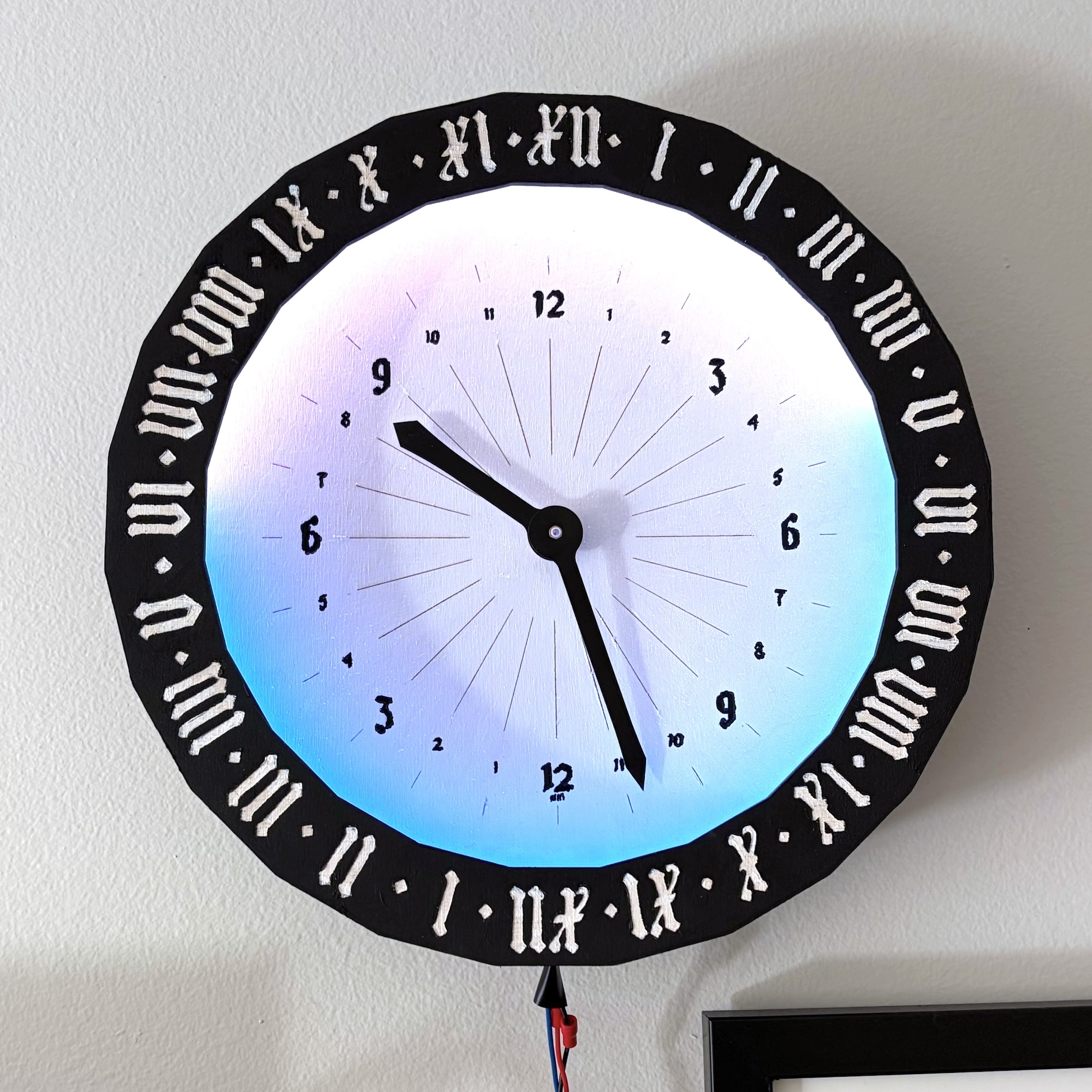
This image illustrates the primary design of the Daylight Clock, showing the 24-hour movement and the LED strip mentioned in the mechanism section.

Chart drawn by HN Digest from figures reported by hannahilea.com; values are shown as written in the source.
The hardware is powered by an Adafruit Feather RP2040 microcontroller. To maintain the time even when the device is unplugged, the system includes a real-time clock (RTC) component. The software uses the asyncio library to concurrently monitor input controllers—such as the latitude slider and time knob—while re-computing the color of each neopixel.
“The lights around the circumference illuminate the current daylight span, based on the clock’s home latitude and longitude.”
— Here comes the sun[light]: An ambient Daylight Clock with time and space controls
Time and Space Controls
A dedicated control box provides physical interfaces for 'time and space' overrides. A rotary encoder allows the user to advance time in one-week increments, while a linear potentiometer acts as a latitude selector. The slider is designed to align with an Equal Earth projection map, allowing the user to physically slide the position to match a specific latitude.
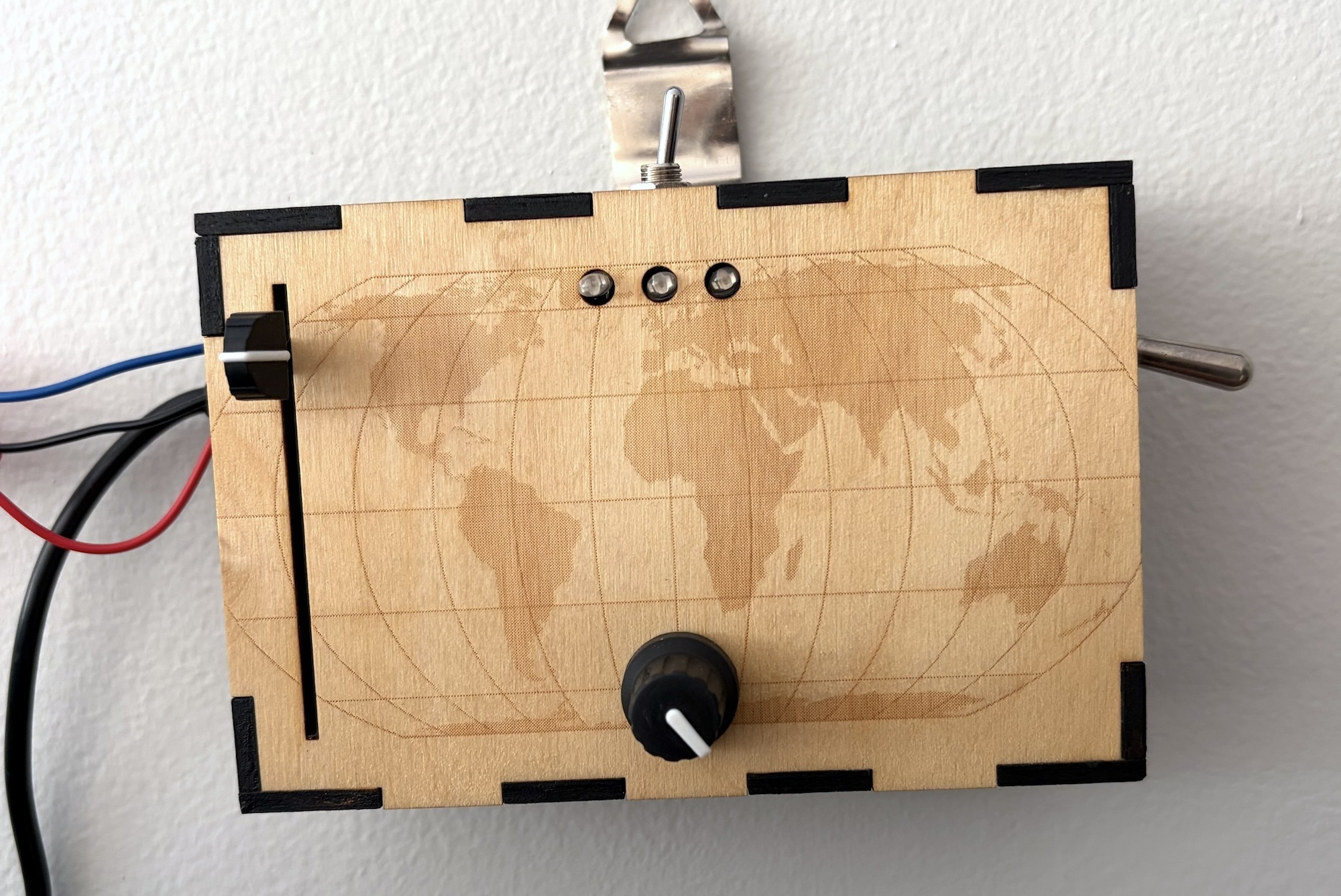
This image depicts the physical interface for 'time and space' overrides described in the Time and Space Controls section.
A three-way toggle handles 'relative longitude,' allowing the user to see the daylight shift across the west, central, or east edges of a given time zone. This allows the user to observe how the sun rises and sets at different points within the same time zone, addressing the discrepancy where the sun may set significantly earlier or later depending on one's specific location.
Design Trade-offs and Limitations
Because the clock hands are mechanical and not electronically linked to the lighting system, they do not 'jump' to a new time when the longitude is changed. Instead, the longitude toggle only affects the illuminated daylight span on the LED strip. This distinction ensures that the physical hands remain accurate to the current time while the lights reflect the geographic solar data.
The project was inspired by a friend's digital daylight-aware clock, but this version prioritizes an analog, ambient experience. By moving the electronics into a separate control box, the creator achieved a more self-contained aesthetic, though it resulted in a physical trade-off: the box does not sit completely flush against the wall due to the internal wiring volume.
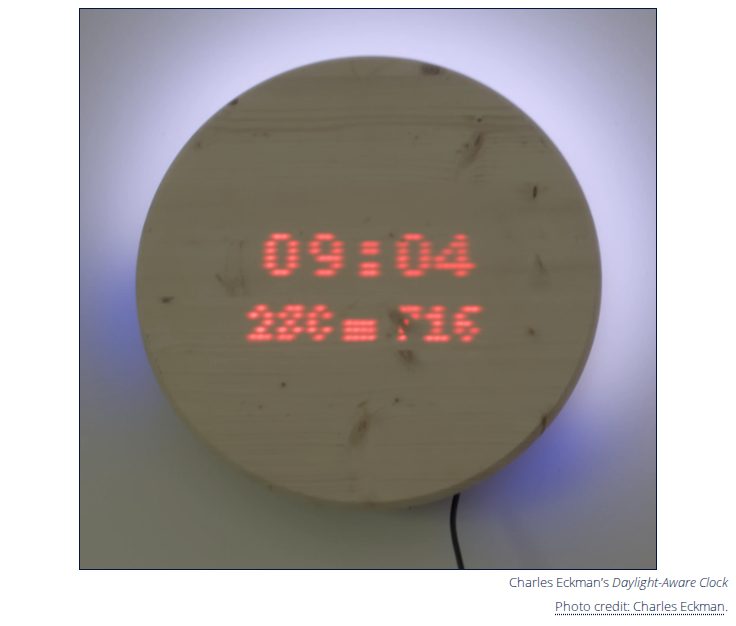
This image shows the digital inspiration mentioned in the final paragraph of the article.
What Hacker News readers are saying
- Experience: One commenter shared their experience building a similar project that tracks time based on the Roman Empire tradition, where daylight is divided into twelve equal hours regardless of the season. comment ↗
- Alternative: Another user suggested several existing products in the watch industry that offer similar functionality, such as hybrid analog/digital watches and mechanical sunrise-sunset complications. comment ↗
- Open question: A commenter expressed the opinion that a 24-hour dial might be a more effective way to visualize the sun's position relative to the observer's location. comment ↗
Summarized opinions from the Hacker News thread, not verified facts. Read the full discussion ↗