In 1951, Norbert David Larky and David D. Holmes filed the first patent for a color test pattern generator, a development that laid the groundwork for the iconic color bars seen on television screens today. These patterns were originally essential for manual calibration, allowing viewers and engineers to adjust focus, shading, and interlacing on early television sets that required constant tuning.
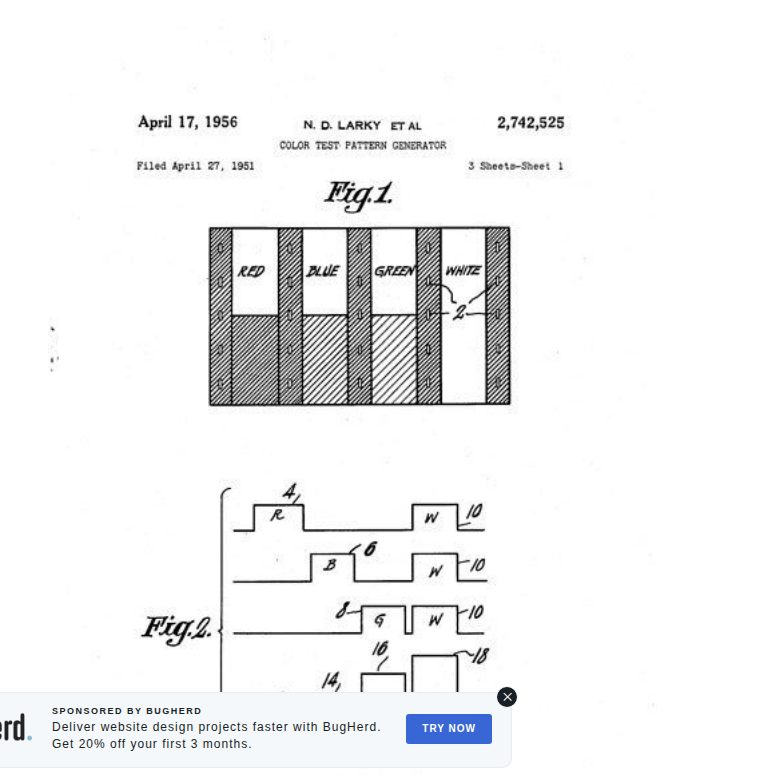
This image illustrates the foundational patent filed in 1951 that established the technology for modern color bars.
From Monoscopes to Color Bars
Before the advent of color, the RCA 'Indian head' monoscope served as a primary reference image for TV stations. Created in 1938, this graphic provided a consistent visual for owners to test the curve of the picture and overall focus.
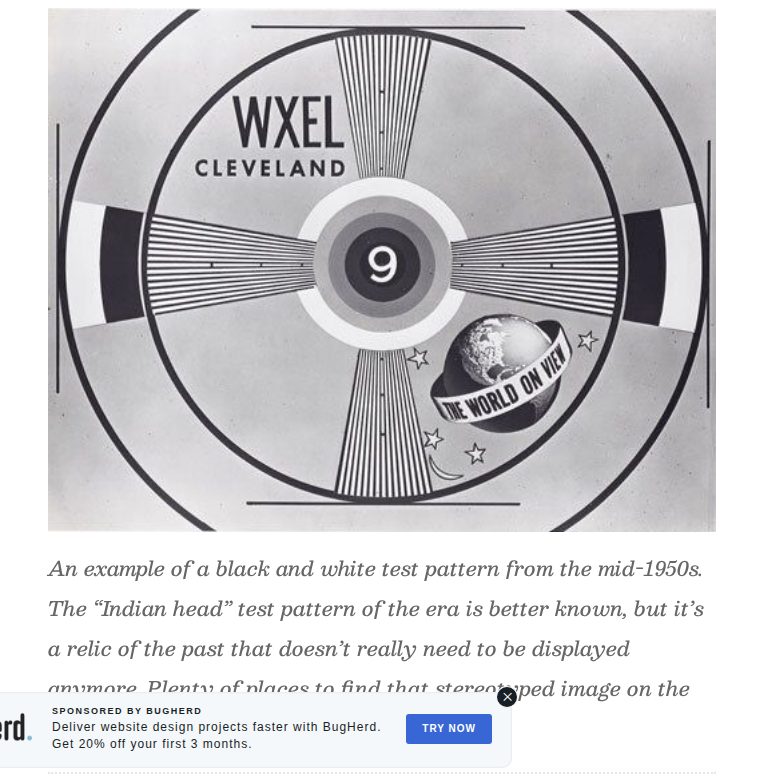
This visual provides a historical contrast to the modern color bars discussed in the evolution of TV calibration.
The shift to color bars was driven by the need for more sophisticated calibration as television technology progressed. While the color TV concept predated Larky's work, his patents provided the foundational technology for the color bars that became a staple of the industry.
“The color bar design, which is more complex than it seems, is a great example of an image that is so utterly pervasive in modern life that we just kind of ignore it’s there.”
— Test Pattern History: How Color Bars Became a TV Staple
Engineering the Three-Row System
The most recognizable version of the color bars, standardized in 1978 and updated in 1990, utilizes a three-row layout. The first row displays a sequence of primary and secondary colors, such as white, yellow, cyan, green, magenta, red, and blue.
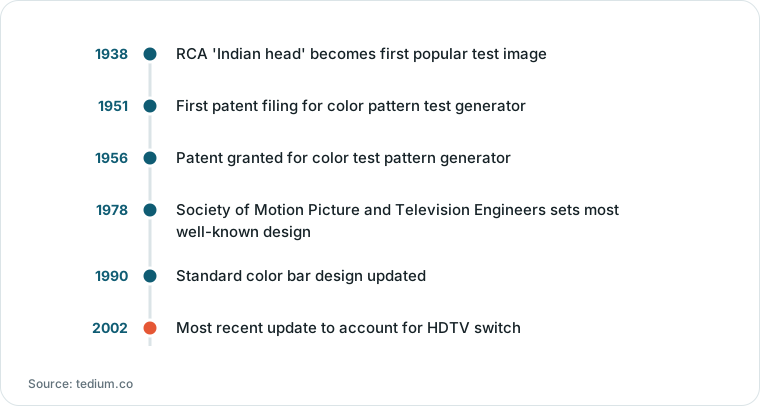
Chart drawn by HN Digest from figures reported by tedium.co; values are shown as written in the source.
The middle row acts as an alignment system to remove personal judgment from calibration. By isolating specific hues, engineers can measure color saturation and hue objectively, which is critical when managing large amounts of video equipment.
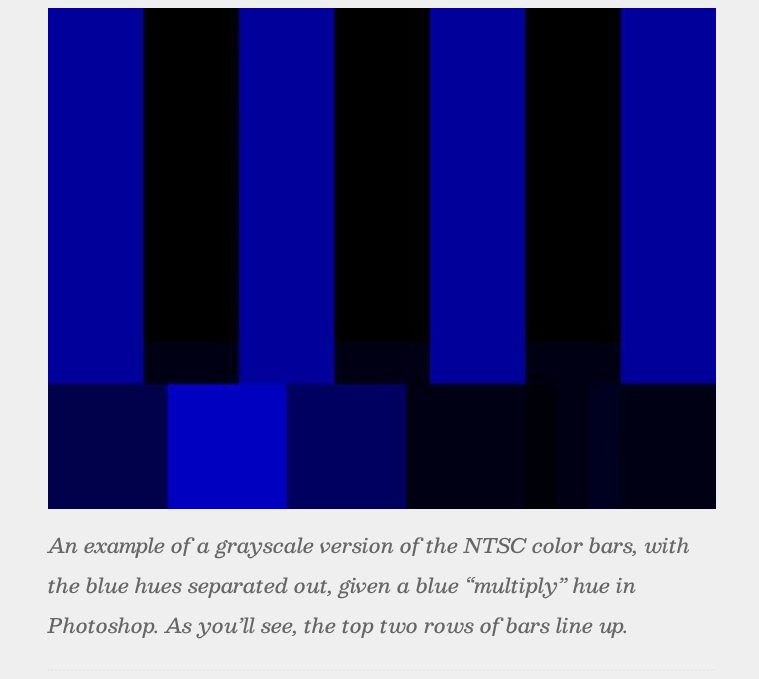
This image helps explain the alignment system and the specific layout of the three-row color bar system.
The bottom row serves as a utility row, containing a full-intensity white block and a low-intensity black block. It also includes 'pluge pulses'—short black bars that help calibrate the black levels on a monitor.
Modern Persistence and Digital Artifacts
While modern TV sets are much easier to tune, test patterns remain vital in professional production to ensure chroma and luminance levels are correct. They have also transitioned into pop culture icons, appearing in music and as visual motifs in modern media.
Digital platforms like Netflix now host various test signals that are often inaccessible to the average viewer but serve as functional tests for sRGB graphics, menu styles, and high dynamic range (HDR). These signals represent the modern continuation of a technical necessity that began in the mid-20th century.

This image demonstrates the modern continuation of test signals in digital streaming environments.
Uncertainties in Modern Standards
While the general structure of the color bars is well-documented, the specific mathematical values of the color mixtures and the precise technical specifications for the 'pluge pulse' are not fully detailed in the primary source.
Furthermore, the exact differences between NTSC and modern HDTV color bar values remain a point of technical nuance for professional engineers.