Leonardo da Vinci, the Renaissance polymath, identified a fundamental geometric principle of botany in his notebooks: the sum of all branch thicknesses at any height of a tree, when put together, is equal to the thickness of the trunk. This observation provides a primary benchmark for understanding how trees distribute structural support as they grow, a concept that continues to intrigue both scientists and artists today.
Leonardo's Geometric Rule of Trees
Leonardo da Vinci’s observations on tree growth were rooted in his boundless curiosity about the natural world. He noted that the architecture of a tree follows a specific rule where the branches at every stage of height, when put together, are equal in thickness to the trunk.
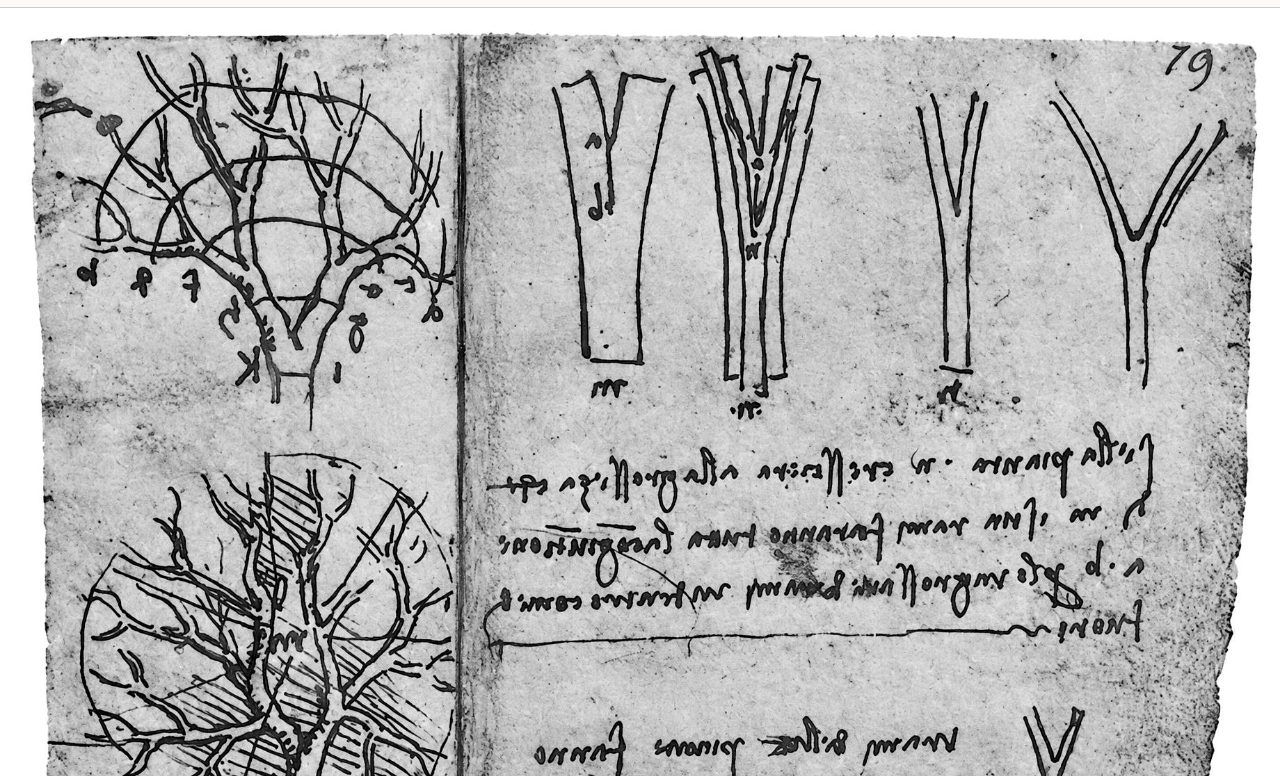
This image directly illustrates the specific 'rule of trees' and the notebook entries mentioned in the text.
This principle suggests a consistent method of resource and structural distribution. By identifying this geometric constant, Leonardo provided a baseline for how trees manage the physical demands of height and weight.
“All the branches of a tree at every stage of its height when put together are equal in thickness to the trunk.”
— Branching Beyond Leonardo
Moving Beyond the Geometric Baseline
While Leonardo's rule provides a clear geometric framework, modern theory seeks to expand on these observations. The transition to 'branching beyond Leonardo' involves looking at the specific biological mechanisms that drive these patterns.
Current inquiries focus on how trees adapt their architecture to specific environmental pressures, such as light availability, wind, and soil nutrients. These factors may cause deviations from a perfect geometric rule, creating a more complex, adaptive architecture.
Limitations and Future Inquiry
The primary source establishes Leonardo's rule as a significant historical and scientific observation but does not provide the specific data points for the modern theories that succeed it. The 'beyond' in the title refers to the ongoing evolution of botanical science.
The current boundary of the research lies in reconciling Leonardo's elegant geometric summary with the messy, adaptive reality of biological growth in diverse ecosystems. Understanding these deviations is key to predicting how forests will respond to changing environmental conditions.
The Significance of the Observation
Leonardo's work serves as a bridge between historical observation and modern scientific inquiry. By documenting these patterns in the 16th century, he provided a starting point for the study of how biological organisms optimize their physical structures.
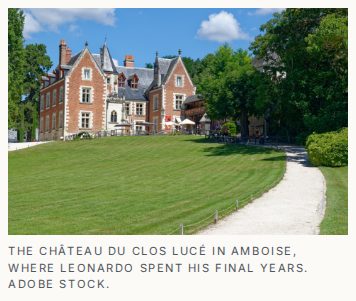
Provides historical context regarding Leonardo da Vinci's life and the era of his botanical observations.