A digital synthesizer prototype suffered from a persistent 'click' or 'thunk' sound whenever the power was switched off or the USB cable was removed. This audio artifact, produced by the PCM5102A DAC's line out, persisted even after the developer implemented the specific mute circuit recommended by the chip's datasheet.
Identifying the Source of the Artifact
The developer initially suspected a failure in the muting logic and wired up a voltage divider to signal the DAC to mute during unplanned power loss. However, oscilloscope readings revealed that the voltage spike actually occurred after the chip had already stopped functioning.
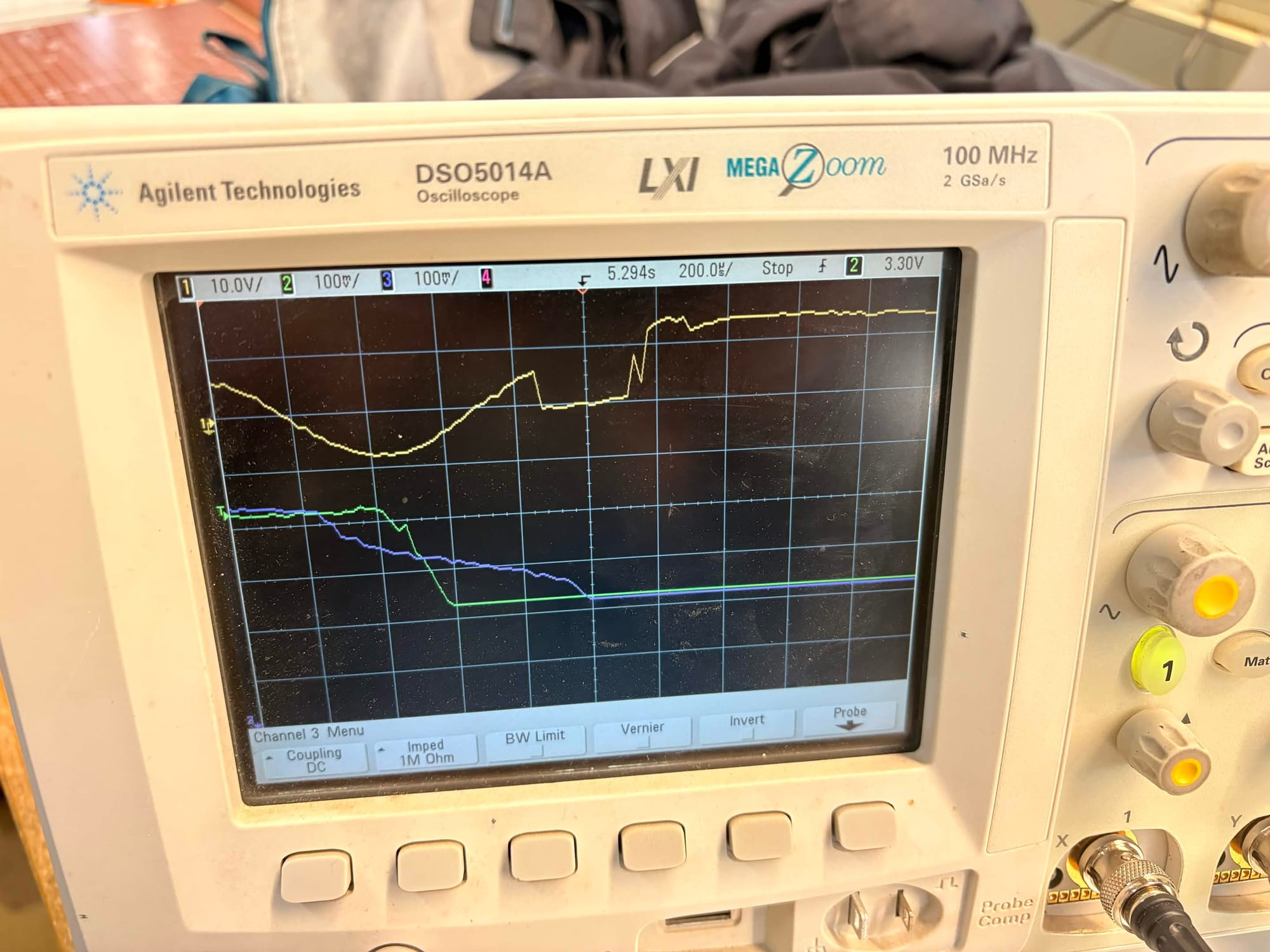
This image illustrates the specific voltage spike identified during the investigation into the power-loss audio artifact.
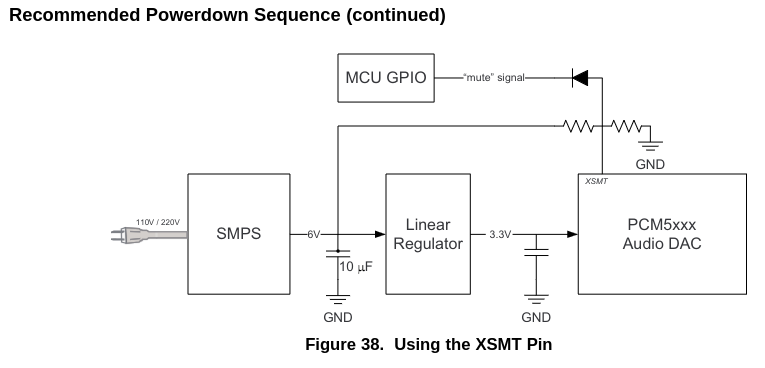
This circuit was part of the developer's initial attempt to solve the muting logic failure.
The investigation suggested that the DAC needed more time to gracefully switch off its outputs. Testing on a breadboard showed that adding 220uF of bulk capacitance to the 3.3V rail effectively removed the spike, even though the exact physics of the fix remained partially unclear.
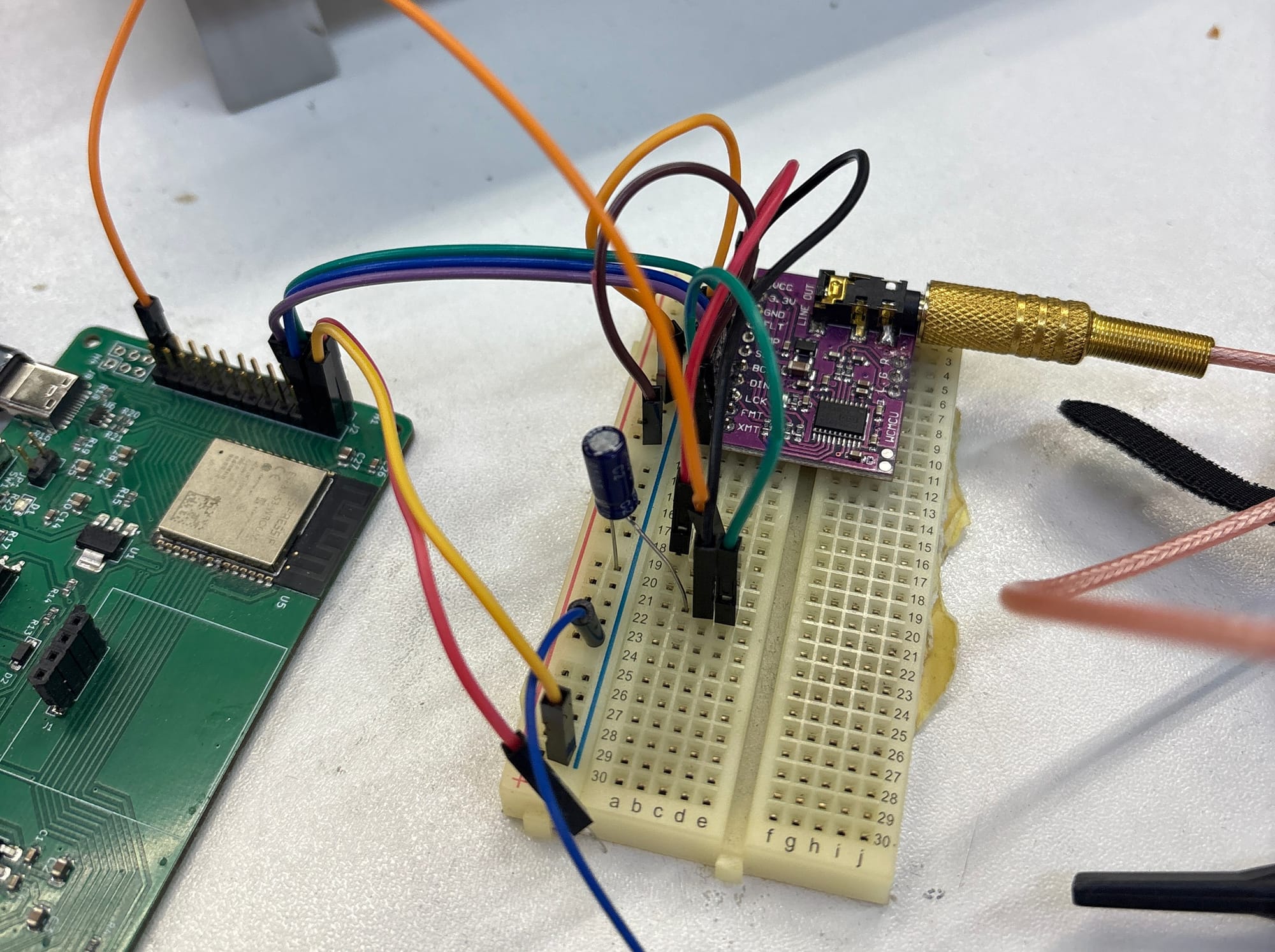
The breadboard setup was used to verify the effectiveness of the bulk capacitance fix before moving to a production PCB.
The Failure of Ceramic Capacitors
When the fix was moved from a breadboard to a production-ready circuit board, the voltage spike returned. The developer had replaced the large electrolytic capacitors with small surface-mount ceramic MLCC capacitors to save vertical space.
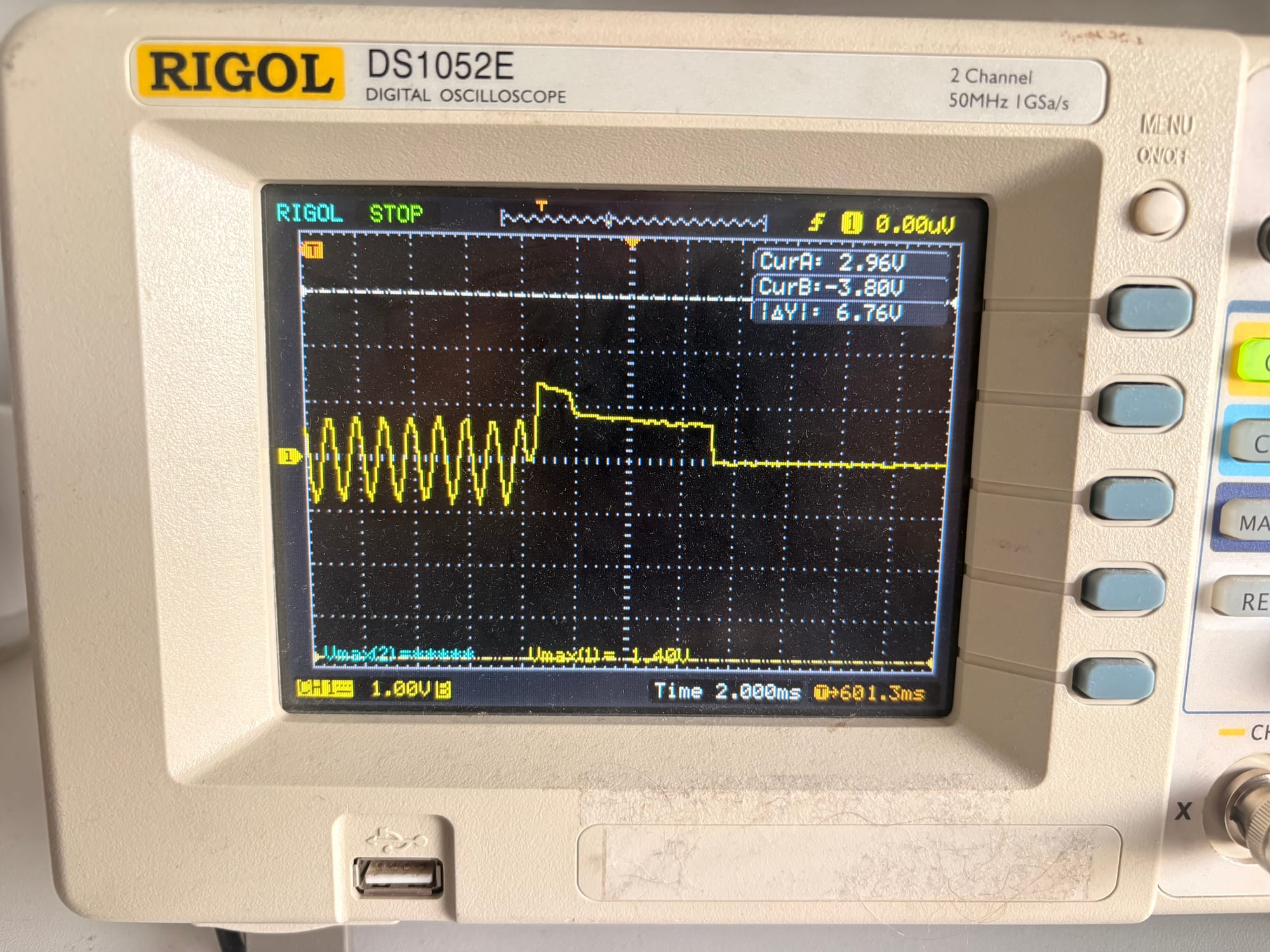
This visual confirms the return of the voltage spike when the large electrolytic capacitors were replaced with MLCCs.
The discrepancy was traced to the behavior of MLCCs, which can lose up to 50-60% of their capacitance when under DC bias. Because the board only provided 50uF of effective capacitance—far less than the 100uF tested on the breadboard—the chip did not have enough residual energy to power down quietly.
Mechanism of the Voltage Spike
The artifact occurs because the DAC detects a loss of I2S clock data from the ESP32 and mutes itself. However, it still requires a sufficient window of time to hold the output at 0V while the residual energy in its internal charge pump capacitors dissipates.
Because the power loss happens in roughly 1 millisecond, it is too fast for the chip's internal protections, which are designed for a slower fall of 6 milliseconds or more. The resulting spike is the energy from those charge pump capacitors dumping onto the line out.