Mice bioengineered to lack the enzyme granzyme K showed significantly improved heart and liver function and reduced kidney damage compared to their counterparts. This discovery identifies a specific protein that drives the physical degradation of tissues—such as liver stiffening and scarring—without unleashing the systemic inflammation that often complicates anti-aging research.
The Role of Granzyme K in Tissue Degradation
Researchers have pinpointed granzyme K as a key enzyme responsible for the aging of body tissues. Specifically, the protein contributes to the stiffening and scarring of organs, such as the liver, which are hallmark signs of biological aging.

This micrograph provides a visual example of the liver stiffening and scarring discussed as a primary effect of granzyme K activity.
Unlike many other biological processes associated with aging, the activity of granzyme K does not appear to trigger a significant inflammatory response. This distinction is critical for medical research, as many current anti-aging interventions are hindered by the side effects of chronic inflammation.
“Drugs that reduce the levels of this protein might one day combat the effects of ageing without impairing the body’s immune defences.”
— Found: a protein that drives ageing without unleashing inflammation
Experimental Evidence in Bioengineered Mice
To test the impact of this protein, scientists used bioengineered mice that were modified to lack the granzyme K enzyme. These mice demonstrated a measurable decline in age-related tissue damage compared to standard models.
The results showed that the absence of granzyme K led to improved heart and liver function. Furthermore, the mice exhibited less kidney damage, suggesting that the protein's influence on tissue integrity is systemic across multiple major organ systems.
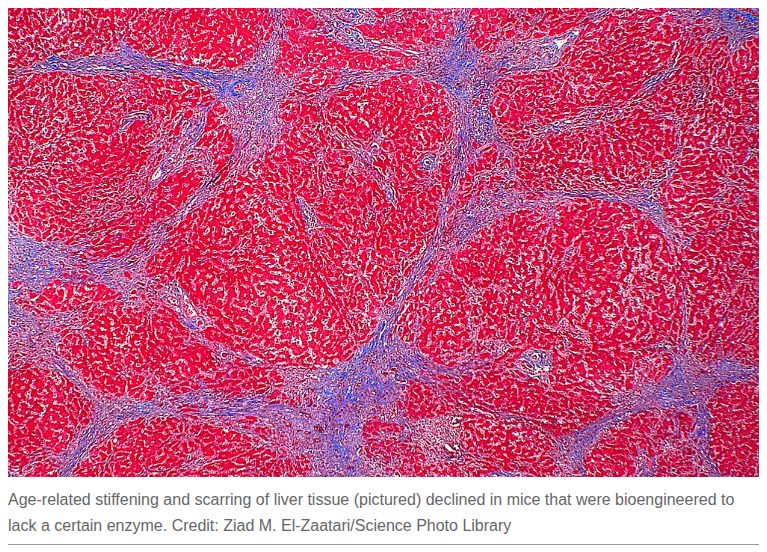
This image illustrates the specific physiological degradation of liver tissue that the study identifies as being driven by the granzyme K enzyme.
Clinical Implications and Future Research
The discovery opens a potential pathway for developing drugs that reduce granzyme K levels. Because the protein drives aging without unleashing inflammation, these drugs could theoretically combat age-related decline while leaving the body's primary immune defenses intact.
While the results in mice are promising, the transition to human applications remains a significant hurdle. Further study is required to determine how these findings translate to human physiology and to develop safe, effective pharmacological methods for inhibiting the protein.