A 26-year-old LEGO Studios camera, originally released in 2000, can now function as a live webcam on a modern MacBook Pro. By utilizing a user-space driver and the OBS Virtual Camera, developer Benjamin Kelly bypassed the fact that no official macOS drivers exist for the device's internal Logitech QuickCam Web hardware.
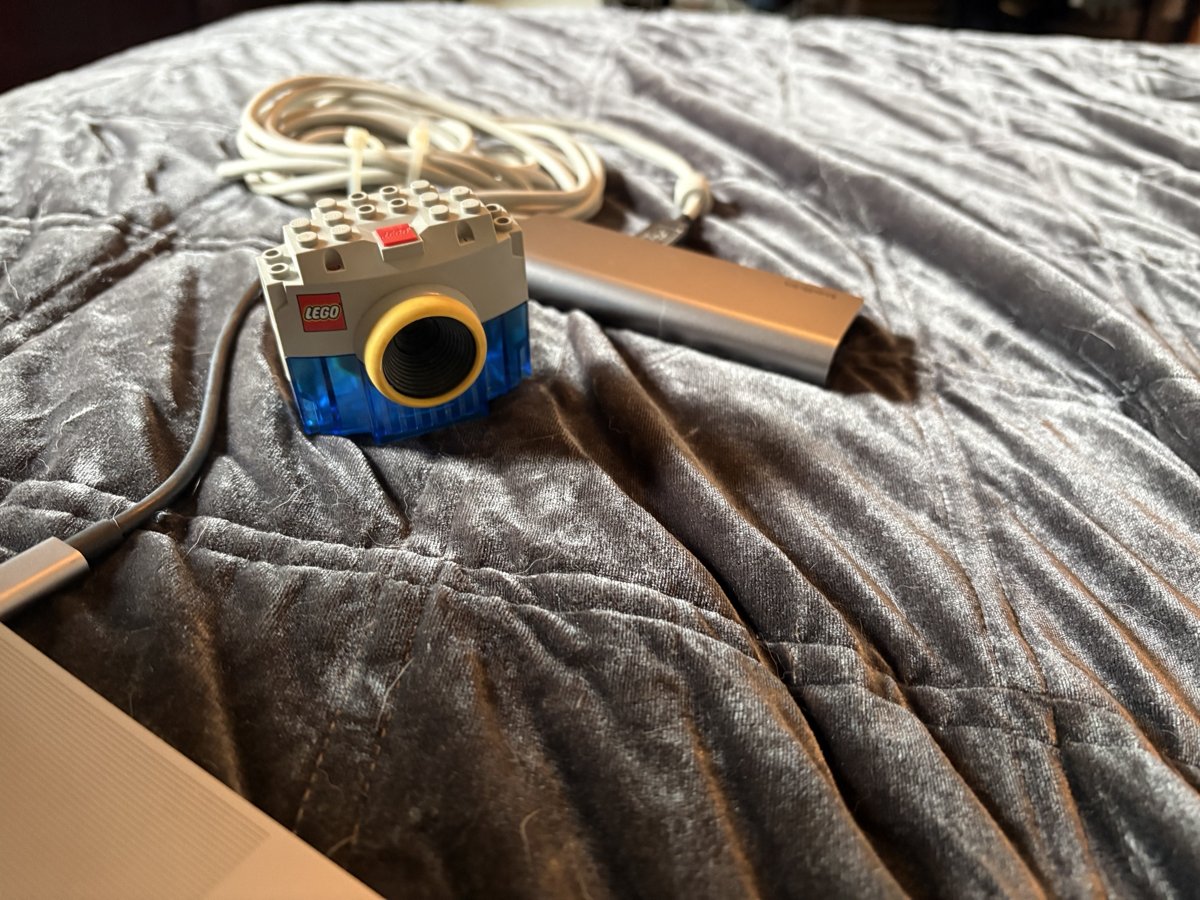
This image identifies the specific 26-year-old hardware being revived by the new user-space driver.
Bypassing Kernel Restrictions
Modern macOS makes loading kernel extensions difficult for security reasons, which typically prevents older USB devices from being recognized. To solve this, the developer wrote a driver called legocam using libusb, which allows a standard program to communicate directly with the USB device without requiring system-level kernel privileges.
The project consists of approximately 400 lines of C and Objective-C. It identifies the camera by its specific USB ID (046d:0850) and handles the low-level communication required to wake the sensor and begin streaming.
Reverse-Engineering the Protocol
Because the camera's specific communication protocol was no longer documented for macOS, the developer turned to the Linux community. By analyzing the gspca_stv06xx driver, they identified the exact sequence of register writes and the structure of the isochronous USB packets needed to operate the STV0610 USB bridge and VV6410 image sensor.
The legocam tool stitches these raw data packets together and outputs the frames as a raw 356x292 pixel Bayer pattern (bayer_grbg8) to stdout. This keeps the initial data processing simple and decoupled from the final display logic.
The Virtual Camera Bridge
While the raw data can be viewed using tools like ffplay, macOS requires a signed camera extension for a device to appear in apps like Zoom or FaceTime. To circumvent this, the developer created a second program called obscam.
Obscam captures the raw frames from the first program, converts them to color using libswscale, and pushes them into the OBS Virtual Camera. Because OBS already provides a signed extension, the LEGO camera becomes selectable in any standard video application as 'OBS Virtual Camera'.
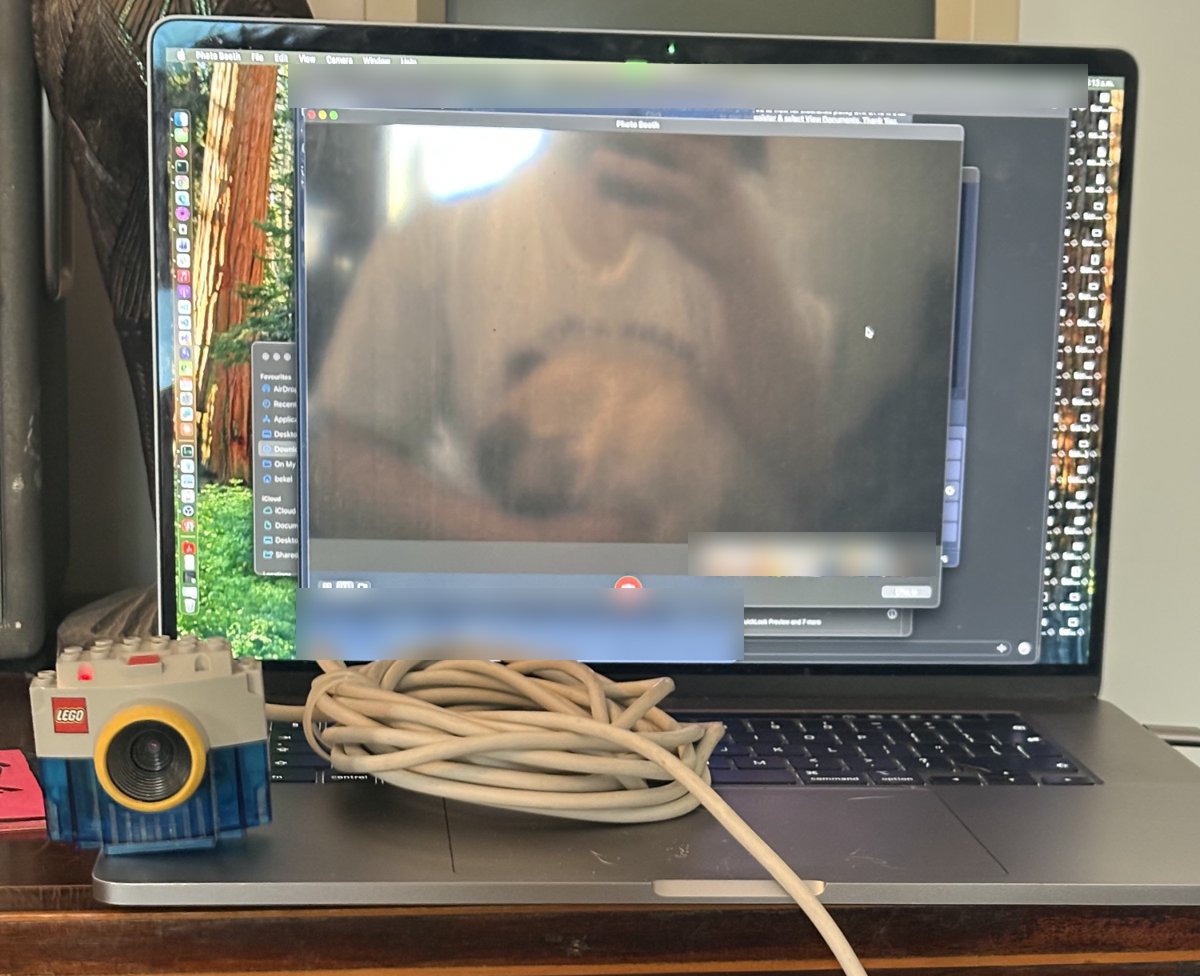
This visual demonstrates the successful integration of the vintage hardware with modern macOS software.
Hardware Limitations and Constraints
The setup faces significant performance trade-offs due to the age of the hardware. The frame rate is capped at roughly 5 frames per second, a limitation imposed by the original USB 1.1 bandwidth and the sensor's internal clock rather than the software implementation.
Additionally, the camera lacks automatic exposure, requiring the user to manually set exposure and gain values via command-line arguments. Currently, the microphone and the physical snapshot button on the LEGO brick remain non-functional.