Independent developers are reporting that the Apple App Store review process is nearing a breaking point due to a massive influx of AI-generated applications. While Apple typically aims to review 90% of submissions within 48 hours, many developers are now seeing their apps stuck in review for weeks or even months, disrupting simultaneous cross-platform releases.

This image illustrates the core issue of the article: the strain placed on Apple's review infrastructure by a flood of AI-generated apps.
The Impact of 'Vibe Coding' on Submission Volume
The rise of AI tools has lowered the barrier to entry for app development, enabling anyone to 'vibe code' their own iOS apps and AUv3 plugins. This has led to a significant increase in the volume of new submissions, which may be overwhelming the infrastructure Apple uses to vet software.
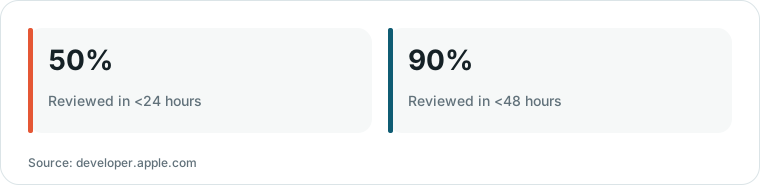
Chart drawn by HN Digest from figures reported by developer.apple.com; values are shown as written in the source.
This surge creates a 'crossfire' for established developers. For example, the synth 'Microvolt 3901' by Pittsburgh Modular faced a significant delay, arriving on iOS weeks after its VST counterpart due to the backlog in the review queue.

This image supports the discussion regarding the specific impact on the music app market and the 'vibe coding' trend.
“The Apple App Review process is currently on the verge of collapsing due to the flood of new iOS apps (AI or not), or even hallucinating, if you ask iOS developers.”
— AI is turning Apple’s app review process into a nightmare for developers
Automated Rejections and 'Hallucinated' Requirements
Developers have reported instances where the review process appears to be handled by automated systems that generate erratic or nonsensical demands. One developer reported being asked for licenses for 'Polyharmonic,' a term the reviewer seemingly hallucinated as a specific audio technology.
In other cases, unique features like MIDI functionality have been flagged as 'spam' simply because of their similarity to other apps. These automated hurdles can lead to a 'dead end' where developers submit appeals that are ignored by the system.
Consequences for Independent Developers
The current environment poses a risk to the livelihoods of developers who spend months coding flagship products. One developer reported having a flagship synthesizer rejected four times in a row as 'design spam' or 'duplicates' created by 'app generation template services,' despite the app being a high-quality, original work.
The trade-off of this AI-driven flood is a market saturated with low-quality apps that often lack basic support links or robust descriptions. This makes it harder for high-quality, hand-coded apps to reach their audience, potentially leading to a period of market disillusionment for indie creators.
Uncertainties in Review Automation
It remains unclear to what extent Apple is actively using LLMs or automated agents to handle the initial stages of the App Review process. While developers suspect automation is the cause of 'hallucinated' requirements, Apple has not publicly detailed how AI is integrated into their security and quality checks.
The long-term viability of the App Store's current review model remains an open question as the volume of AI-generated content continues to scale.
Discussion Digest
Commenters on Hacker News discussed the rise of 'vibe coded' apps, with some noting that many of these submissions are low-quality products where the developer simply asked an AI to write the copy and left the UI in a default, spreadsheet-like state.
One commenter argued that while the flood of apps is a burden on Apple, the platform's requirement for developers to pay for the review service remains a point of contention. Others noted that the review process has always been inconsistent, citing examples of music apps being rejected for 'copyrighted content' in screenshots even when the content was fake.
The discussion also touched on the difficulty of finding coverage for indie apps, noting that the lack of an affiliate program has made it less financially viable for media outlets to cover smaller iOS music releases.
What Hacker News readers are saying
- Experience: One developer shared their experience of being repeatedly rejected for 'design spam' and 'duplicating existing apps' despite their work being a unique creation. comment ↗
- Skeptical: One commenter argued that the issue stems from Apple's monopoly on distribution and questioned the fairness of their policies regarding app duplication. comment ↗
- Alternative: A commenter suggested that developers might consider distributing their software as web apps or via TestFlight to bypass some of the App Store's restrictions. comment ↗
- Experience: Another developer noted that while the current situation is difficult, many 'vibe coded' apps are produced by people without musical taste who use AI to generate low-quality tools. comment ↗
Summarized opinions from the Hacker News thread, not verified facts. Read the full discussion ↗