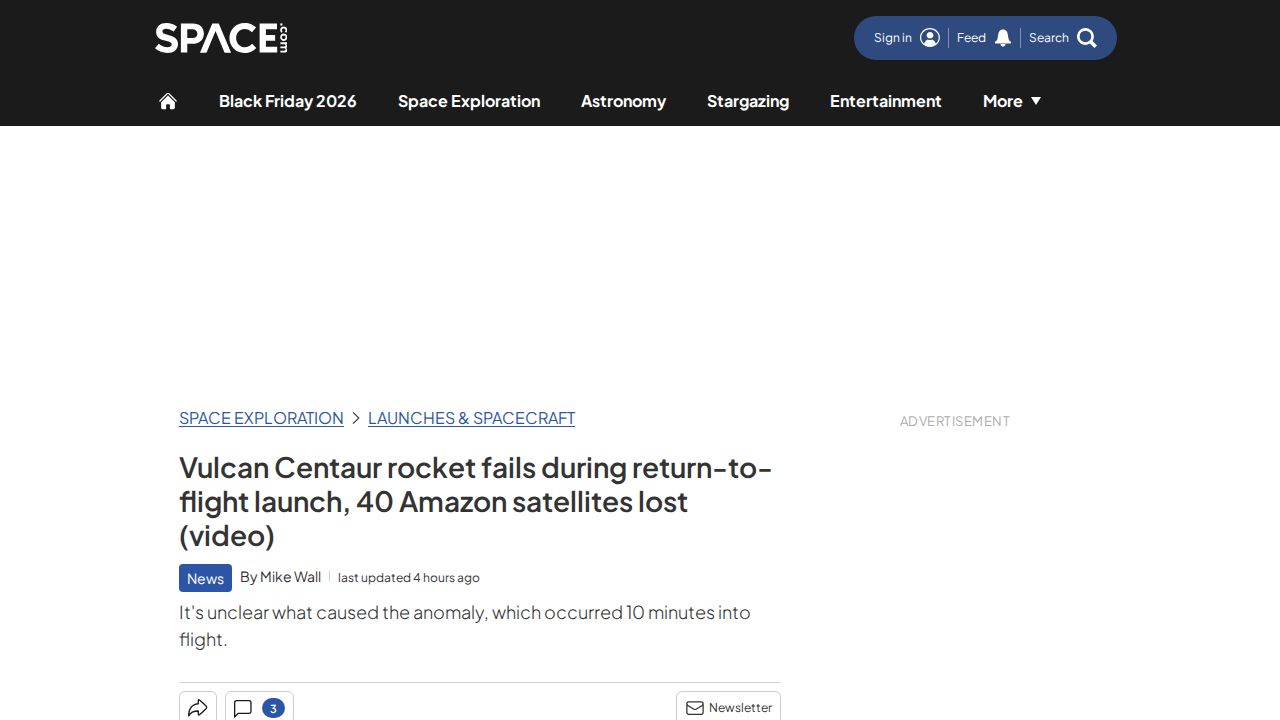
A return-to-flight launch of the Vulcan rocket resulted in the loss of 40 Amazon satellites, highlighting the high stakes and technical complexities of the current American space race. The failure occurred during a critical mission for Amazon's satellite deployment, raising questions about the reliability of the rocket's booster stage and its shared propulsion components.
Reported Launch Failure
The primary report indicates that the Vulcan rocket failed during a return-to-flight launch, leading to the loss of 40 Amazon satellites. This mission was part of a broader effort to deploy a massive constellation of satellites for Amazon's internet services.
Commenters on Hacker News noted that the official launch stream from ULA appeared to cut off near the end of the mission, transitioning to a PR video without providing a detailed explanation for the failure.
Technical Analysis of the Booster Stage
Technical analysis cited in the discussion suggests the fault is likely located in the booster stage. This distinguishes the issue from the Centaur upper-stage and the solid-rocket motors, which appeared to function correctly.
A specific anomaly involved the booster shutting down about 40 seconds later than the expected timeline. This delay implies the booster had an extra 40 seconds of fuel relative to expectations, which may suggest an under-performance of the propulsion system.
The engines involved are the Blue Origin BE-4 models. These engines were reportedly modified following a previous pad explosion, specifically regarding the oxygen valves. If the fault is tied to these engines, it could potentially impact other rockets using the same technology, such as Blue Origin's New Glenn.
Impact on Amazon and the Space Industry
The loss of these satellites impacts Amazon's aggressive deployment schedule. Following a previously waived deadline, Amazon now faces a target to deploy over 3,200 satellites by the end of July 2029.
The failure has sparked debate regarding the market position of United Launch Alliance (ULA). Some observers suggested the disaster could be a significant setback for ULA as it competes with SpaceX, which is currently expanding its dominance in the launch sector.
Furthermore, because the BE-4 engines are also linked to the Artemis program, a fundamental flaw in the engine's performance could risk the timelines of major lunar missions. While ULA remains a key contractor for NASA's Starliner and the SLS upper stage, the reliability of the Vulcan rocket remains a primary concern for its long-term commercial viability.
Uncertainties and Future Outlook
The exact cause of the failure remains a subject of investigation. While the booster stage is the primary suspect, it is not yet confirmed whether the issue is a unique Vulcan rocket fault or a systemic problem with the BE-4 engines.
The industry remains divided on the severity of the setback. Some argue that the failure is a standard part of the difficult process of space exploration, while others view it as a potentially catastrophic blow to ULA's standing in the rapidly evolving space race.
Pull Quote
The booster shut down about 40 seconds later than the expected timeline, which implies that it had an extra 40 seconds of fuel relative to expectations. It is possible that the modifications somehow caused an under-performance of the booster, which would doom the mission. [50511036]