In 1859, French mathematician Urbain Le Verrier identified a discrepancy in Mercury's orbit: the planet's perihelion shifted by 43 arc-seconds per century more than Newton's laws of motion predicted. Because Le Verrier had successfully used those same laws to predict the location of Neptune just years earlier, he proposed that a new, undiscovered planet—which he named Vulcan—was responsible for the gravitational pull on Mercury.
The Success of Neptune and the Birth of Vulcan
The scientific community's confidence in Newton's laws was nearly absolute in the mid-19th century. When astronomers noticed that Uranus's orbit did not align with these laws, they correctly hypothesized the existence of another body, leading to the definitive observation of Neptune in 1846.
This success created a powerful precedent. When Le Verrier found a similar, albeit much smaller, discrepancy in Mercury's orbit, he assumed the same mechanism—an unseen planet—was at work. This led to the naming and 'discovery' of Vulcan, a body predicted to orbit the Sun inside the orbit of Mercury.
“Vulcan's nemesis turned out, in fact, to be Albert Einstein.”
— Kevin Boone: The planet Vulcan: a cautionary tale that deserves to be better known
Observations and the 'Red Disc' Evidence
Despite the lack of physical evidence, Vulcan was 'confirmed' by numerous sightings over forty years. Even reputable US astronomers like James Craig Watson and Lewis Swift reported seeing Vulcan as a red disc in 1878.
The description of a disc was significant because, in the telescopes of the era, stars appeared only as points of light. By reporting a disc, observers were providing what seemed like definitive proof that the object was a nearby planetary body rather than a distant star.
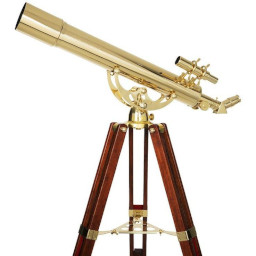
The image illustrates the tools used by 19th-century astronomers to observe the heavens and search for the predicted planet.
Einstein and the End of Vulcan
Vulcan's demise came not from a failure of observation, but from a superior theoretical model. Albert Einstein's general theory of relativity provided a mathematical framework where Mercury's orbit was perfectly in line with predictions, removing the need for a hidden planet.
The story highlights a fundamental risk in the scientific method: the tendency to favor a known, successful theory over a radical new one. Because Newton's laws had worked for two centuries, it was more 'logical' to invent a new planet than to suggest the laws of gravity themselves were incomplete.
The Psychology of Discovery
The tale of Vulcan illustrates how researchers can be influenced by 'wishful thinking' and sub-optimal experimental methodology. When scientists look hard enough for a specific result, they are prone to interpreting ambiguous data as confirmation of their hypothesis.
This phenomenon is not unique to the 19th century; it remains a relevant warning for modern science. It serves as a reminder that when money, reputation, and established theories are involved, the pressure to find what is expected can lead to the 'discovery' of things that do not exist.