Anthropic has demonstrated that its Claude Mythos Preview model can onboard AI workloads onto AMD MI355X GPUs in approximately three days, a process that historically required six to 12 months of manual engineering. By using the model to autonomously write almost 100% of the necessary kernels, the company claims it can achieve this with "basically no human intervention," significantly accelerating the integration of non-Nvidia hardware into its compute fleet.
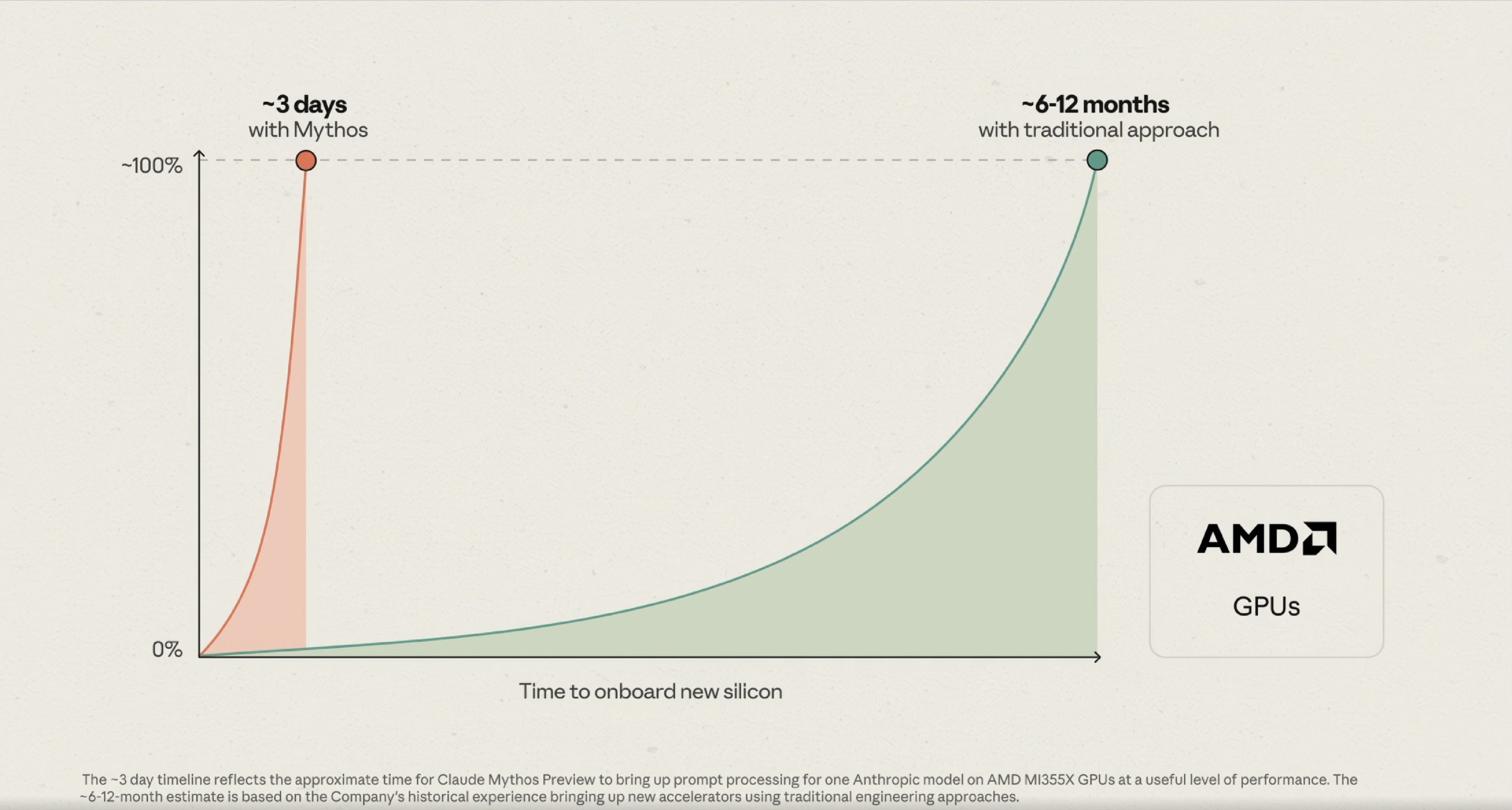
The chart visually demonstrates the core claim of the article: reducing a months-long engineering task to just three days.
Automating the CUDA Moat
For years, Nvidia's dominance in the AI market has been bolstered by CUDA, a mature software layer that makes it difficult for developers to port models to competing hardware. Traditionally, tailoring AI code to new accelerators required dozens of engineers working for months to write and optimize low-level kernels.
Anthropic's use of Claude Mythos to automate this process suggests a shift in the competitive landscape. By generating these kernels autonomously, the company can bypass the traditional software barriers that have historically protected Nvidia's market position.
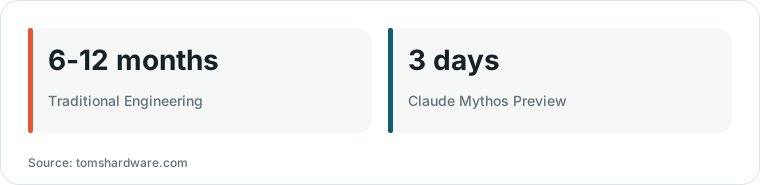
Chart drawn by HN Digest from figures reported by tomshardware.com; values are shown as written in the source.
Mechanism of Autonomous Onboarding
The three-day timeline specifically covers prompt processing (prefill) for one Anthropic model on AMD MI355X GPUs at a "useful level of performance." The model handles the complex task of porting or writing the kernels that allow the AI to communicate with the specific architecture of the AMD chips.
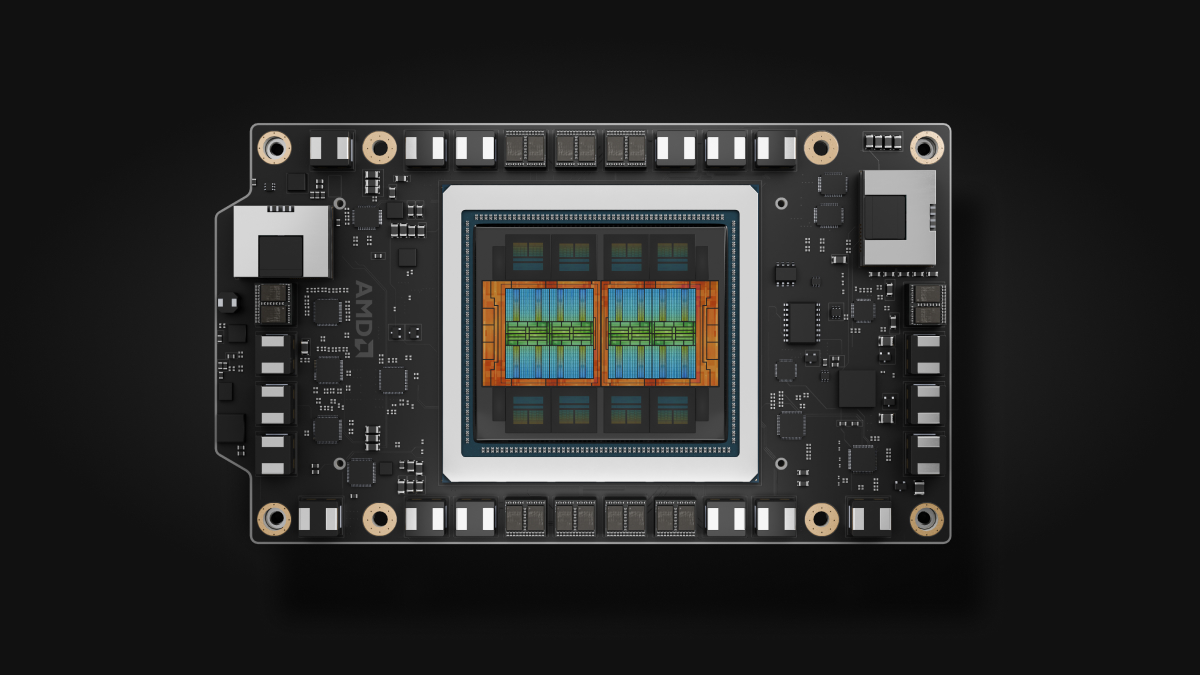
This image provides a visual of the specific hardware (AMD MI355X/MI350 series) discussed in the onboarding process.
This approach compares favorably to existing tools like AMD's HIPify, which is designed to translate CUDA code to AMD's ROCm platform. AMD's own leadership has noted that Claude may be more effective than HIPify because it incorporates web search capabilities to navigate complex technical requirements.
Strategic Implications and Limitations
Anthropic's strategy involves maintaining a diverse, fungible pool of compute to avoid over-reliance on a single provider. This multi-chip approach allows the company to leverage specialized hardware like Google's TPUs, which can now natively run models built in PyTorch.
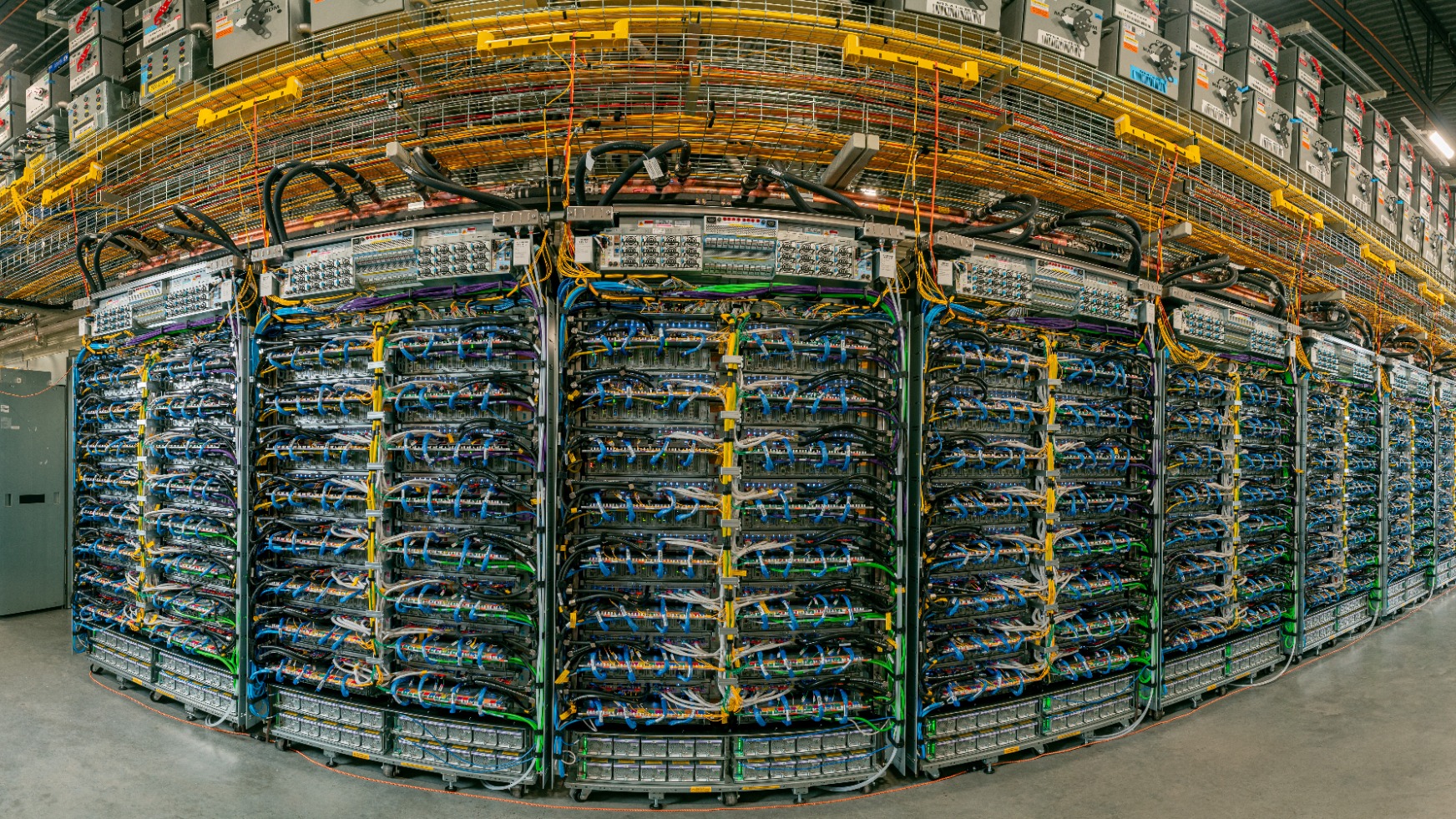
This image illustrates the 'fungible pool' of compute mentioned in the strategic implications section.
However, several uncertainties remain regarding this transition. Anthropic has not clarified if the three-day timeline includes the 'decode' (replying) step of model inference, and there is currently no public data comparing the performance of these AI-written kernels against Nvidia's native performance. Furthermore, while AI can write the code, the physical hardware remains a bottleneck, as agents still require GPUs to test and validate the generated kernels.