U.S. producer prices surged by 6.5% year-over-year in October, marking the highest annual increase since November 2022. While the monthly rise of 0.3% came in slightly below the expected 0.4%, the annual figure exceeded the previous month's 6.3% reading and sits just below the 6.6% forecast.
Reported PPI Trends
The original post reports that the U.S. producer prices rose 6.5% year-over-year in October. This figure represents a significant jump from the 6.3% recorded in the previous month.
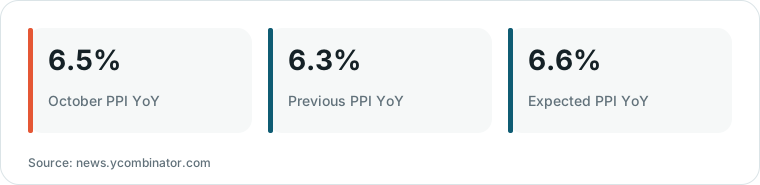
Chart drawn by HN Digest from figures reported by news.ycombinator.com; values are shown as written in the source.
The report notes that while the monthly increase was lower than some analysts expected, the annual trend remains a primary indicator of 'inflation at the factory gate.'
Additionally, the report mentions that September’s reading was revised upward from 1.3% to 1.4% before the October data was released.
“U.S. producer prices rose 6.5% YoY in October, the highest since November 2022, below expectations of 6.6% and up from 6.3% previously.”
— U.S. October PPI Rises 6.5% YoY, Highest in Nearly Four Years
Broadening Inflation Drivers
According to a Reuters article cited in the discussion, inflation is beginning to spread beyond the energy sector. Food prices increased by the most in eight months, largely driven by expensive diesel raising transportation costs.
Prices for goods excluding food and energy also logged their biggest gain since May. This broadening suggests that inflationary pressures are becoming more systemic across different categories of production.
These trends provide a basis for the view that the Federal Reserve could maintain a hawkish stance, potentially continuing to raise interest rates after the next month's expected hike.
Fiscal Deficit and Monetary Policy Debates
Commenters on Hacker News debated the effectiveness of traditional monetary policy in the current fiscal environment. One commenter, writing as ericd, argued that the massive government budget deficit and high interest payments—estimated at $1T per year—might make raising rates less effective.
The argument suggested that high interest payments effectively increase the rate of money printing, which could counteract the effects of decreasing private credit creation. This perspective frames the current inflation as an emergency tied to fiscal policy rather than just monetary supply.
Other participants in the discussion pointed to the origins of current inflation, attributing it to Covid-era supply shocks and government spending. One commenter, harmmonica, suggested that the current situation is a result of aggressive handouts to businesses and the wealthy during the pandemic.
Debt and Systemic Solutions
The discussion also touched on the long-term sustainability of U.S. debt. One commenter, bobthepanda, suggested that the economy may be moving toward 'inflating away' the value of old debt as a primary method of debt management.
Alternative systemic solutions were also proposed by participants. For example, one commenter, seniorThrowaway, argued that addressing the budget deficit requires structural changes to the medical system through the application of anti-trust laws to reduce costs at the source.