AgentRun has launched an open-source platform designed to solve the inefficiency of AI agents that repeatedly perform the same tasks, leading to high token costs and redundant planning. By introducing a self-improvement layer and a decoupled computing architecture, the platform allows agents to 'learn' from previous runs and only utilize expensive hardware when specifically required.
Solving the Repetition Problem
Standard agent harnesses are often built to loop until a problem is solved, which can lead to agents 'rediscovering' the same APIs or documentation every time they run a familiar task. AgentRun addresses this by enabling agents to leave notes, hints, and successful strategies after a run.
Over time, the platform helps an agent transition from a loop-based approach to a general solution written in a workflow DSL. This allows the agent to reuse the workflow in future runs rather than planning the entire process from scratch every time.
“It's like handing Einstein a stack of paperwork: he'll get it done, but he'll think hard about every form, every time.”
— Introducing AgentRun: Run smarter agents. Use fewer tokens.
The 'Train-Network' Computing Model
AgentRun separates the 'brain' of the agent from its 'hands' by running the agent's logic in a cheap Node runner. This runner manages hundreds of loops simultaneously and only connects to a 'computer'—such as a GPU-enabled VM or a persistent Android phone—when a specific tool call requires it.
This architecture functions like a train network where the agent picks the appropriate 'train' for each leg of a journey. For example, it might use a small local runner to read files but switch to a 'bullet train' (a high-powered GPU) only for model fine-tuning, significantly lowering costs for multi-step operations.
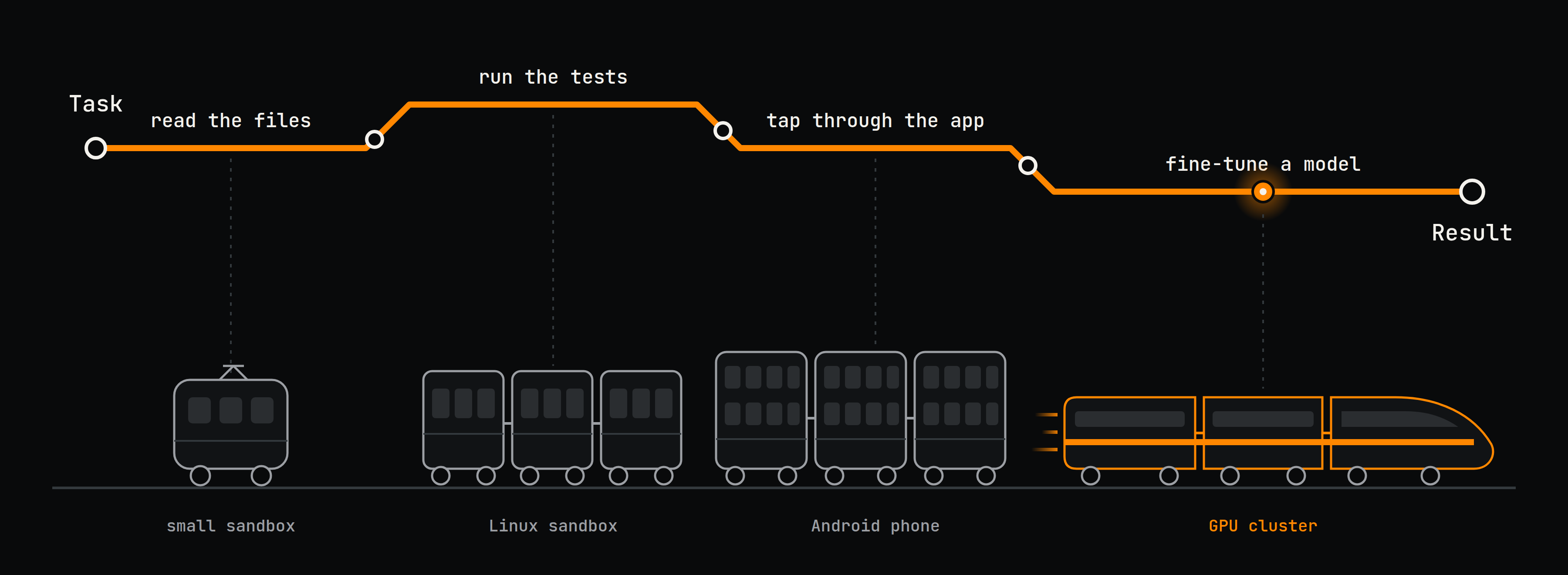
This visual explains the decoupled computing architecture where the agent selects the most efficient hardware for specific parts of a workflow.
Workflows vs. Agents
The platform identifies that many tasks do not actually require a full agentic loop. AgentRun allows users to build workflows that can make decisions, classify data, or run smaller sub-agents for specific steps like web research.
By using web-grounded decisions, these workflows can check facts on the web at a fraction of the cost of a full agent. The platform includes a visualizer that lets users watch these workflows run node-by-node, pause them, and inspect every decision point.
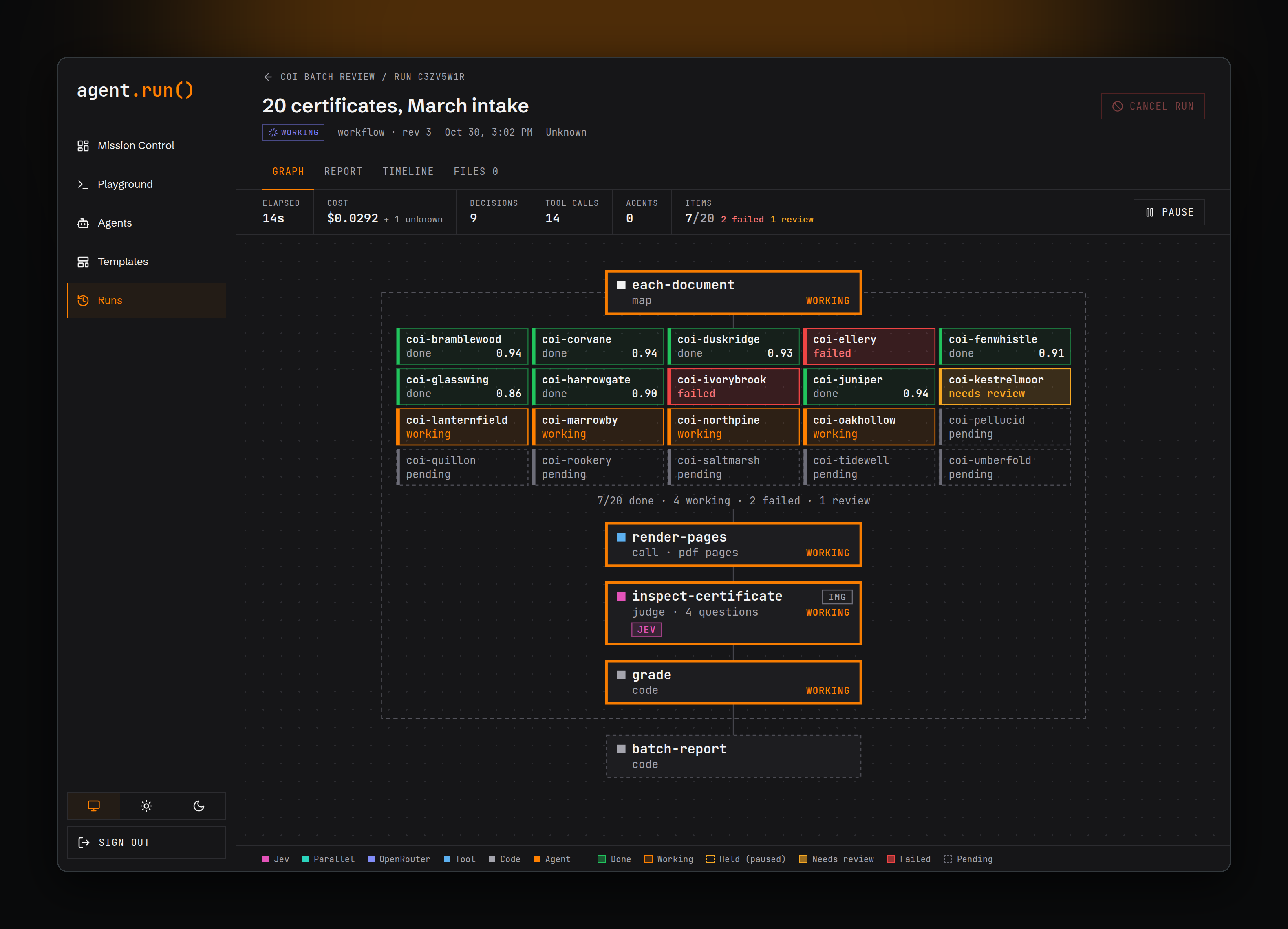
This screenshot demonstrates the platform's ability to visualize complex workflows and monitor their progress in real-time.
Limitations and Integration
While AgentRun supports various harnesses via the Agent Client Protocol, the specific performance gains of the workflow DSL compared to other engines like Temporal or Airflow are not detailed in the current documentation. Additionally, while the platform provides a comparative cost chart, the exact pricing for its 'on-demand' computers remains variable based on the specific hardware selected.
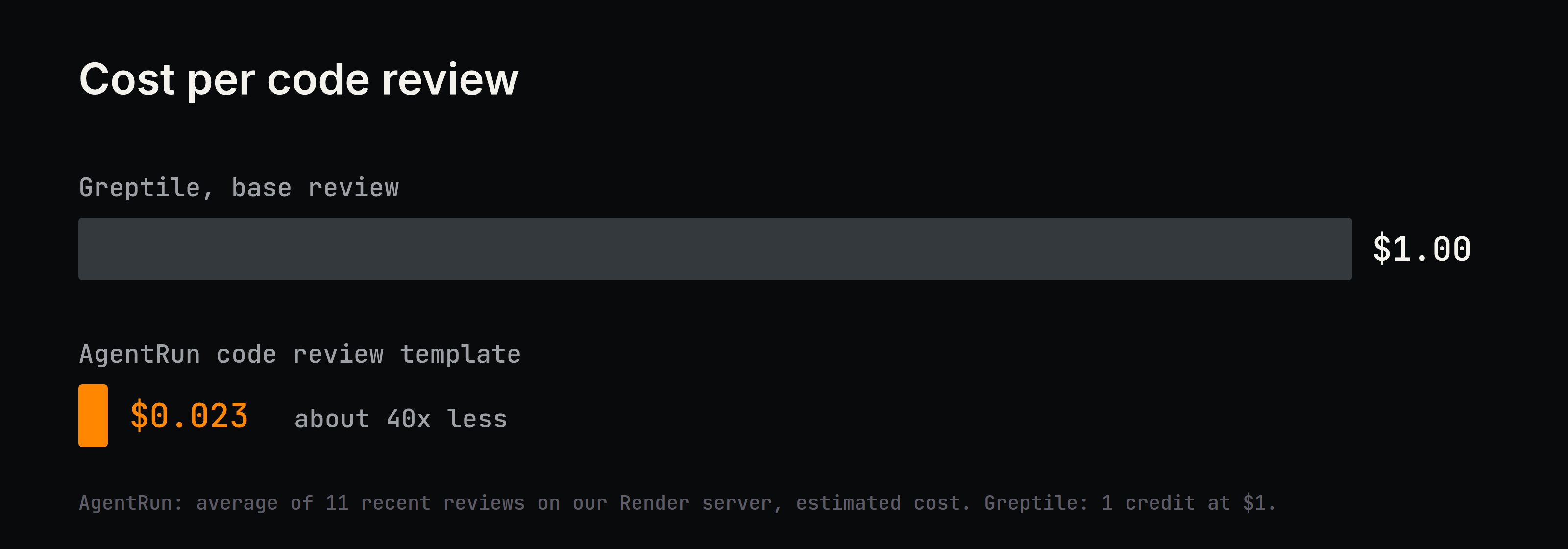
This chart supports the claim that the platform's workflow-based approach can drastically reduce token costs compared to standard agentic loops.
What Hacker News readers are saying
- Alternative: One commenter suggested that using a local orchestrator to manage PR reviews is a more cost-effective and higher-quality alternative to using subscription-based services. comment ↗
- Open question: A user inquired about the possibility of integrating a large-scale government registrar database as a data source for the agents. comment ↗
- Experience: One developer shared their experience building a similar autonomous agent in Python, noting they particularly liked the project's mission control feature. comment ↗
- Skeptical: One commenter expressed skepticism regarding the progress of AI capabilities, arguing that users need to provide more specific opinions rather than relying on broad prompts. comment ↗
Summarized opinions from the Hacker News thread, not verified facts. Read the full discussion ↗