In 1975, a PhD student at the University of Utah named Martin Newell created a 3D model of a teapot using 28 cubic Bézier patches to approximate the proportions of a physical Melitta by Friesland Porzellan teapot. While it began as a personal dissertation project, this model—and its subsequent iterations—became the most recognizable symbol in the history of computer graphics, serving as a standard for evaluating rendering algorithms for over half a century.

This diagram illustrates the historical progression of the teapot's design from the original Newell model to modern iterations.

This image depicts the specific 3/4 scale modification that defined the standard appearance of the teapot.
From Dissertation to Global Symbol
The teapot first appeared in the graphics community at SIGGRAPH in 1976. It was featured in a landmark paper on texture and reflection, which was subsequently used as the cover for the October 1976 issue of the Communications of the ACM journal.
Because of its frequent use in technical papers and art installations, researchers jokingly dubbed it the 'Teapotahedron' and 'the sixth Platonic solid.' It remains a primary tool for testing hidden surface removal and reflection continuity.
“The Utah Teapot has been the symbol of computer graphics.”
— Utah Teapot
Iterative Technical Refinements
Over the decades, various researchers at the University of Utah modified the model to solve specific rendering challenges. Frank Crow added a round bottom in 1987, while Hank Driskill introduced a trimmed NURBS model in 1992 to create a solid interior and a perfectly round body.
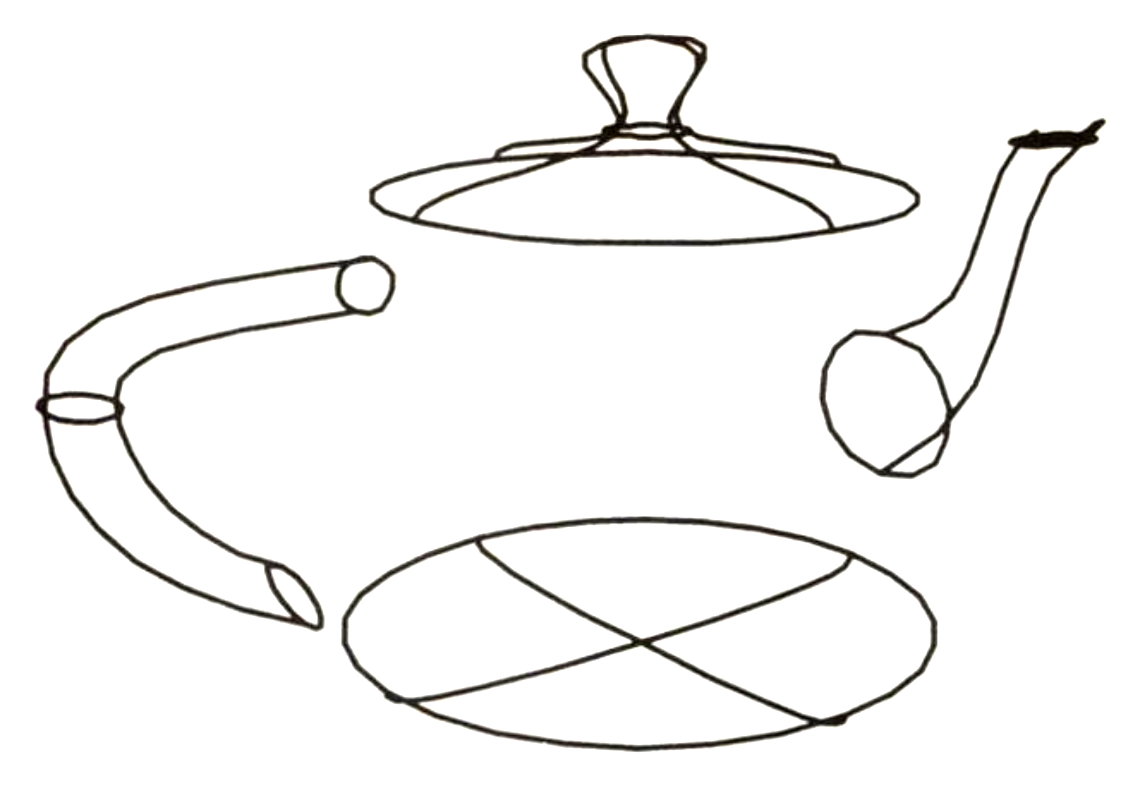
This technical figure explains the structural changes made by Frank Crow to the teapot's geometry.
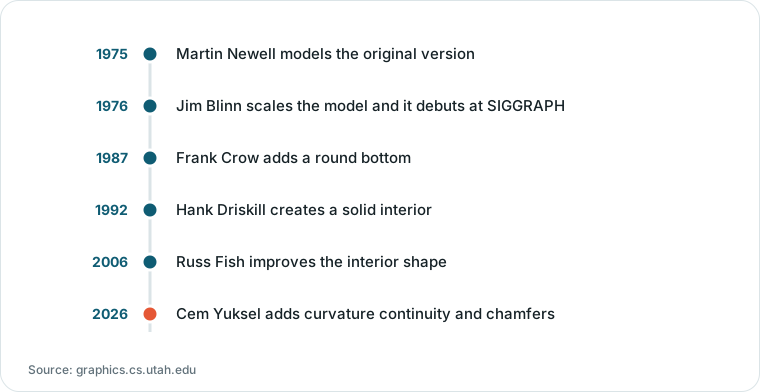
Chart drawn by HN Digest from figures reported by graphics.cs.utah.edu; values are shown as written in the source.
The most recent 2026 version by Cem Yuksel introduces curvature continuity. This ensures that reflections on the teapot appear smooth by eliminating sharp changes in surface normals, a significant technical upgrade over the earlier cubic Bézier approximations.
Geometry and Continuity Trade-offs
Modern versions of the teapot balance historical identity with modern mathematical requirements. For example, the 2026 version includes small chamfers where the handle and spout meet the body to ensure surface normal continuity, even though the physical teapot used as a reference had much larger chamfers.
While the 2026 model uses fewer patches for the interior than previous versions, it maintains the round bottom of the Crow model to preserve the most commonly recognized form of the object.
What Hacker News readers are saying
- Alternative: One commenter noted that the teapot's origin is linked to Friesland, which had a complex relationship with the Melitta brand at the time. comment ↗
- Experience: A commenter who works at the University of Utah shared their experience attending a graphics symposium where they saw both a signed render and a physical replica of the teapot. comment ↗
- Skeptical: One reader observed that the 3D model appears somewhat squished compared to the original Melitta pot. comment ↗
Summarized opinions from the Hacker News thread, not verified facts. Read the full discussion ↗