For decades, the study of life's origins was defined by a 'crisis' of bickering over which specific molecule—RNA, lipids, or proteins—acted as the primary spark for biological existence. A new generation of researchers is now moving beyond this search for a single 'first molecule' to investigate how complex chemical reactions evolved into stable systems capable of storing and passing on information.
From Philosophy to Prebiotic Chemistry
The scientific pursuit of life's origins shifted from philosophical pondering to empirical chemistry in the mid-20th century. In 1952, Stanley Miller performed a landmark experiment using a glass apparatus to simulate a primordial atmosphere and ocean, successfully producing amino acids from simple gases and electrical sparks.
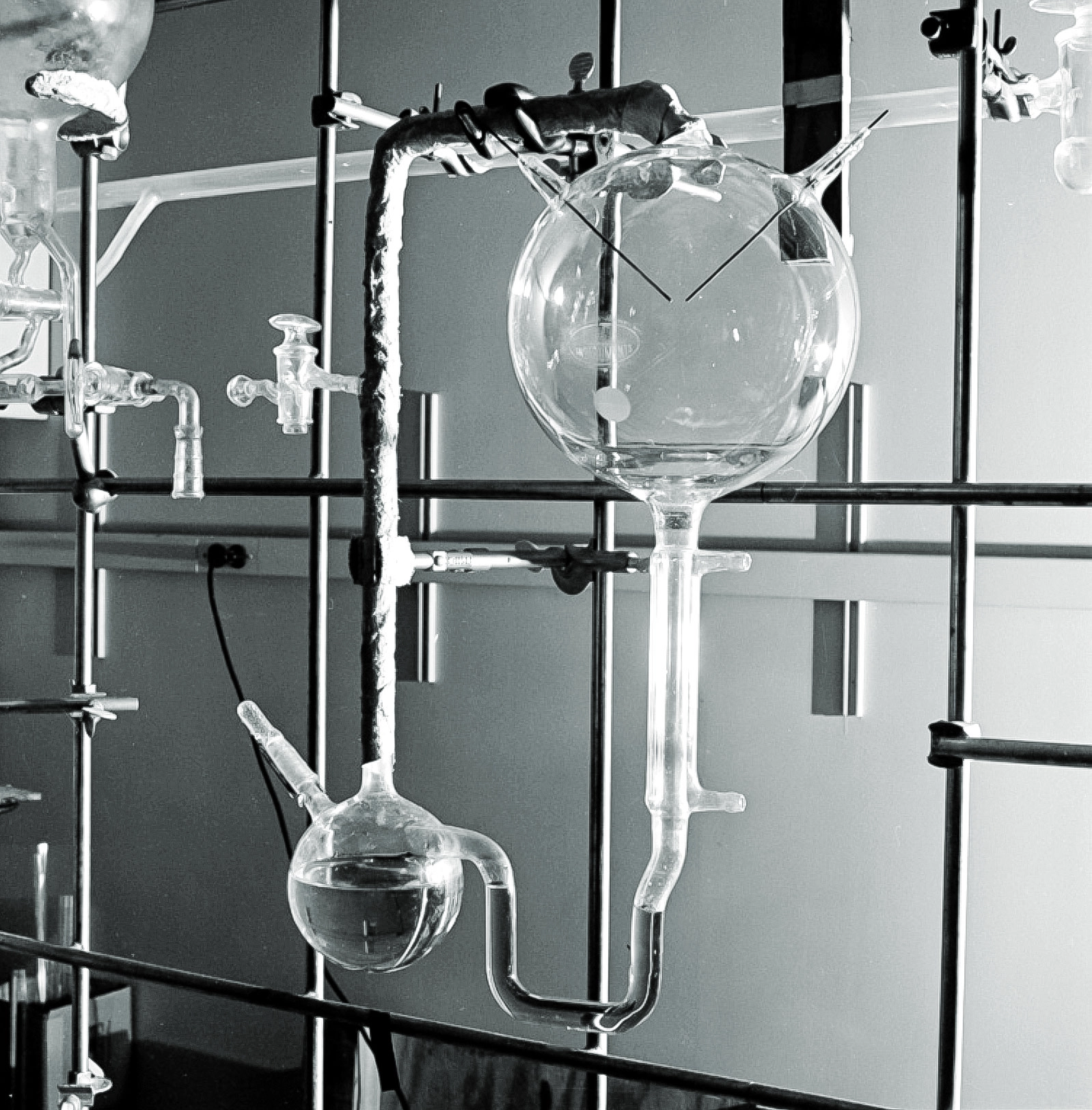
This image illustrates the specific glass apparatus used by Stanley Miller in his landmark 1952 experiment.
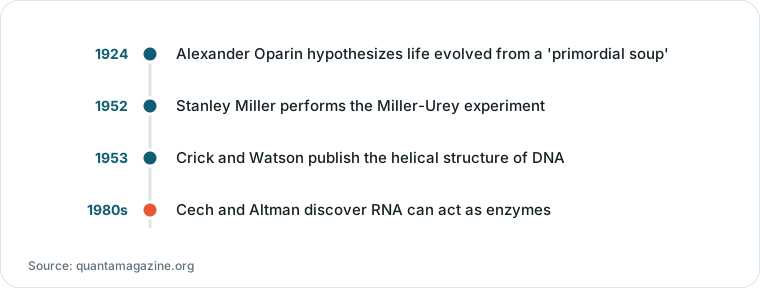
Chart drawn by HN Digest from figures reported by quantamagazine.org; values are shown as written in the source.
This experiment proved that the building blocks of life were not metaphysical mysteries but products of chemistry. However, the discovery of the DNA double helix in 1953 quickly shifted the focus toward genetic molecules as the primary suspects for life's origin.
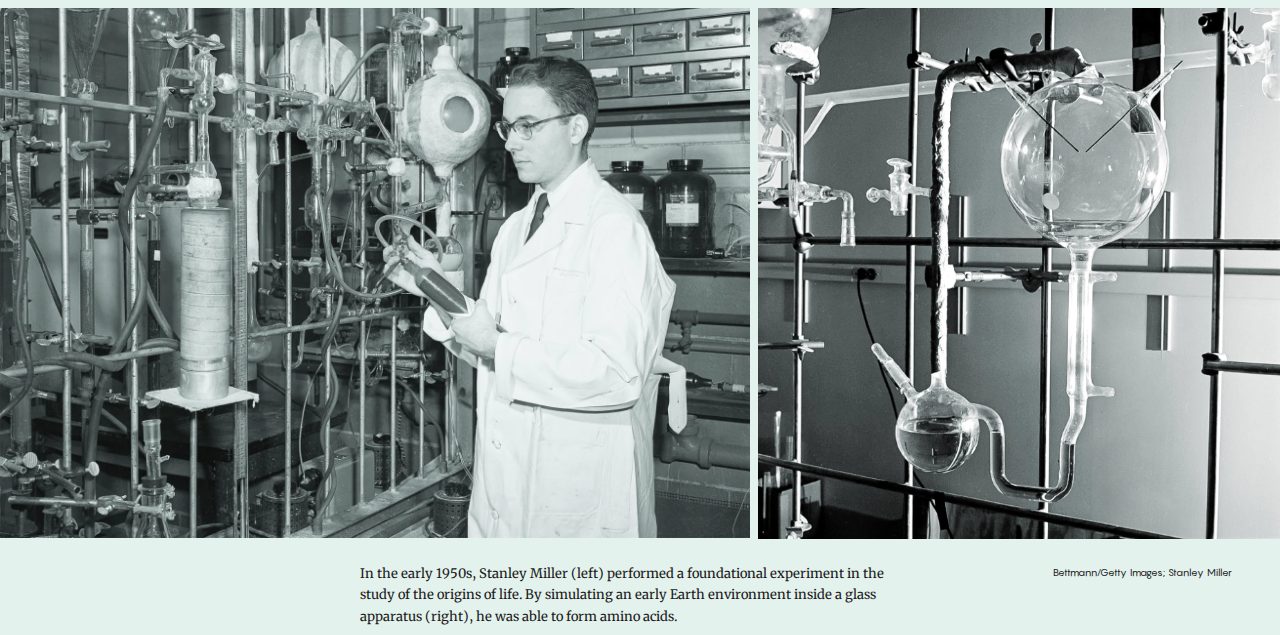
This screenshot provides a visual summary of Miller's work and the experimental setup described in the text.
The Era of Molecular Bickering
As the field matured, it became dominated by competing theories that sought to identify a single progenitor. The 'RNA-world' theory proposed that RNA molecules, which can both store information and act as enzymes, were the first biological entities.
Other theories emerged, such as the 'metabolism-first' world, which suggests life began as self-sustaining networks of molecules in 'autocatalytic sets.' These theories were often pitted against one another, leading to a period of intense academic friction where researchers argued over whether life started in 'warm little ponds,' hydrothermal vents, or ice patches.
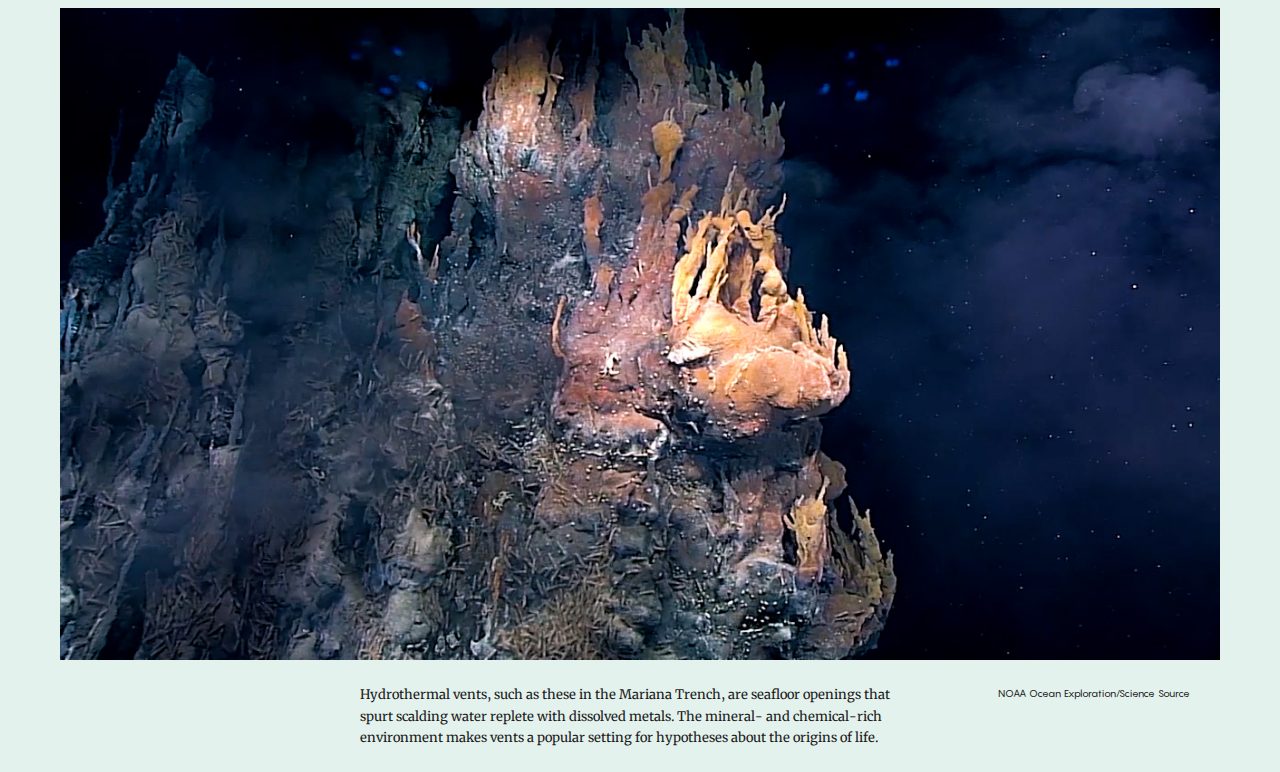
The image depicts the hydrothermal vents mentioned as a potential site for early life's emergence.
A New Synthetic Biology Approach
Modern researchers are now 'unshackling' themselves from the requirement of a single starting molecule. Instead, they are using synthetic biology to push backward from the living world using genetic tricks, while chemists push forward from nonliving mixtures to see how these processes stabilize.
The goal is to understand how molecular processes became a stable evolutionary system. Scientists are now asking what life *does*—how it captures energy, senses its environment, and forms dynamic communities—rather than just what it is made of.
The Challenge of Evolutionary Continuity
A significant remaining hurdle in the field is the transition from chemistry to biology. While experiments have shown that many precursors to life's ingredients form easily under early Earth conditions, it is much harder to explain how these processes became a continuous lineage.
The central question remains how these early systems achieved enough consistency and imperfection to persist for billions of years on an ever-changing planet. Researchers are currently probing these novel biological systems to find the mechanism that allowed chemistry to become biology.