At 81 years old, M John Harrison has become the oldest winner in the history of the Booker Prize, securing the £50,000 award for his postapocalyptic novel, 'The End of Everything'. This win is particularly significant because Harrison is the first author to emerge from the 'bona fide' science fiction world to receive the prestigious literary honor.
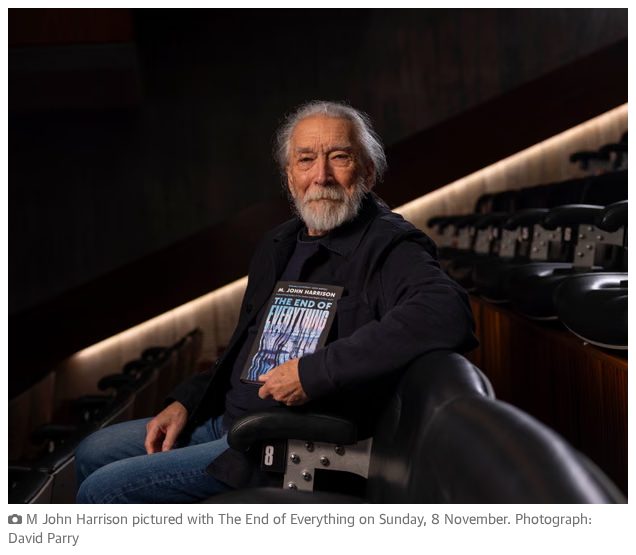
This image identifies the author and the specific work that won the Booker Prize.
A Historic Milestone for Science Fiction
While many previous Booker Prize winners have included science fiction elements in their work, Gaby Wood, chief executive of the Booker Prize Foundation, noted that Harrison is the first winner to come directly from the science fiction genre. This win represents a major shift in the mainstream literary establishment's recognition of the genre.
Harrison, who was born in 1945, has spent decades working to bridge the gap between speculative fiction and literary fiction. He has stated that he has been working for 40 to 50 years to shift the balance, arguing that well-written science fiction should be considered literary fiction.
“Harrison’s was “the first Booker winner to have emerged from the bona fide SF world”.”
— M John Harrison becomes first science fiction author to win the Booker prize
Narrative Style and Setting
'The End of Everything' is set a few decades from now on the Kent coast, years after a disaster that no one can properly account for. The story follows Phillip Tennent and his aunt Marnie as they attempt to survive alongside the iGhetti—vast, shape-changing beings whose origins and intentions are never explained.
The novel is described as a 'disaster story in which the disaster is the failure to comprehend.' Harrison intentionally passed on some of the characters' puzzlement and confusion to the reader, aiming to reflect the collapse of rationality in the modern era.
Critical Reception and Trade-offs
The book has received a polarized reception from critics and readers alike. Some reviewers have praised it for exposing the 'terrifying insecurity of life right now,' while others have noted that its abstract and flowery writing style may not be for everyone.
The judging panel highlighted the book's ability to turn the reader 'upside down' while leaving them with a 'twinge of optimism.' However, the very qualities that led to its win—its brevity and its refusal to provide clear explanations for its central mysteries—remain points of contention for some readers.