In 2025, data centers were responsible for only 38% of an $8.25 billion bill for new energy infrastructure, leaving the remaining 62%—over $5 billion—to be covered by residents. This disparity is particularly acute for lower-income and rural households, who may see extra energy costs consuming up to 28% of their total income.
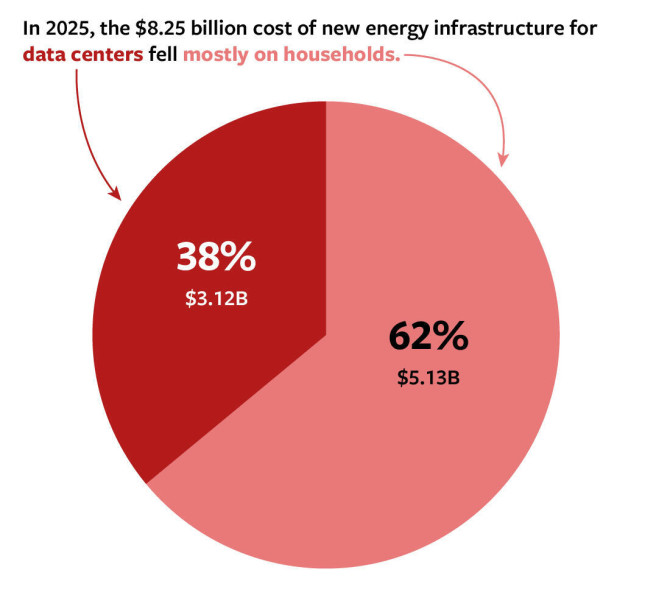
This visual illustrates the primary finding that households bear the majority of the cost for new energy infrastructure required by data centers.
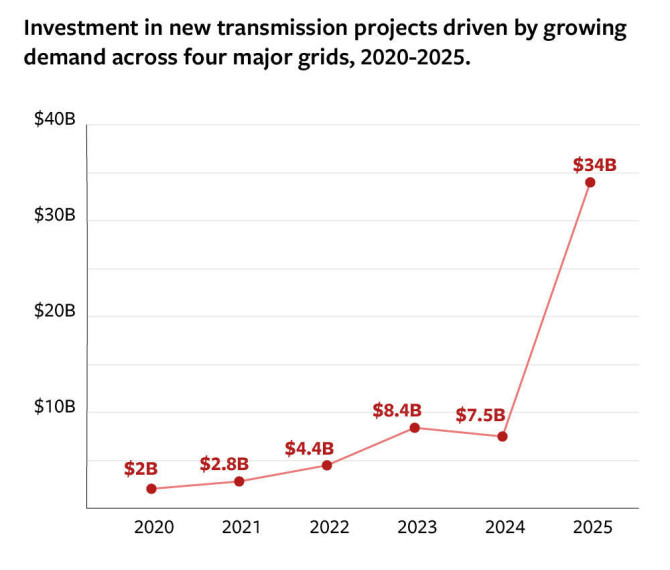
The chart supports the data point regarding the massive increase in transmission investment driven by data center growth.
The Infrastructure Cost Gap
Cornell researchers analyzed four major U.S. power grids and found that while data centers drive massive demand, the current rules for paying for grid expansion are lagging. Because infrastructure costs are often allocated based on past energy consumption, new data centers do not pay for the capacity they need to be built.
This 'chicken-and-egg' problem means that because a data center is not yet consuming power before its infrastructure is ready, the costs of those upgrades fall on existing customers. This creates a system where the entities driving the new demand are not the primary payers for the expansion required to support them.

Chart drawn by HN Digest from figures reported by news.cornell.edu; values are shown as written in the source.
“It’s not just a question of generating enough electricity but of whether the rules for paying for the grid are keeping pace with who is driving new demand.”
— Data centers need power – lower income, rural residents pay the price | Cornell Chronicle
Disproportionate Impact on Vulnerable Communities
The study highlights a significant geographic and socioeconomic divide in how these costs are distributed. Rural residents, who are also less likely to use AI tools like ChatGPT, saw a higher share of their income spent on energy compared to urban residents.
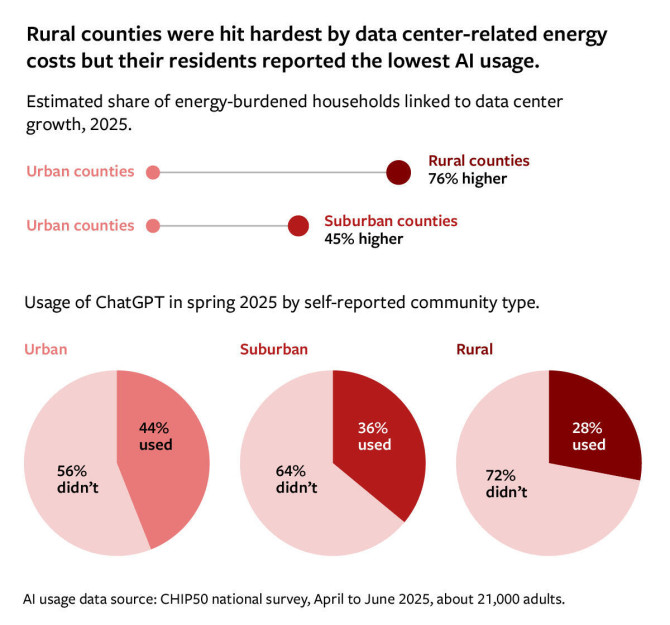
This chart visualizes the socioeconomic divide where rural residents bear high costs while utilizing fewer AI tools.
The impact of these costs is not limited to the immediate vicinity of a data center. Because the power grid connects communities across state lines, residents in states like New Jersey, Pennsylvania, and Ohio are helping to fund grid upgrades linked to data center growth in Virginia.
Economic Trade-offs and Proposed Solutions
The research notes that data centers do provide economic benefits, with each gigawatt of capacity potentially creating 15,000 jobs across the economy. However, the study suggests that these benefits must be balanced against the infrastructure costs borne by the public.
To mitigate the burden, researchers suggest that data centers could cut power use during peak demand hours or be charged directly in line with the new demand they add. Other proposed strategies include state-level programs to direct funds to low-income households to offset higher energy expenses.
What Hacker News readers are saying
- Technical note: One commenter critiqued the study's methodology, arguing that it incorrectly assigns infrastructure costs based on peak energy demand rather than the actual cost of the upgrades themselves. comment ↗
- Technical note: Another commenter argued that the primary issue is cost allocation rather than deployment speed, suggesting that faster permitting would only accelerate the subsidy to data centers by households. comment ↗
- Technical note: One reader suggested that the rising costs are a result of policy choices regarding fixed supply regimes rather than a physical requirement of the universe, noting that legislative action could address the issue. comment ↗
- Technical note: A commenter proposed that local governments could treat data centers as an opportunity by charging high property taxes to provide dividends or benefits to residents. comment ↗
Summarized opinions from the Hacker News thread, not verified facts. Read the full discussion ↗