A team of researchers at Cornell University discovered that grazing exactly two sheep per hectare around solar arrays can increase the abundance of beneficial insects, such as honey bees and lady beetles, by 38% compared to mowed control plots. This finding highlights a potential synergy in 'agrivoltaics'—the dual use of land for solar energy and agriculture—where livestock management can simultaneously support biodiversity and renewable energy production.
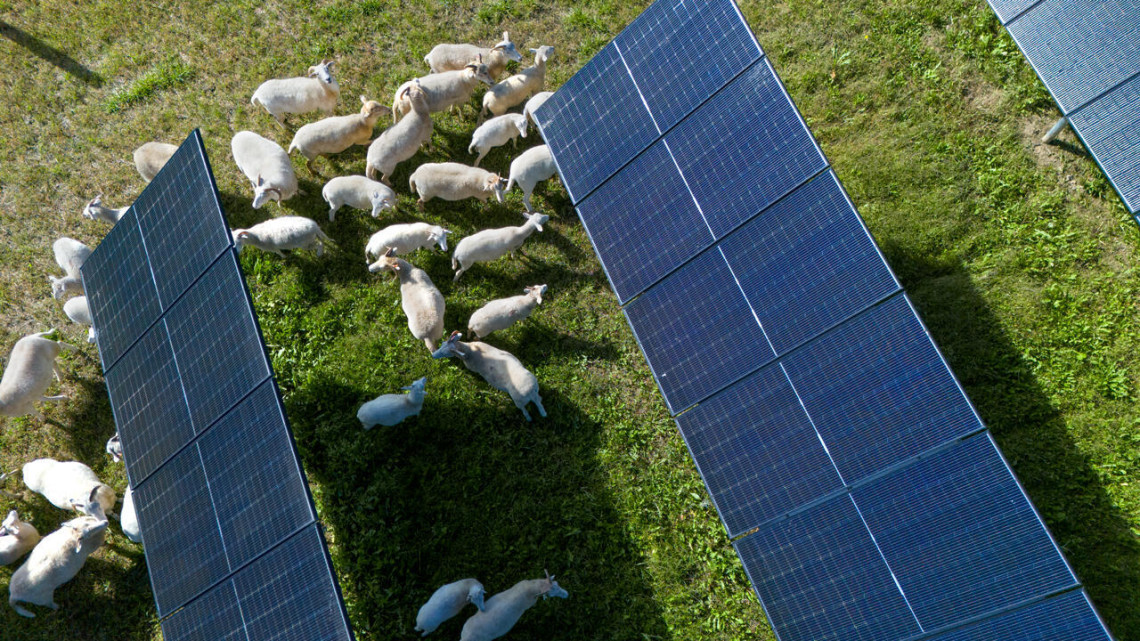
This image provides a visual example of the solar arrays and surrounding land used in the Cornell University study on agrivoltaics.
Ecological Trade-offs in Agrivoltaic Systems
The study, published in Environmental Research Letters, examined how different 'stocking rates'—the number of sheep allowed to graze a plot—affect the local ecosystem. Researchers found that while four sheep per hectare provided similar insect abundance to mowing, the highest grazing density of eight sheep per hectare significantly harmed honey bee populations.
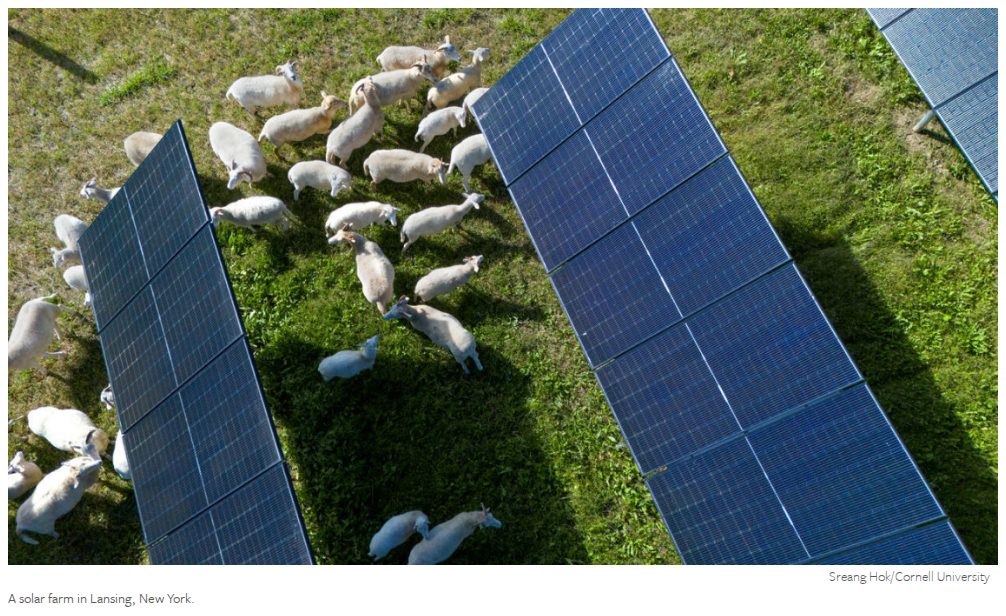
This screenshot captures the specific research site and visual data presented in the primary source article.
The 83% surge in honey bees at the lower stocking rate suggests that moderate grazing maintains a habitat that supports pollinators better than mechanical mowing. These findings provide a scientific framework for developers and municipalities to balance land management with biodiversity goals.
“When we talk about sustainable solar development, integrating these discussions into a single framework is really helpful to farmers and community decision makers.”
— Sheep grazing in solar fields offers farmers economic, ecological gains | Cornell Chronicle
Economic Models for Solar Grazing
Beyond ecology, a second Cornell research team developed a tool to help farmers navigate the logistics of solar grazing. The spreadsheet-based model allows growers to calculate the most profitable flock sizes by weighing target sizes against costs, expected revenues, and the specific grass growth patterns of a solar site.
This tool is already being used by companies like United Agrivoltaics to onboard new farmers. It helps ensure that if a farmer lacks enough sheep to manage the grass, they can identify alternative methods, ensuring the contract remains viable for both the land owner and the livestock producer.
Impact on Rural Economies
Solar grazing represents a shift from farmers paying to lease land to farmers receiving payment for grazing services. This steady income allows for the expansion of sheep operations, which could potentially address the fact that roughly half of the lamb and mutton consumed in the U.S. is currently imported.
Proponents suggest that scaling the domestic sheep industry through solar contracts could revitalize rural economies by bringing back processors and supporting industries. However, the long-term impact on soil health and specific carbon sequestration rates remains an area for future study.
What Hacker News readers are saying
- Open question: One commenter questioned the economic necessity of placing solar arrays in grasslands, suggesting that using barren desert land might be a more cost-effective alternative. comment ↗
- Open question: Another commenter argued that placing solar arrays near energy consumers is more practical than using remote deserts due to the difficulties and costs associated with power transmission. comment ↗
- Alternative: A reader pointed out an alternative technology involving semi-transparent, colored photovoltaic panels that allow specific light wavelengths to pass through for crop growth. comment ↗
Summarized opinions from the Hacker News thread, not verified facts. Read the full discussion ↗