Rather than focusing on high-level software engineering principles like 'Clean Code,' a curated reading list for 'streetfighting computer scientists' emphasizes the mastery of low-level systems, hardware internals, and rigorous mathematical theory. The list is designed to provide the foundational knowledge necessary to understand and manipulate the underlying mechanics of computing, moving beyond the 'wistful wanking' of practical software design to the 'brawling combat' of systems architecture.
Foundations of the Lingua Franca
The list identifies C and C++ as essential because they serve as the native API expression of all major operating systems and are implemented on most hardware. While the author notes that Rust is a highly readable and useful language, they argue that studying C++ move semantics is a worthwhile investment because it provides a deeper justification for Rust's design.
For those who do not need to write in C or C++ daily, the list still treats these languages as the primary means of understanding how software interacts with the machine. The goal is to move past high-level abstractions to understand the 'native' way systems communicate.
“these are books to read so that you can cut motherfuckers with knives.”
— Book list for streetfighting computer scientists
Systems and Architecture Mastery
A significant portion of the 'brawling combat' section focuses on the mechanics of the operating system and network stack. This includes classic texts on UNIX network programming, the Linux programming interface, and the design of the FreeBSD operating system.
The curriculum also demands a quantitative understanding of hardware, specifically through texts on computer architecture, optimizing compilers, and the anatomy of high-performance microprocessors. This ensures the practitioner understands how code is transformed into electrical signals and executed by silicon.
Theoretical and Mathematical Rigor
To handle 'streetfights' involving complex data, the list requires a deep dive into algorithms and data structures. This includes not only standard algorithms but also specialized topics like approximation algorithms, randomized algorithms, and matrix computations.
The list emphasizes the importance of understanding computational complexity and the theory of computation to avoid the 'embarrassing' mistake of promising solutions to NP-complete or undecidable problems. It also includes linear algebra and concrete mathematics as essential prerequisites for modern computing.
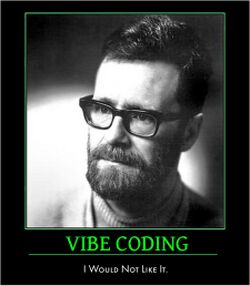
The curriculum emphasizes the importance of understanding computational complexity and the theory of computation, areas where Dijkstra's contributions are seminal.
Advanced Theory and Functional Models
For the 'advanced streetfighter,' the list moves into the abstract realms of type systems, purely functional data structures, and the lambda calculus. These topics provide the mathematical framework for modern programming language theory.
While the author admits that the 'λ-cube' is rarely useful in a 'tight confines of a knifefight,' these high-level models are presented as the ultimate destination for those seeking to understand the deepest structures of computer programming.