In Mexico, approximately 60 percent of wastewater—equivalent to more than 26 billion liters per day—is discharged directly into rivers, lakes, and aquifers without any treatment. To address this crisis, the Cihuatlán wetland in Jalisco was inaugurated in 2021 as a large-scale nature-based solution (NbS) capable of treating over three million liters of wastewater every day for a population of more than 20,000 people.
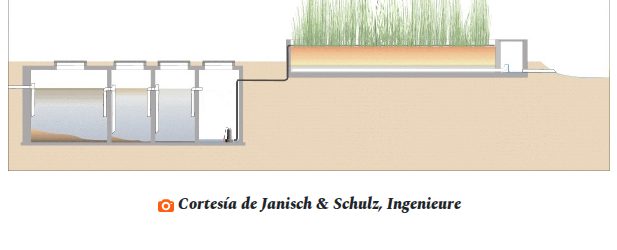
This image provides a visual overview of the large-scale artificial wetland facility described in the article.
Mechanics of Nature-Based Sanitation
Nature-based solutions (NbS) use constructed wetlands to mimic the physical, chemical, and biological processes of natural ecosystems. Unlike traditional mechanical plants, these systems rely on millions of microorganisms to transform organic matter, requiring minimal electricity while maintaining high purification efficiency.
The Cihuatlán facility follows a specific four-stage hydraulic design. First, water passes through grids and Imhoff sedimentation tanks to remove large solids and sludge. Second, the sludge is moved to humidification cells where marsh plants like Carex and Phragmites dehydrate it into a nutrient-rich humus.

This visual illustrates the biological processes and vegetation used in the humidification stage of the four-stage design.
“Nature does not require electricity to function, but it does need careful design, constant maintenance, and respect for its processes.”
— Nature-based sanitation. Cihuatlán: A Large-Scale Artificial Wetland
Biological Filtration and Biodiversity
In the third stage, water enters vertical-flow wetlands consisting of layers of sand and gravel. These 'living filters' use intermittent water distribution to allow oxygen to enter the substrate, facilitating the action of native plants and microorganisms that remove pollutants.
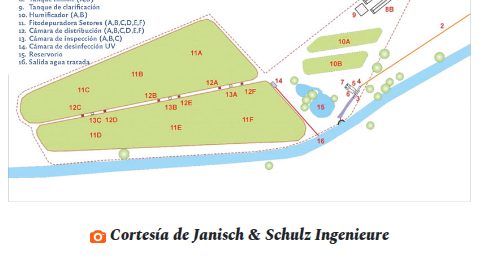
This image depicts the third stage of the purification process where sand and gravel layers facilitate biological filtration.
These wetlands also serve as ecological corridors, providing habitats for local wildlife such as the great egret and the green iguana. The final stage uses ultraviolet radiation to eliminate bacteria and parasites, ensuring the water meets Mexican environmental regulations before it is discharged.
Economic and Governance Trade-offs
The Cihuatlán project demonstrates that sanitation can be an engine for community development by linking to local agroforestry and floriculture. Because it relies on gravitational and biological processes, it offers a low-cost alternative to conventional chemical-heavy treatment plants.
However, the source notes that the greatest risk to these systems is not technical but political. Because responsibilities for wastewater are split between municipal, state, and federal authorities, a lack of coordinated institutional will can lead to poor maintenance and continued environmental contamination.
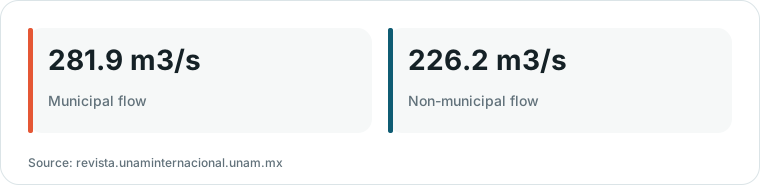
Chart drawn by HN Digest from figures reported by revista.unaminternacional.unam.mx; values are shown as written in the source.
What Hacker News readers are saying
- Experience: One commenter noted that similar large-scale aquaculture sites exist in Kolkata to keep food affordable, though they expressed uncertainty regarding the long-term viability of such institutions. comment ↗
- Skeptical: A commenter questioned why wastewater treatment remains a global challenge, suggesting that the issue might stem from a lack of government will rather than a lack of technical solutions. comment ↗
- Alternative: Another user suggested that engineered wetlands serve as a biomimicry alternative to the current model of using heavy subsidies to fund uneconomical traditional sewage treatment plants. comment ↗
Summarized opinions from the Hacker News thread, not verified facts. Read the full discussion ↗