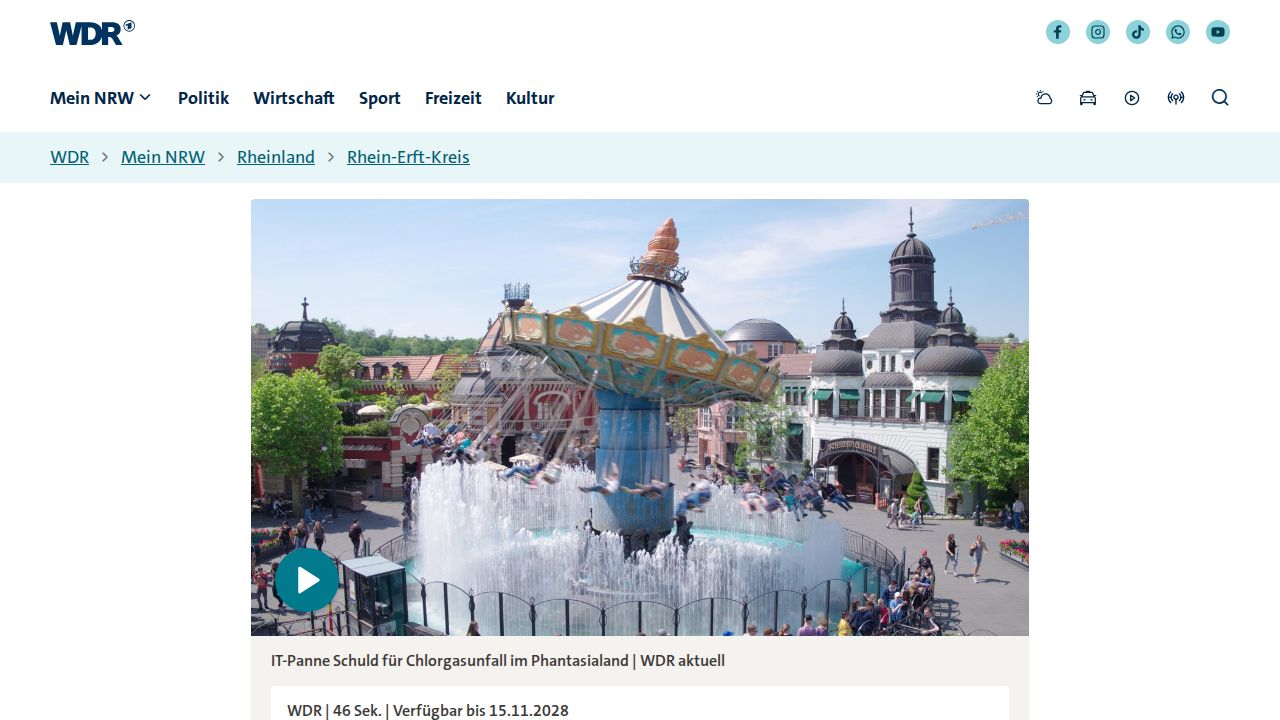
Fifteen guests at a hotel associated with the Phantasialand theme park were injured after being exposed to chlorine gas. The incident occurred because an automatic dosing system pumped excessive amounts of chlorine into a pool, triggering a maintenance safety alert that went unread due to a Microsoft 365 service disruption.
The Incident and Technical Failure
According to the primary source, a technical defect caused an automatic dosing system to pump an excessive amount of chlorine into a pool. This malfunction triggered a maintenance safety alert from the system's monitoring software.
Because of a concurrent Microsoft 365 outage, the hotel did not receive the email notification sent by the safety system. As a result, staff remained unaware of the dangerous chemical levels until the gas affected guests (k310).
Discussion on Systemic Design Flaws
Commenters on Hacker News argued that the primary fault lies with the hotel's infrastructure rather than Microsoft's service. One commenter, writing as N19PEDL2, stated it was 'unacceptable' that communications for such a dangerous situation relied entirely on email without a backup or double-check.
Other participants, including discordance and lazzurs, characterized the setup as a 'poor and dangerous design.' They argued that any system capable of causing physical harm should utilize a more resilient and redundant architecture rather than relying on a single point of failure.
One commenter, ashleyn, suggested that the pool room should have featured an audible alarm mounted on the wall to provide a local, non-networked alert for staff.
Reliability of Cloud Services for Safety
The discussion highlighted the distinction between standard business tools and safety-critical infrastructure. Commenter greggsy described email as a 'zero guarantee' service, noting it should never be the sole mechanism for life-or-death solutions.
Another commenter, mentalgear, suggested that core safety services must remain as minimal and stable as possible, advocating for safe fallbacks that are independent of large 'big tech' clusters. This perspective emphasizes that while Microsoft 365 is a standard business utility, its use in industrial or life-safety contexts introduces significant risks during service interruptions.