On November 16, 2026, malicious JavaScript was served to visitors of 178 organizations through the Optimizely Web experimentation platform. The breach affected some of the world's most visited sites, including Zoom, the BBC, CNN, Salesforce, and IKEA, demonstrating how a single compromised third-party dependency can expose hundreds of brands simultaneously.
Mechanism of the Injection
Optimizely Web functions by having customers load a JavaScript 'snippet' from the company's Content Delivery Network (CDN). These snippets contain Optimizely's core code, specific customer experiments, and a field called 'Project JavaScript' for custom code written by the customer.
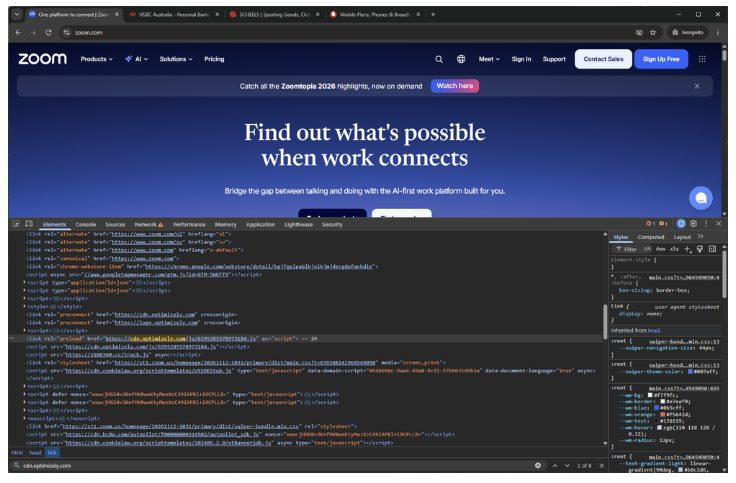
The attacker successfully injected malicious code into the 'Project JavaScript' field of various customer projects. Because the file was still served from the trusted `cdn.optimizely.com` domain with a valid certificate, the affected websites' security systems did not flag the script as an external threat.
“A website can be compromised through a third-party dependency without its own code or infrastructure ever being breached.”
— World's Largest Brands Infected With Malware Via Optimizely
Payload Capabilities and Impact
The injected script, identified as `track.js`, was a multi-purpose kit that executed several malicious actions at once. It swapped cryptocurrency wallet addresses in page text, form fields, and even on the user's clipboard, replacing them with the attacker's addresses.
The malware also monitored form submissions for credit card numbers, expiry dates, and CVV codes, sending the data to a remote server. Additionally, it stole cookies that were not marked as 'HttpOnly' and captured screenshots of the pages visited by users.
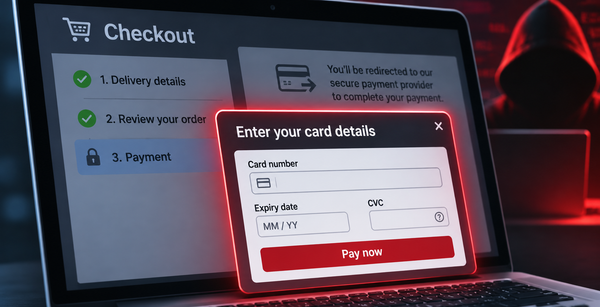
The article describes how the injected script monitored form submissions for credit card numbers and CVV codes.
For mobile users on older iOS versions, the script loaded exploit kits in hidden iframes. These kits were designed to target specific vulnerabilities in iOS 18.6 and earlier, with some versions of the exploit automatically reloading every 60 seconds to retry the attack.
The article explains that the script loaded exploit kits in hidden iframes to target specific iOS vulnerabilities.
Technical Variations and Detection
Investigators identified three distinct versions of the injected loader. One was a plain script tag, another used base64 encoding to hide the destination URL, and a third used `eval()` to execute the payload if the primary domain was blocked.
The attack highlights a critical security trade-off: a website's security is only as strong as its third-party dependencies. Even if a brand's own infrastructure remains unbreached, a compromise in a trusted script provider can allow attackers to execute code directly in the visitors' browsers.
While most of the malicious code has been removed, the specific method of entry remains an open question. It is currently unknown whether the attacker gained access through a compromised Optimizely system, stolen credentials with cross-customer access, or another method.
What Hacker News readers are saying
- Technical note: One commenter identified the specific malware as potentially being related to Coruna and DarkSword exploits, noting the injection of a hidden iframe on certain iOS versions. comment ↗
- Technical note: A commenter who previously worked on site builder products suggested that enforcing Content Security Policy (CSP) and manually whitelisting domains can help limit the impact of these types of attacks. comment ↗
- Skeptical: Another user raised questions about the difficulty of achieving 100% confidence in internal security, suggesting that these types of compromises make it hard to rule out internal actors or system misuse. comment ↗
Summarized opinions from the Hacker News thread, not verified facts. Read the full discussion ↗