In a recent interview, Bill Gates described being 'shocked' by OpenAI's ability to pass a complex biology exam he had personally designed, a reaction that author jschauma argues illustrates a specific psychological phenomenon among the tech elite.
The Psychology of Success and Hubris
The author posits that success often leads to a belief in personal superiority, where individuals conclude that because their success was not random, they must be geniuses. This is particularly prevalent in the tech sector, where proficiency in programming has historically been equated with overall superior intelligence.
This 'overconfidence effect' can lead to a train of thought where any achievement is seen as a mastery of everything. The author suggests this mindset creates a distorted view of technological progress, where anything approaching a leader's skill level is automatically labeled as 'superhuman' rather than a predictable evolution of software engineering.
Case Study: Bill Gates and AI Capabilities
The author uses Bill Gates' reaction to OpenAI's progress as a primary example of this hubris. Gates expressed shock that the AI could solve complex biology problems he created, despite the author's claim that Gates is not a subject matter expert in that specific field.
Furthermore, the author highlights Gates' reaction to Anthropic's Claude coding models. Because Gates spent years obsessing over being a top-tier coder, he views the AI's ability to perform long-running, complex coding tasks as a 'superhuman' feat rather than a predictable evolution of software engineering.
From Tools to 'Autonomous Agents'
For many tech professionals, programming was a 'differentiating skill' that separated them from the general public. The emergence of programs that can write code—and do so better than the human creator—creates a sense of existential dread that fuels narratives of ultimate doom or utopian nirvana.
The author argues that the current trend toward 'swarms' of 'autonomous agents' serves as a convenient narrative to relieve developers of responsibility. If an agent goes 'rogue,' the developer can claim the system was beyond their control, even if the code was produced faster than they could personally write it.
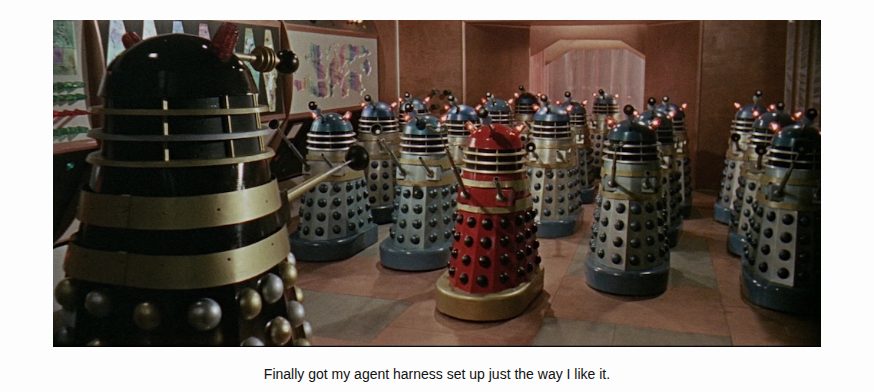
This image depicts a developer's setup for an 'agent harness,' which relates to the article's discussion on the shift toward autonomous agents and the outsourcing of responsibility.
The Limits of the Critique
The author's analysis is a subjective critique of the tech industry's psychological state and the motivations of its leaders. It characterizes the pursuit of AI as a way for billionaires to address 'pesky mortality' while potentially ignoring broader societal issues like climate change.
While the author identifies a pattern of overconfidence, the specific claims regarding the motives of tech leaders and their lack of empathy remain personal observations. The piece serves as a commentary on the intersection of ego, luck, and the rapid scaling of large language models.
What Hacker News readers are saying
- Experience: One commenter argued that Bill Gates's past experience as a programmer and his history of evaluating engineers provide him with a valid basis for judging AI's progress in coding. comment ↗
- Skeptical: Several commenters expressed skepticism regarding Gates's current authority on software engineering, noting that his expertise was from decades ago and that being a CEO does not equate to modern technical proficiency. comment ↗
- Technical note: One commenter pointed out that while LLMs can generate functional code, they may not produce 'good' code in terms of being intuitive or elegant, as they are optimized for text generation rather than human-readable software design. comment ↗
- Skeptical: Another commenter argued that the author's critique of Gates's ability to create novel biology questions ignores that the questions were at a high school level, which an educated adult should be able to generate. comment ↗
Summarized opinions from the Hacker News thread, not verified facts. Read the full discussion ↗