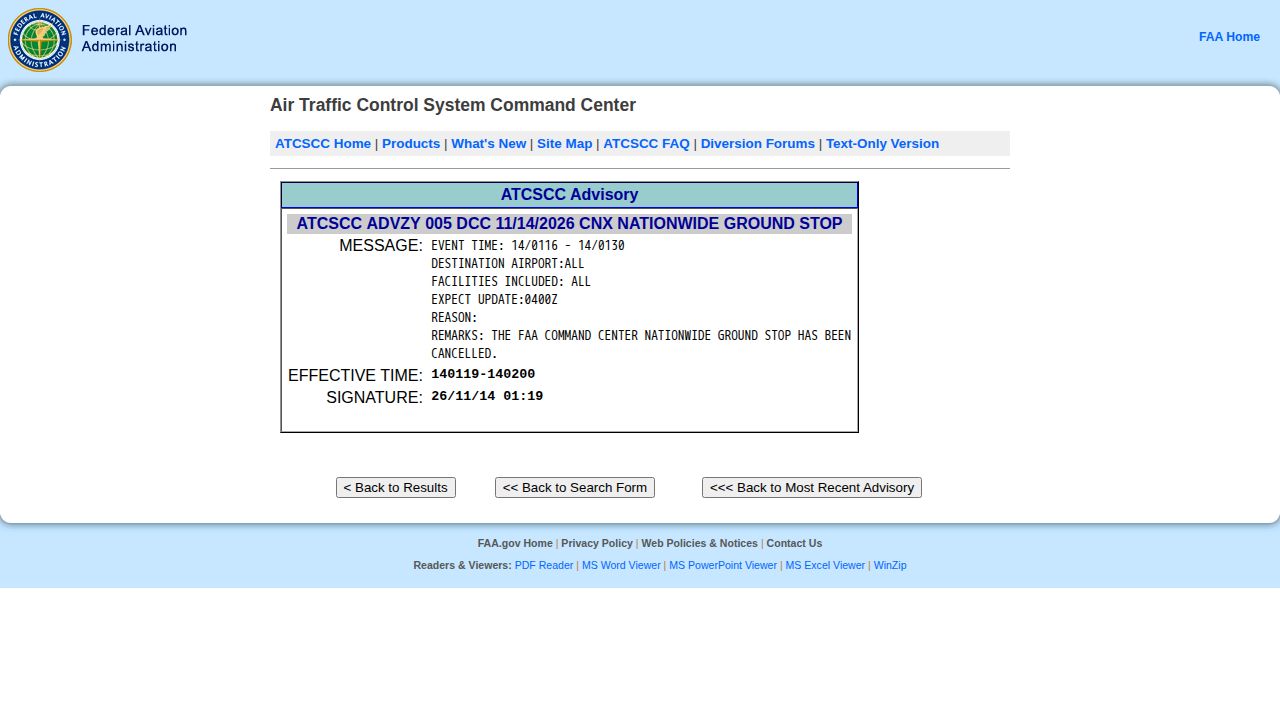
The Federal Aviation Administration (FAA) officially cancelled a nationwide ground stop at 01:19Z on November 14, 2026, after a technical failure grounded all facilities across the United States. The disruption was triggered by a conflict between modern equipment and legacy infrastructure, revealing a critical single point of failure in the national airspace system.
The Ground Stop and Official Response
The FAA issued a nationwide ground stop message (ATCSCC ADVZY 005) that affected all facilities in the United States. The order was active during the period of 01:16 to 01:30, and the cancellation was finalized at 01:19Z.
During a White House briefing, Secretary Mullin explained that the disruption occurred as the FAA and Secretary Duffy were attempting to integrate new equipment and technology into the existing system. The briefing indicated that these updates overwhelmed the older infrastructure, leading to a systemic failure.
Systemic Vulnerabilities and 'Patchwork' Infrastructure
The briefing highlighted a fundamental issue with the current air traffic control architecture, which officials described as a 'patchwork' that is no longer functional. Secretary Duffy emphasized that the current method of applying patches to the old system is insufficient and that a complete system overhaul is required.
Commenters on Hacker News discussed the implications of this architecture, with some noting that the current setup creates a single point of failure for all flights in the U.S. rather than having regionalized zones that could be grounded independently. Others speculated on the specific technical triggers, suggesting that networking routers might have been overloaded by increased communications traffic from new data polling systems.
Unresolved Technical Details
While the FAA confirmed the system was overwhelmed by new technology, the specific nature of that technology remains a point of discussion. Some observers suggested the failure could be linked to the deployment of high-cost AI tools or specific air traffic routing systems, though these claims remain speculative.
The incident report is expected to provide further clarity on the specific mechanics of the failure. Until then, the primary takeaway from the official reports is the incompatibility between the rapid introduction of new technology and the limitations of the aging legacy hardware.