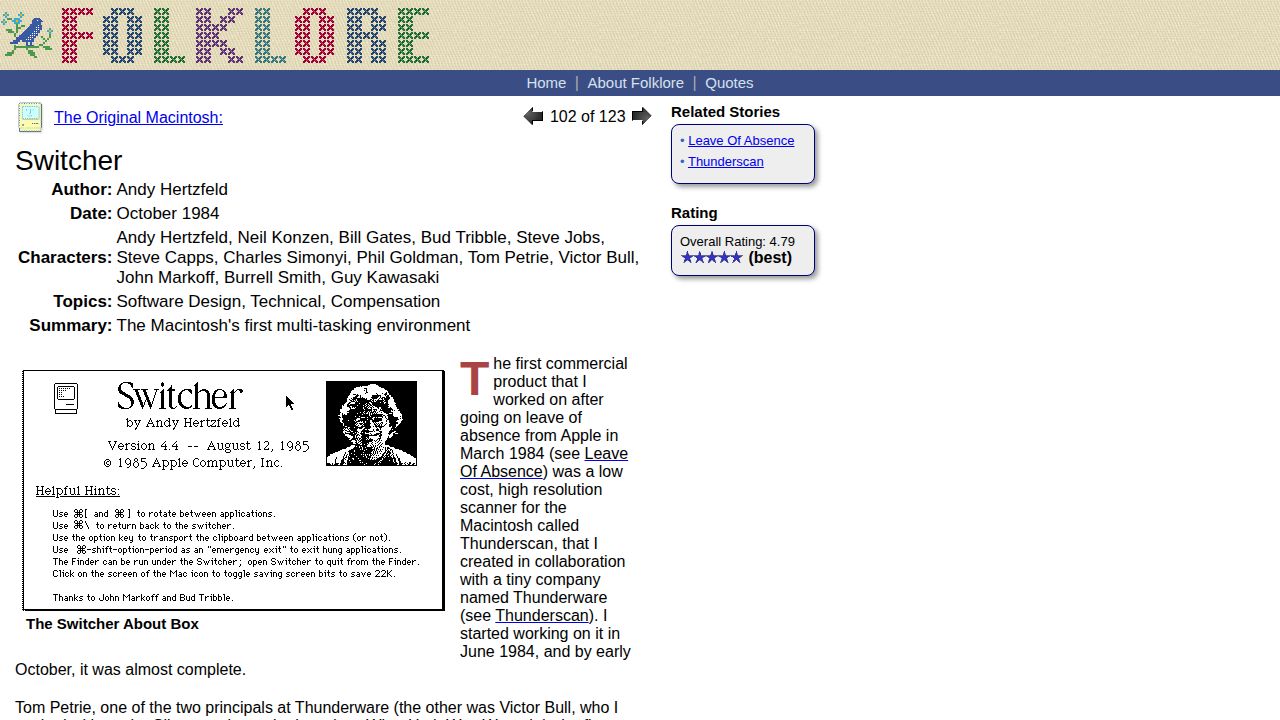
In the mid-1980s, a software utility known as 'Memory Shift' represented a period of computing where even minute programs required intense engineering insight and deep foundational knowledge. This era of software development stands in stark contrast to modern practices, where high-volume codebases often rely on established design patterns rather than the raw, assembly-level debugging and hardware-level troubleshooting that defined the 'glory days' of software engineering.
The Original Report on 'Memory Shift'
The primary source, a folklore entry titled 'Switcher (2004)', references a 1984 IBM PC software utility called 'Memory Shift'.
The text describes the utility as a TSR (Terminate and Stay Resident) swapper, a type of software that remained in memory to manage system resources. However, the specific identity of 'Memory Shift' remains somewhat ambiguous, with some observers questioning if it was a unique utility or a reference to products like Borland's Sidekick.
Engineering Density vs. Modern Scale
Commenters on Hacker News discussed the disparity between early and modern software engineering, noting that small programs from the 1980s often represented more original thought than modern applications with significantly higher lines of code (LOC).
One commenter, writing as gwern, noted that even 'minute' programs from that era were complex enough to require significant resources, comparing them to projects that would today involve multiple programmers or extensive academic treatment.
The discussion highlights a shift from 'high-density' engineering—where every line of code was a deliberate, foundational choice—to a modern era of scale and abstraction.
Foundational Debugging and Craftsmanship
The discussion also touched on the 'old school' caliber of engineering required during that period. One commenter, writing as com2kid, described a time when developers had to debug starting at the assembly level and occasionally use an oscilloscope when software-level debugging failed.
This foundational approach allowed these developers to build the very design patterns that modern software now relies upon as standard. The consensus among participants was that this era represented a peak of 'real software engineering' where the focus was on the underlying mechanics of the machine.
Economic and Historical Context
Participants also provided historical context regarding the value of software during this period. One commenter, writing as thechairman12, pointed out that $100,000 invested in the S&P 500 in 1984 would be worth approximately $4.5 million today.
This perspective serves to underscore the high stakes and significant investment associated with early software development, reinforcing the idea that these 'small' programs were major engineering milestones of their time.
Unresolved Technical Details
Despite the rich discussion on the era's engineering philosophy, some specific details remain unconfirmed. A commenter, writing as defrost, noted that searching for 'IBM PC Memory Shift software utility 1984' yields no clear hits, leaving it uncertain if the utility was a standalone product or a misremembered name for a contemporary tool.