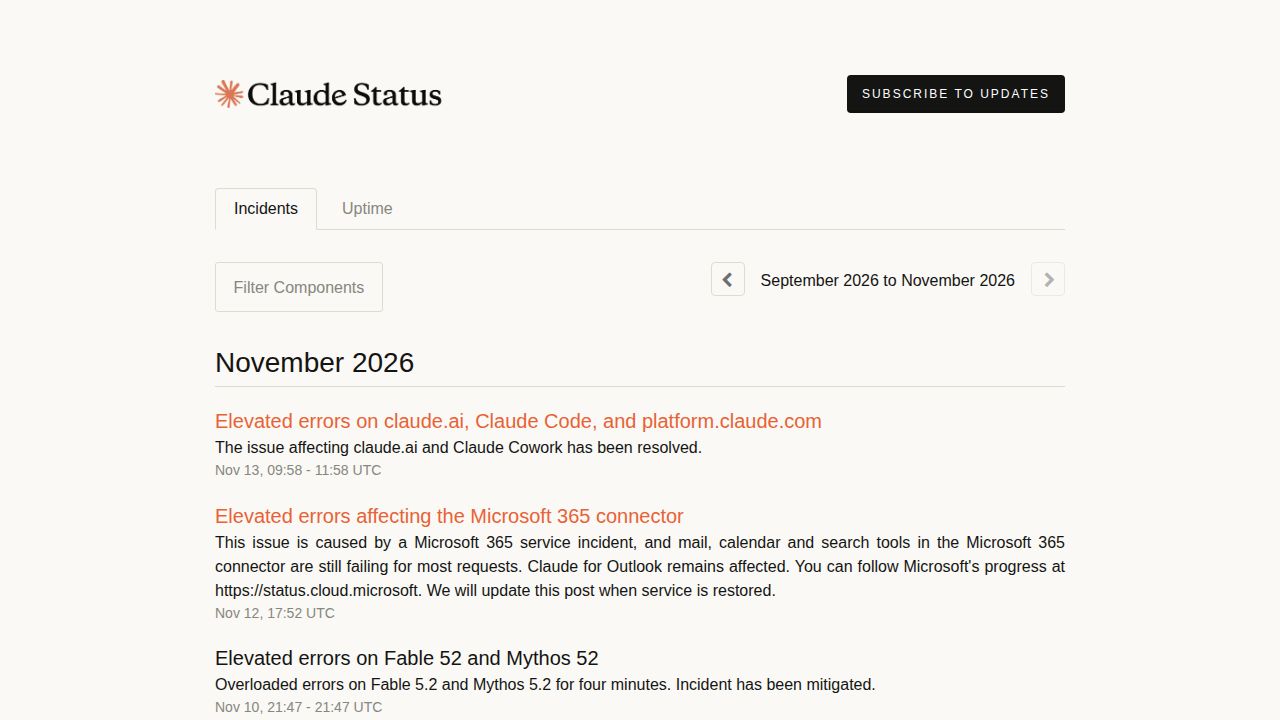
On November 13th, Anthropic's Claude services experienced an outage that left many users unable to access the platform during critical work moments. For some, this resulted in immediate project disruptions, including ruined source files and the inability to finalize time-sensitive presentations just minutes before delivery.
Reported Impact and Resolution
According to the status history provided by the submitter (primary), Claude services were down on November 13th. A commenter identified as yodon noted that a fix was officially deployed at 09:58 UTC, though they observed that monitoring for full recovery continued after that point.
User experiences varied significantly during the downtime. One user, biofox, reported being kicked out while finalizing a presentation with only 39 minutes remaining, while another user, rfgplk, described the situation as unacceptable because four projects were ruined due to lost progress on modified source files.
Strategies for Mitigating Outages
In response to the outage, several commenters discussed technical strategies to avoid reliance on a single provider. One commenter, micw, detailed a diversification strategy involving a custom VS Code integration for a DeepSeek harness combined with existing Codex and Claude subscriptions and an OpenRouter account.
Others suggested maintaining local models as a reliable fallback. For example, mark_l_watson mentioned using a strong local model like qwen-3.8-flash-next to ensure functionality even when internet reliability is low or primary cloud providers are unavailable.
Risks of Vendor Lock-in
The discussion highlighted broader concerns regarding 'vendor lock-in' and its consequences for professional workflows. Commenters questioned whether large companies should maintain internal servers equipped with H100s and open-weight models to provide redundancy during cyber attacks or service failures.
While some users expressed concern that such outages demonstrate how quickly production can stall without AI availability (nicce), others argued that because AI serves primarily to accelerate human ideas rather than replace thinking, the immediate impact remains manageable if the underlying logic belongs to the user.