Forensic analysis of publicly released AI models from DeepSeek, Moonshot AI, MiniMax, and Ant Group has revealed numerical patterns that match NVIDIA’s Blackwell GPU architecture. These findings suggest that while U.S. export controls aim to limit China's access to high-end computing power, several leading Chinese developers have successfully integrated these chips into the training of their newest frontier models.
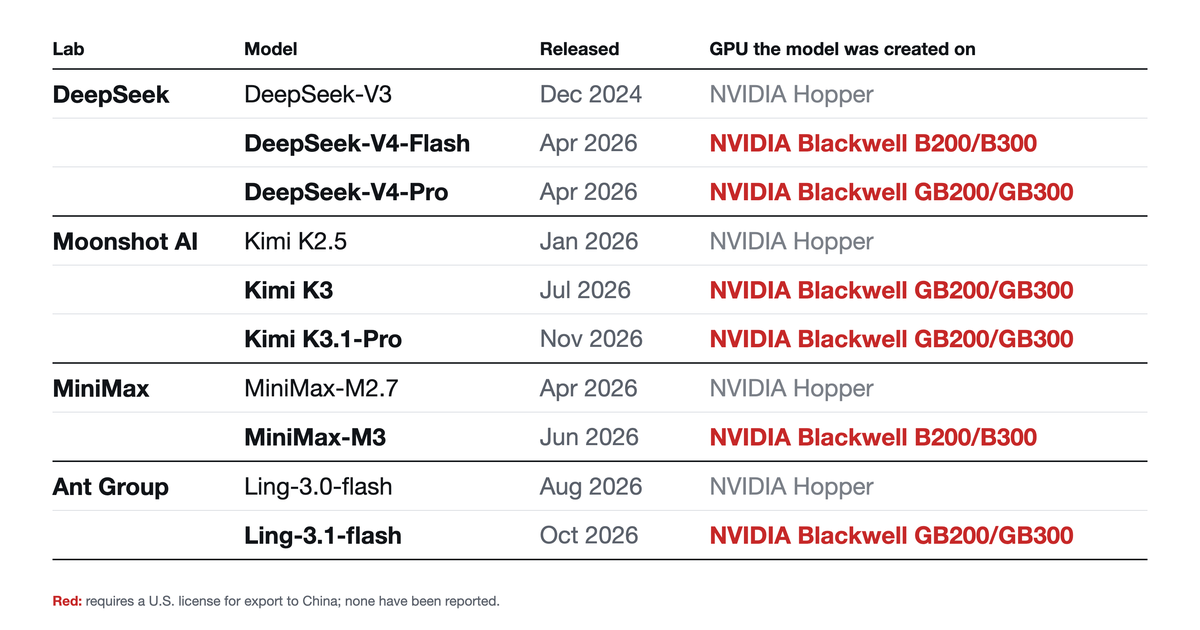
This image provides a visual summary of the specific models and labs identified in the forensic analysis.
The Hardware Fingerprint Mechanism
The evidence is derived from the model's 'weights'—the billions of numbers that determine how an AI processes information. During the initial training phase, these weights are assigned starting values using a deterministic pseudorandom number generation (PRNG) algorithm called Philox.
Because the software (PyTorch) divides this work among parallel threads on a GPU, the specific number of processing units (streaming multiprocessors, or SMs) determines how those numbers are distributed. A chip with a different SM count will place the same random numbers into different positions in the weight matrix.
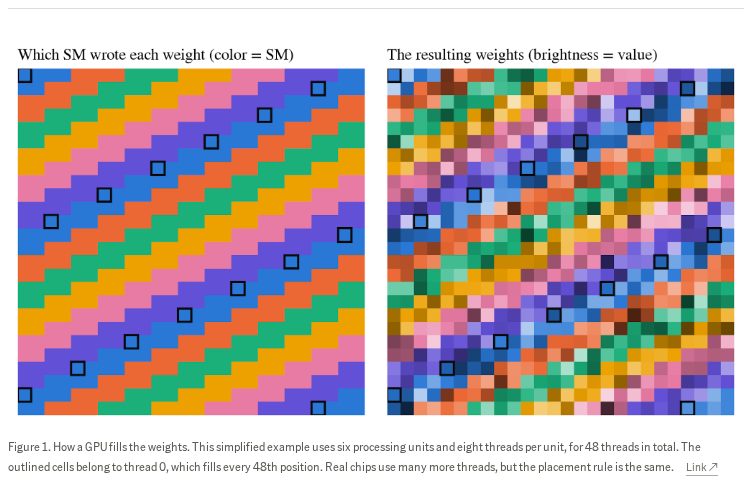
This figure explains the fundamental mechanism of how hardware configuration influences the distribution of weights.
By comparing the published weights against thousands of potential configurations, researchers can identify the exact hardware layout. For example, Blackwell B200/B300 chips use 148 SMs, while GB200/GB300 chips use 152 SMs. The models in question matched these specific counts with high statistical significance.
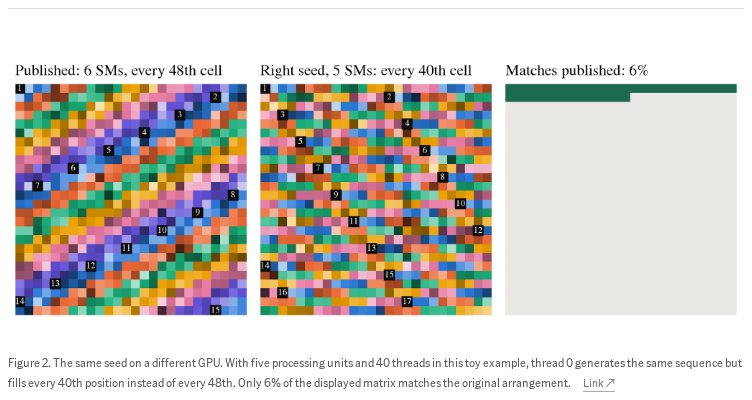
This visual demonstrates how changing the hardware layout alters the resulting weight distribution.
“The findings suggest that several leading Chinese AI developers have begun using Blackwell to train their newest models.”
— Top Chinese Frontier AI Models Carry the Fingerprint of Export-Controlled NVIDIA Blackwell GPUs
Timeline of Hardware Transition
The forensic data reveals a distinct shift in the hardware used by Chinese labs. For instance, DeepSeek's V3 model (released in December 2024) matches the Hopper-era fingerprint, while its V4-Flash and V4-Pro models (released in April 2026) match the Blackwell architecture.
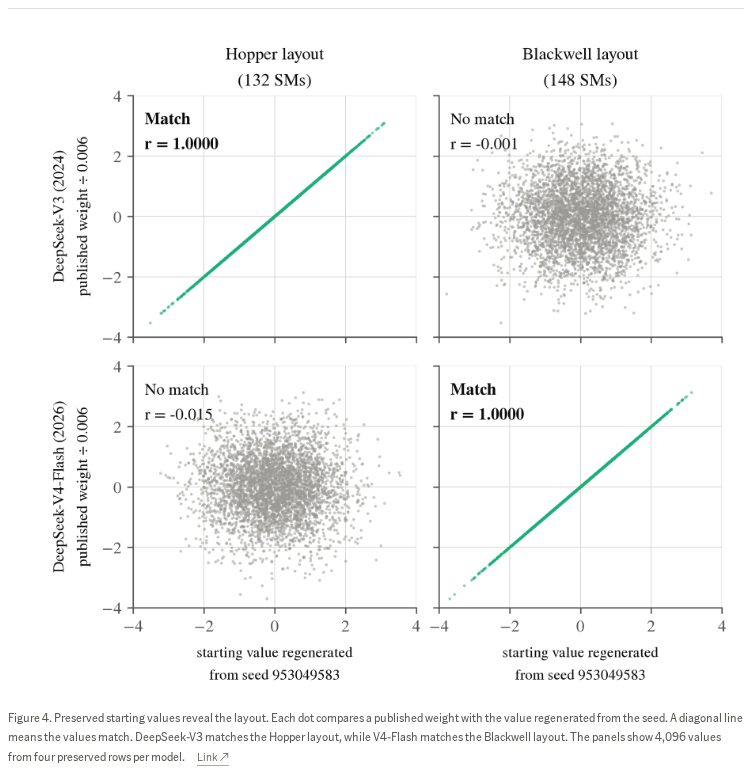
This image provides the primary evidence of the hardware fingerprinting technique used in the study.
Similar patterns were observed at Moonshot AI, where models transitioned from Hopper to Blackwell between January 2026 and July 2026. Ant Group also showed a shift from Hopper in its Ling-3.0-flash model to Blackwell in its Ling-3.1-flash release.
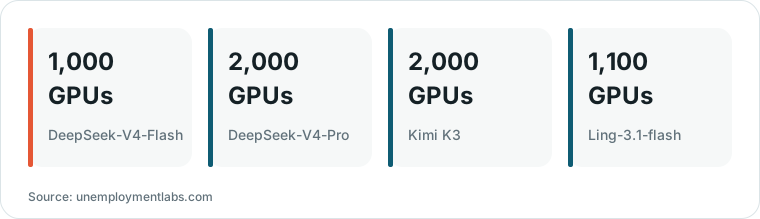
Chart drawn by HN Digest from figures reported by unemploymentlabs.com; values are shown as written in the source.
Notably, not all Chinese labs have made the switch. Models from Alibaba, Zhipu, and Tencent still show Hopper-era fingerprints, and Meituan reported using 'AI ASIC superpods' that showed no NVIDIA hardware signatures at all.
Scale and Economic Implications
The analysis suggests these training runs were conducted on a massive, data-center scale. Based on the size of the models and the amount of training data, researchers estimate that each run required between 500 and 3,000 Blackwell GPUs over a period of two to three months.
At an estimated cost of $70,000 per GPU, the largest of these clusters would cost between $150 million and $200 million to initialize. The total investment for the five identified Blackwell-trained models likely exceeds half a billion dollars, excluding the costs of the initial training runs.
While the findings provide technical evidence of hardware access, they do not establish how the chips were obtained, where they were located, or whether specific export laws were violated.
What Hacker News readers are saying
- Alternative: One commenter suggested that the government might intentionally tolerate certain exports to maintain geopolitical stability or to create a strategic appearance of compliance while allowing the market to function. comment ↗
- Skeptical: Another user argued that export controls are fundamentally ineffective due to a vast gray market of resellers, noting that similar restrictions have failed to keep Western chips out of other restricted regions. comment ↗
- Technical note: A commenter expressed technical skepticism regarding the robustness of the fingerprinting method, noting that they would need to verify the specific behavior of the PyTorch parallel philox-based PRNG. comment ↗
Summarized opinions from the Hacker News thread, not verified facts. Read the full discussion ↗