Chicago Public Schools (CPS) is actively exploring ways to independently suppress or replace Google's search engine after the tech giant indicated that schools banning generative AI features might be blocked from using its search services. This development follows a series of protests and a growing movement among parents and educators who argue that AI-generated content undermines traditional human-led instruction.
The Conflict Over Embedded AI
The tension escalated after Google informed school districts that its search engine and generative AI features are so intertwined that schools opting out of AI would lose access to the search platform entirely. This stance has forced districts like Chicago to weigh the utility of Google's search results against the district's policy of restricting student access to generative AI tools like ChatGPT and Gemini.
A CPS spokesperson stated that the district is currently looking for ways to independently suppress the 'AI Overview' that appears at the top of Google search results. If the district cannot successfully block these features while maintaining access to the search engine, it will look for alternative search providers.
Community Pushback and Educational Philosophy
Protests have emerged in both Chicago and Cambridge, Massachusetts, where parents and educators expressed skepticism about the benefits of AI in schools. One student protester argued that students deserve feedback from dedicated human teachers rather than a 'bot' that compiles random internet sources for 'nonsensical' answers.
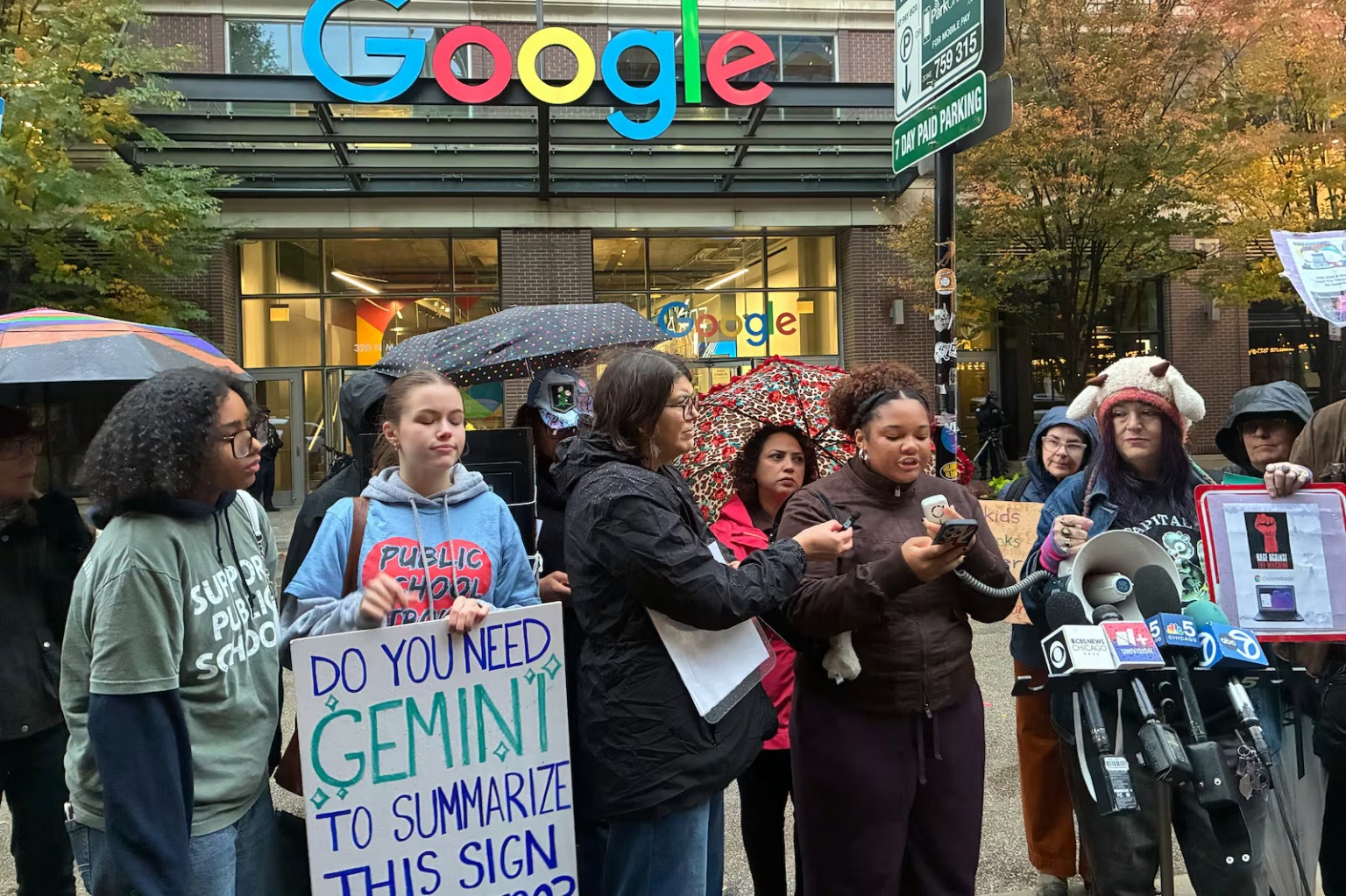
This image depicts the community pushback and protests from parents and educators regarding AI integration in schools.
Advocacy groups, such as Illinois Families for Public Schools, are pushing for a three-year moratorium on generative AI in classrooms. They advocate for a 'human-centered education' and have successfully influenced some incoming school board members to sign pledges opposing the technology.
Policy Trends and Google's Response
The situation in Chicago mirrors a broader trend in the United States, where some cities have already implemented strict bans on student-facing AI. For example, New York City recently banned the use of chatbots for students in preschool through eighth grade, flagging nearly 40 products for their AI usage.
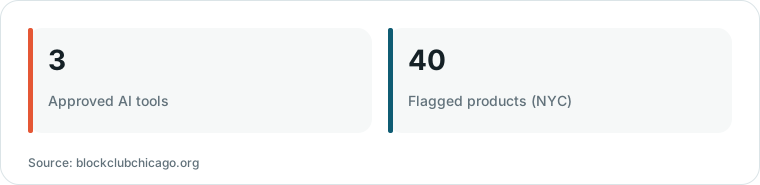
Chart drawn by HN Digest from figures reported by blockclubchicago.org; values are shown as written in the source.
In response to the backlash, Google stated it is working on classroom-specific improvements. These include a 'Guided Learning' pilot intended to use AI to walk students through problems step-by-step, aiming to provide a more pedagogical experience than a simple quick answer.
Unresolved Technical and Policy Questions
It remains unclear what specific 'other search solutions' Chicago Public Schools is considering as a replacement for Google. Additionally, the technical feasibility of 'independently suppressing' Google's AI overviews without losing access to the core search results is an open question that will determine the district's next steps.
What Hacker News readers are saying
- Technical note: One commenter expressed frustration with the difficulty of removing integrated AI features from the Android operating system, comparing the situation to the historical difficulty of removing Internet Explorer from Windows. comment ↗
- Skeptical: Another user suggested that Google's move to force AI integration is a tactic that is losing its perceived invincibility as public pushback increases. comment ↗
- Alternative: One commenter pointed out that Google has since updated its policies to allow school administrators to explicitly choose whether to enable AI products for student accounts. comment ↗
Summarized opinions from the Hacker News thread, not verified facts. Read the full discussion ↗