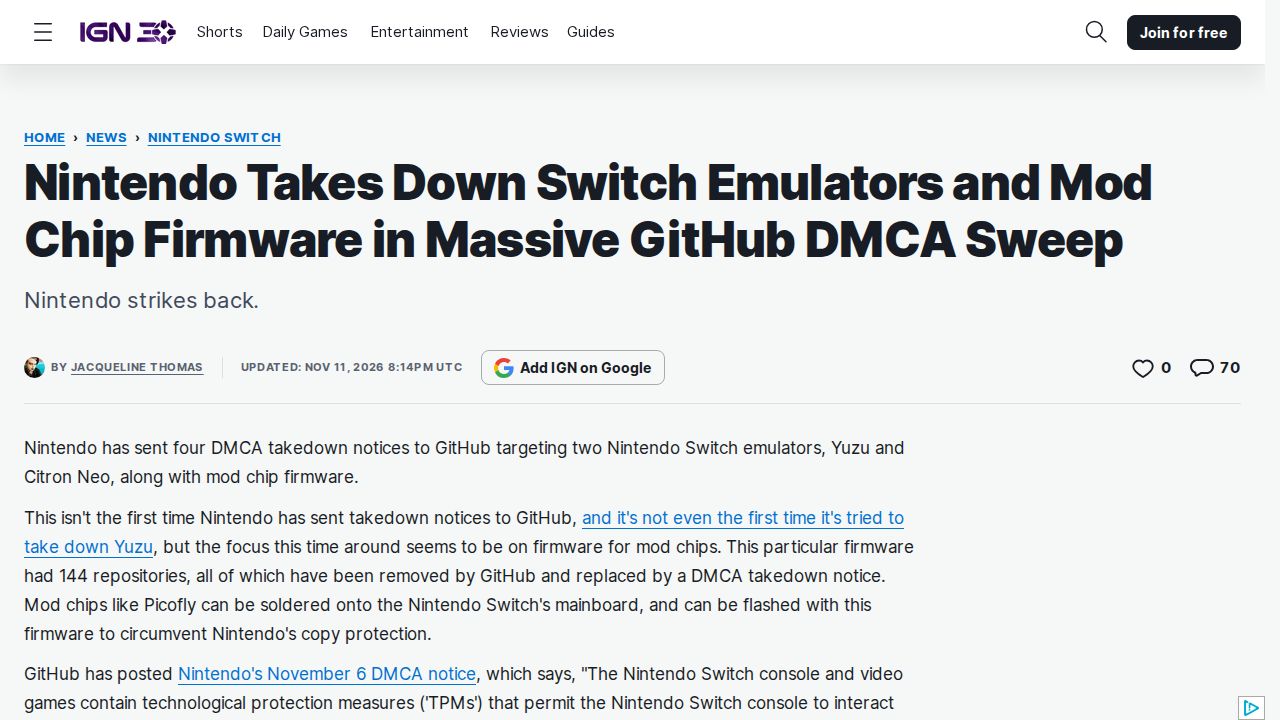
Nintendo has issued four DMCA takedown notices to GitHub, resulting in the removal of 144 repositories specifically associated with mod chip firmware. This move targets the software used to flash hardware like the Picofly, which can be soldered onto a Nintendo Switch's mainboard to bypass the console's built-in copy protection.
Targeting Hardware Circumvention
The primary focus of this recent sweep appears to be the firmware used for hardware mod chips. These chips are designed to be soldered directly onto the Switch's mainboard to circumvent the console's security protocols.
By removing these specific repositories, Nintendo aims to disrupt the distribution of the software necessary to make these hardware modifications functional.
“The Nintendo Switch console and video games contain technological protection measures ('TPMs') that permit the Nintendo Switch console to interact only with legitimate Nintendo video game files.”
— Nintendo Takes Down Switch Emulators and Mod Chip Firmware in Massive GitHub DMCA Sweep
Legal Basis and Technological Protection
In the November 6 DMCA notice, Nintendo stated that the Switch console and its games contain technological protection measures (TPMs). These measures are designed to permit the console to interact only with legitimate Nintendo video game files.
The company argues that these protections are essential to prevent users from playing pirated copies or unlawfully copying and playing games on unauthorized devices.
Persistence of Emulation and Distribution
Despite the removal of these repositories from GitHub, evidence suggests that the firmware may still be hosted on other parts of the site or external platforms. This highlights the ongoing challenge of policing decentralized software distribution.
Historically, Nintendo has demonstrated a persistent approach to these issues, such as a 2024 action where they successfully took down approximately 8,500 copies of the Yuzu emulator by targeting multiple mirrors.
Broader Industry Context
This crackdown occurs as the gaming industry faces new challenges regarding AI-generated content and unauthorized ports. Major publishers have recently begun taking down browser versions of games and AI-generated projects to protect their intellectual property.
The move by Nintendo signals a continued commitment to enforcing copyright in an era where AI and advanced emulation techniques are making it easier to replicate and distribute game content.
What Hacker News readers are saying
- Technical note: One commenter noted that many emulators remain available because they are hosted on self-hosted repositories rather than GitHub, suggesting that the community is adept at rehosting and backing up content. comment ↗
- Skeptical: A commenter questioned the legality of using circumvention procedures to back up games they personally own and run on emulators. comment ↗
- Technical note: One user explained that Nintendo likely targets emulators under the portion of the DMCA that prohibits trafficking in circumvention devices, which lacks many of the exceptions available for breaking DRM. comment ↗
- Skeptical: Another commenter raised a question regarding whether games created with AI would qualify for the same copyright protections that Nintendo is currently seeking to defend. comment ↗
Summarized opinions from the Hacker News thread, not verified facts. Read the full discussion ↗