In an era where large language models excel at memorization and 'brute force' archival research, the ability to develop 'research taste'—the capacity for original, non-obvious intellectual exploration—is becoming a rare and vital human skill. Benjamin Breen argues that this taste is cultivated not through consistent, linear progress, but by deliberately inhabiting 'alien' worldviews and understanding the 'broken bones' of forgotten histories.
The Limitation of the Median Perspective
While AI systems are increasingly capable of providing customized feedback and processing vast amounts of data, they often lack the ability to perform open-ended intellectual exploration. Breen suggests that because these models are trained on massive datasets, they tend to gravitate toward an averaged-out, clichéd intellectual tone.
This 'epistemological narrowing' poses a risk to humanistic disciplines like history, where finding something new requires moving beyond immediate feedback loops. A system optimized for clean code or helpful answers may struggle to identify promising ideas in fields where success is not easily quantifiable.
Inhabiting Alien Worldviews
Breen highlights the importance of 'out of distribution' thinking, exemplified by his experience learning Sumerian-Babylonian astronomy and mathematics. This involved mastering a base-60 number system and cuneiform script—skills that offer no practical benefit for modern job applications but fundamentally expand how a researcher thinks.
By forcing oneself to live inside an alien knowledge system, a researcher learns to see the world through different lenses. This process allows for the identification of non-obvious connections that a model trained on 'standard' human thought might overlook.
The Value of 'Useless' Knowledge
The history of science only becomes intelligible when researchers focus on 'useless' things—outmoded ideas like phlogiston or the specific mechanics of medieval clocks. These 'wrong turns' are the raw materials that allow historians to analyze the actual thought processes of past actors.
If history is taught only as a series of triumphant discoveries, the underlying logic of those discoveries is lost. Understanding the 'broken bones' of forgotten histories provides the necessary context to understand why certain paths were taken and others were abandoned.
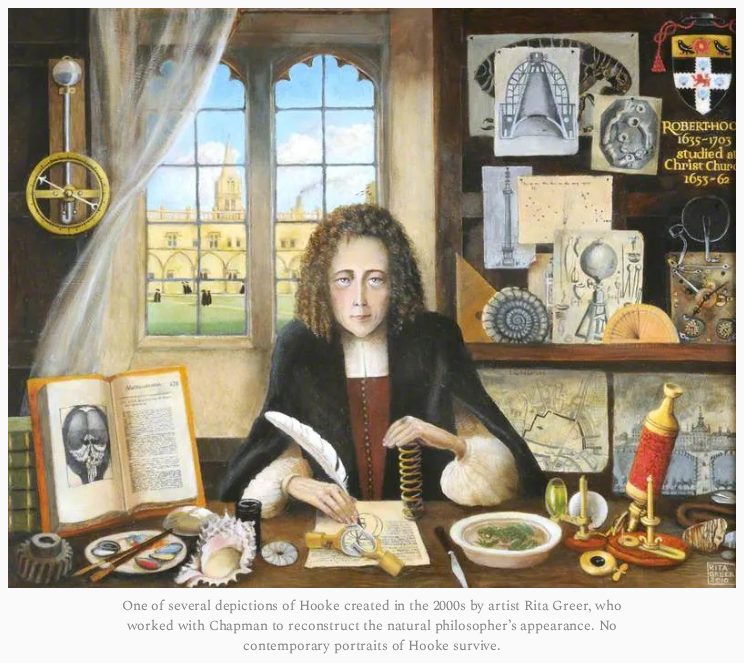
This image illustrates the concept of 'broken bones' of history, where researchers must reconstruct the past from fragmented evidence.