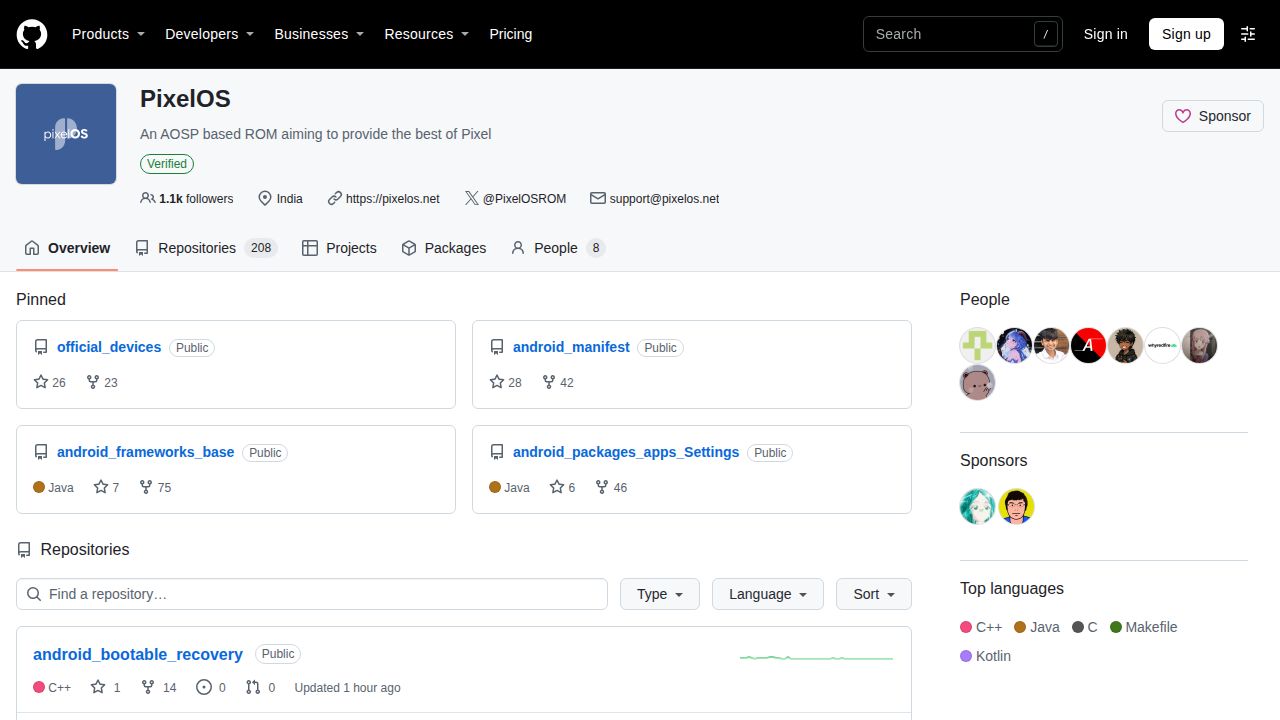
PixelOS aims to bridge the gap between hardware manufacturers and the Google software ecosystem by offering a custom Android operating system (ROM) that mimics the official Pixel experience. By utilizing the Android Open Source Project (AOSP) as its foundation, the project allows users to install a software suite that includes Google apps and specific 'Pixel goodies' on devices from brands like Xiaomi, OnePlus, and Motorola.
Technical Foundation and Repository Structure
The project maintains a comprehensive set of repositories to manage the complexities of different hardware configurations. These include core components like `android_frameworks_base` and `android_bootable_recovery`, alongside brand-specific hardware drivers such as `android_hardware_oplus` and `android_hardware_xiaomi`.
By managing these repositories, PixelOS developers can tailor the AOSP base to function correctly across various manufacturers' chipsets and sensors. This infrastructure allows the OS to maintain stability while delivering the specific software behaviors associated with Google's flagship phones.
“PixelOS is an AOSP based ROM, with Google apps included and all Pixel goodies.”
— PixelOS
User Experience and Performance Goals
The primary objective of PixelOS is to provide an experience similar to Google Pixel phones while incorporating numerous performance enhancements. While the specific nature of these enhancements is not detailed in the primary documentation, the project emphasizes a balance between the 'Pixel' feel and optimized system behavior.
The ROM includes Google apps by default, making it a preferred choice for users who want the convenience of the Google ecosystem but prefer the hardware specifications of other manufacturers. It serves as a middle ground for enthusiasts who want a polished, integrated experience rather than a completely stripped-down system.
Device Support and Ecosystem Trade-offs
PixelOS supports a wide array of devices, though the status of these devices varies. The project manages a mix of active and discontinued hardware, providing a way for owners of older devices to maintain a modern, cohesive software interface.
Choosing PixelOS involves a specific trade-off: users opt into a more integrated Google ecosystem in exchange for a specific UI and feature set. This contrasts with privacy-centric alternatives like GrapheneOS, which prioritize a minimal footprint over the 'Pixel' software experience.
What Hacker News readers are saying
- Alternative: One commenter noted that while the project is a cool idea, they would personally prefer to use GrapheneOS for their next device. comment ↗
- Skeptical: Several commenters expressed confusion regarding the project's purpose, noting that the 'About' page lacked sufficient information on what the ROM actually contains or its specific limitations. comment ↗
- Experience: A developer involved in the project clarified that the ROM is intended to replace stock manufacturer software with a combination of AOSP, Google apps, and exclusive Pixel features. comment ↗
- Skeptical: One commenter pointed out that many of the devices listed on the website are actually discontinued, providing a breakdown of active versus inactive models. comment ↗
Summarized opinions from the Hacker News thread, not verified facts. Read the full discussion ↗