ClickHouse has acquired Xata to integrate 'agentic' database capabilities into its managed Postgres offering, specifically targeting the need for isolated, production-like databases for AI coding agents and automated testing. By merging Xata’s ability to provision branches in approximately 3 seconds with ClickHouse's high-throughput infrastructure, the company aims to solve the scaling issues of traditional database cloning for modern software workflows.
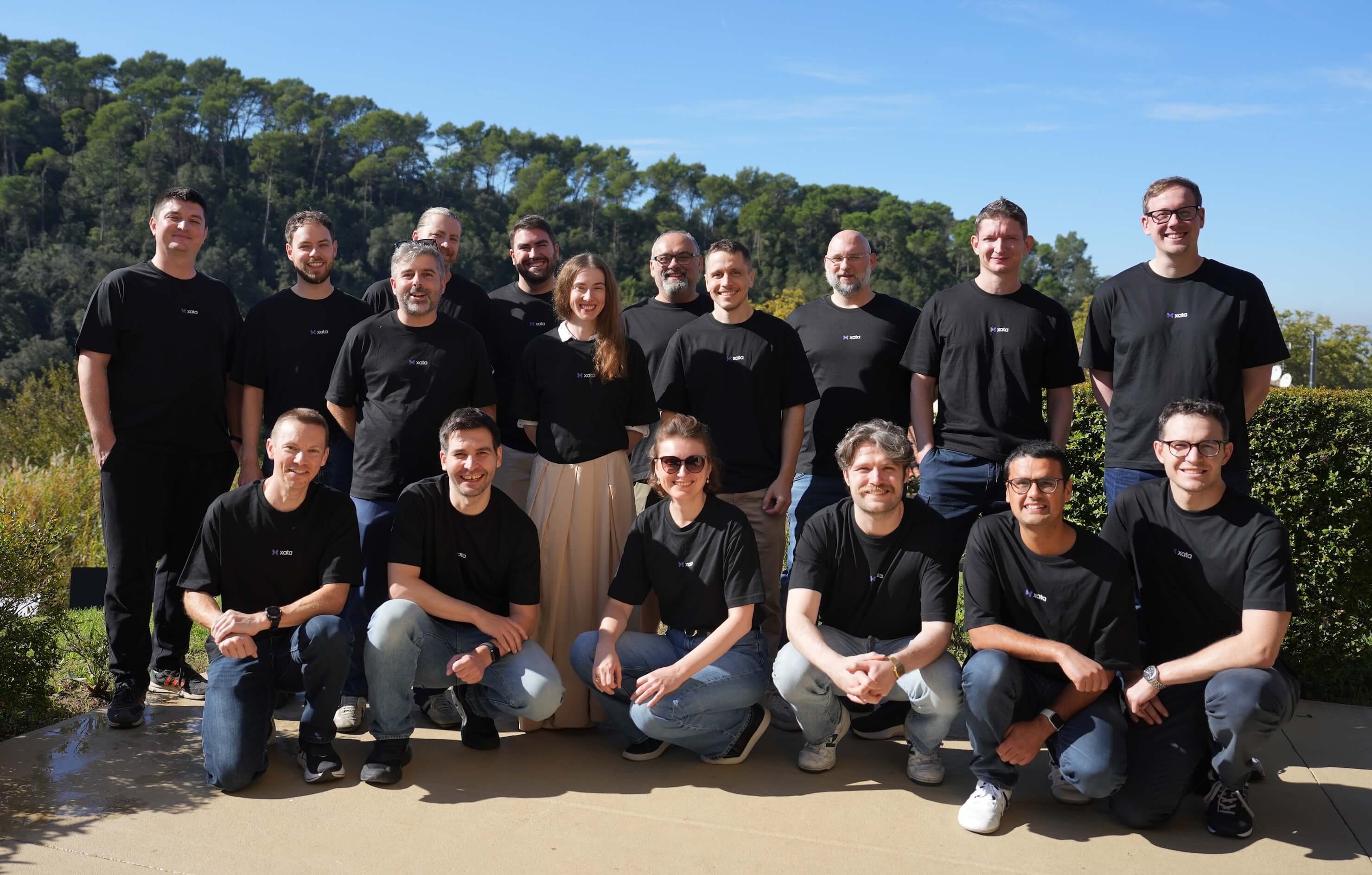
This photo depicts the team behind Xata, the company being acquired to provide agentic database capabilities.
Solving the Agentic Workflow Bottleneck
Modern software development increasingly relies on AI agents and software factories to handle repetitive coding tasks. These workflows create a new bottleneck: every pull request or agent run requires a safe, isolated database containing production-like data to test changes without impacting the live environment.
Traditional database cloning is often too slow and expensive to scale when dealing with terabytes of data. Xata addresses this by using copy-on-write branching, which allows for the creation of independent branches without duplicating the underlying data, ensuring users only pay for the differences between the parent and the branch.
“Even if a database has multiple terabytes of data, creating a branch takes only around 3 seconds.”
— Xata is joining ClickHouse by Monica Sarbu
The Xatastor Storage Engine and Warm Pools
The underlying mechanism for these capabilities is Xatastor, a storage engine that separates storage from compute. It utilizes ZFS and the NVMe/TCP protocol to expose ZFS zvols over a network, allowing it to run unmodified vanilla PostgreSQL at the block-device level.
To achieve near-instant wake-up times after a database scales to zero, the system uses 'warm pools' of compute instances. This architecture removes the overhead of provisioning new nodes or pods from the critical path, enabling databases to resume operation in about one second.
Integration and Customer Transition
ClickHouse Managed Postgres is currently optimized for high-throughput, long-lived production workloads. By adding Xata's technology, the platform will support a wider range of use cases, including thousands of small, mostly idle databases for deployment previews and AI platform backends.
In the short term, Xata will continue to accept new sign-ups and operate as usual. Over time, Xata customers will be migrated to ClickHouse Managed Postgres, while existing ClickHouse Managed Postgres customers will gain access to branching, scale-to-zero, and an 'agentic tier' of features.
This screenshot captures the official announcement's section regarding the next steps for the Xata team.