Generative AI models can consume between 1.4 and 180 times more energy to produce text in non-English languages compared to English. This disparity is most severe for languages that do not use Latin scripts, such as Hindi and Bengali, which require 7.9 and 15.3 times more energy respectively to process an equivalent prompt. The finding suggests that the current architecture of large language models (LLMs) creates a significant energy and cost barrier for billions of non-English speakers.

The chart visualizes the core finding of the study: the significant increase in energy consumption for non-English languages, particularly for those with complex scripts.
The Mechanics of Token Consumption
The primary driver of this energy disparity is how AI models process text into 'tokens'—the basic units of data used by the model. For scripts like Devanagari (used in Hindi, Nepali, and Marathi) or Bengali, primary characters can change form and combine with accents to produce millions of unique characters.
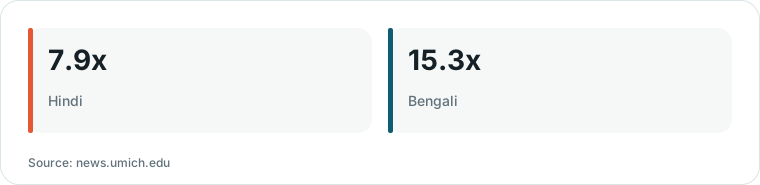
Chart drawn by HN Digest from figures reported by news.umich.edu; values are shown as written in the source.
Because a higher number of tokens consumes more computer memory, the model has less available space to process information. This forces the system to process tokens in smaller batches, which significantly increases the energy burned per token.
This compounding effect means that the more complex the script, the less efficient the inference process becomes. This disparity persists across different model sizes and different types of computer processors.
“When processing and producing non-English text, generative AI burns more energy and sometimes provides less accurate answers, potentially reinforcing existing global inequalities, according to University of Michigan Engineering researchers.”
— Generative AI uses more energy on non-English text
A Double Penalty for Global Users
Beyond the physical energy cost, the study found that languages with higher energy requirements also tend to produce less accurate answers. This creates a 'double penalty' where non-English speakers face both higher costs and lower-quality outputs.
This disparity creates a potential digital divide. Because many companies price AI access based on the number of tokens generated, users of non-English languages may face higher direct costs.
Furthermore, the lower accuracy for these languages may make companies more reluctant to serve certain markets, potentially pricing out billions of people who speak non-English as their first language.
Proposed Solutions and Limitations
To address these inequalities, researchers recommend that developers optimize services for specific languages rather than relying on generalized models. This could involve routing queries to models tailored for specific scripts or using reliable translation pipelines to convert prompts into English before processing.
The study, which measured three open-source models (Alibaba’s Qwen 3, Google’s Gemma 3, and Meta’s Llama 3.1), highlights a need for more native-speaker involvement. Crowdsourcing native speakers to create high-quality training data and resources for underrepresented languages could help improve the efficiency and accuracy of these systems.
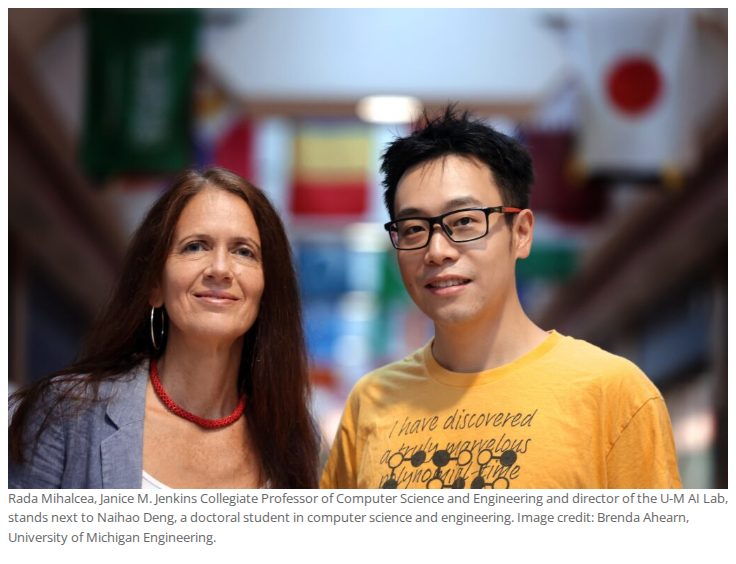
This image identifies the primary researchers from the University of Michigan who conducted the study on language-based energy consumption in LLMs.
Research Scope and Uncertainties
The findings are based on measurements of three specific open-source models and a specific translation tool (No Language Left Behind) used to create benchmarks. It remains unclear how proprietary models like GPT-4 or Claude handle tokenization for Indic scripts compared to the open-source models in the study.
Additionally, the specific energy consumption of the translation tools themselves was not a primary focus of this measurement, which could influence the final efficiency calculations for end-users.
What Hacker News readers are saying
- Alternative: One commenter suggested that the metric used to measure efficiency might unfairly penalize English because the vast amount of training material written by non-native speakers could skew the results. comment ↗
- Skeptical: A reader questioned the relevance of the study's findings, noting that the models tested were roughly 18 months old and asking if the results would still generalize to current models. comment ↗
- Experience: Several commenters shared personal experiences with AI tools defaulting to non-English languages or refusing to provide English answers without specific instructions. comment ↗
Summarized opinions from the Hacker News thread, not verified facts. Read the full discussion ↗