Amazon's infrastructure spending reached a staggering $5 billion in Nvidia chips in August alone, yet much of this hardware remains unusable due to lagging data center construction and power upgrades. This discrepancy highlights a growing concern that Nvidia is prioritizing immediate data center revenue over the availability of consumer-grade graphics cards.
Manufacturing Reallocation and Retail Scarcity
Industry reports suggest that the current crisis in gaming GPUs and RAM is not a result of an organic silicon shortage. Instead, the issue stems from Nvidia routing the majority of silicon wafer allocations away from consumer electronics to maintain record-breaking margins on data center products.
Because RTX and GeForce cards rely on the same TSMC manufacturing nodes as high-end AI chips like the H100 and B200, the prioritization of enterprise orders directly starves the retail market. This creates a manufactured supply squeeze where consumer prices remain high despite the existence of massive amounts of unused hardware in warehouses.
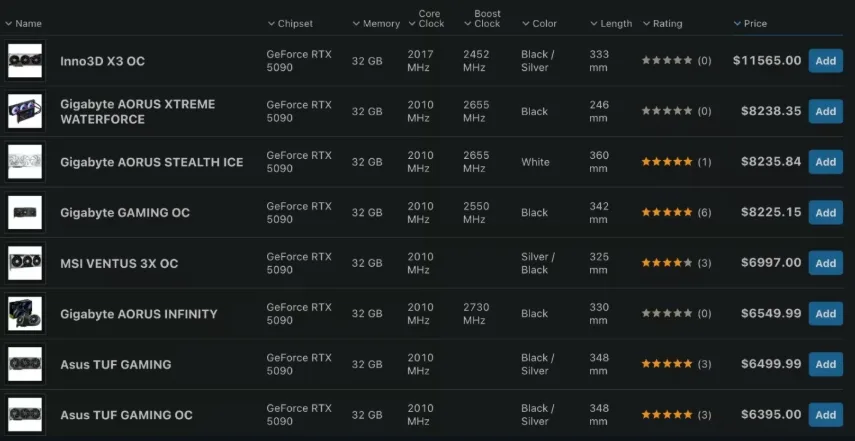
This visual provides context for the retail price squeeze mentioned in the manufacturing reallocation section.
“To maintain record breaking data center margins, Nvidia routed majority of silicon wafer allocation away from consumer electronics and channel stuffed the end product into dark warehouses”
— Multiple Reports Say Nvidia Manufactured the Gaming GPU Crisis by Forcing Big Tech to Stockpile Unused AI Hardware
The Mechanism of Channel Stuffing
Analysts believe Nvidia is leveraging 'enterprise FOMO' (fear of missing out) to secure upfront orders for hardware that major tech firms currently lack the capability to run. By pushing these early deliveries, Nvidia can report pristine earnings while the buyers—including Google, Microsoft, and Meta—bear the burden of storing and depreciating the unpowered assets.
Internal documents obtained by Business Insider suggest that while Amazon typically avoids paying for racks until gear is installed to conserve cash, the intensity of the AI boom has made this coordination harder. Consequently, these companies are forced to accept and store hardware that is effectively 'stranded' in warehouses.

This image relates to the discussion of infrastructure delays and the resulting 'stranded' hardware in warehouses.
Market Consequences and Future Risks
This strategy creates a potential 'unsustainable hardware bubble' for the tech giants purchasing the chips. If these cloud providers hit their capital expenditure limits or fail to show returns on unpowered assets, enterprise GPU orders could slow down drastically, potentially leading to a massive supply correction.
While Nvidia maintains high margins in the short term, a sudden drop in hyperscaler demand could result in an oversupply situation similar to the post-crypto mining era. Meanwhile, the gaming community faces a generation where retail prices were kept artificially high while millions of chips sat idle in storage.
What Hacker News readers are saying
- Alternative: One commenter argued that the reported financing deals are a standard business practice and not necessarily irregular or illegal, suggesting the term "circular financing" may be more of a meme than a factual description. comment ↗
- Skeptical: Another reader suggested the framing of the report is misleading, noting that Nvidia's investments in startups are a way to support the market and grow the customer base. comment ↗
- Skeptical: A commenter challenged the idea of a monopoly, pointing out that Nvidia's estimated market share of TSMC supply is expected to decrease significantly next year. comment ↗
Summarized opinions from the Hacker News thread, not verified facts. Read the full discussion ↗