In a concentrated 13-day drone blitz between October 30 and November 11, Ukrainian forces struck at least nine major Russian oil refineries, affecting over 120 million metric tons of annual crude oil processing capacity. This campaign targeted enterprises that account for approximately 36% of Russia's entire domestic oil refining infrastructure.
Targeting Refining and Export Infrastructure
The drone campaign specifically targeted high-capacity processing facilities to disrupt Russia's ability to process and export crude oil. Key strikes included the Saratov Oil Refinery on November 7 and the Kirishi Oil Refinery in Leningrad Oblast on November 9, which is Russia's second-largest processing facility.

This image illustrates the physical impact of the drone strikes on Russian refining infrastructure, specifically in Leningrad Oblast.
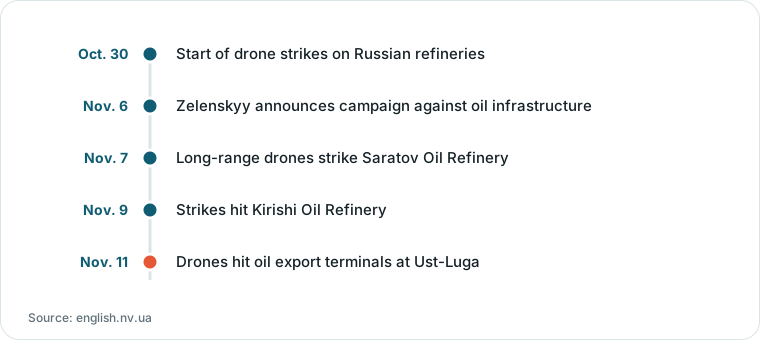
Chart drawn by HN Digest from figures reported by english.nv.ua; values are shown as written in the source.
Beyond inland refineries, the strikes extended to maritime logistics. On November 11, drones hit oil export terminals at the Baltic port of Ust-Luga, a critical hub for Russian crude shipments to international markets.
“Ukrainian drone strikes knocked out 36% of Russia’s total oil refining capacity in less than two weeks, hitting at least nine major refineries between Oct. 30 and Nov. 11, defense manufacturer Fire Point reported on Nov. 12.”
— Ukrainian drones knock out 36% of Russia's oil refining capacity in under two weeks
Impact on Domestic Fuel Supply
The degradation of refining capacity has had immediate domestic consequences. According to reports, the reduction in operational capacity has triggered acute fuel shortages across at least six Russian oblasts.
By hitting a significant portion of the domestic refining network, the campaign aims to create a bottleneck in the supply chain. This affects both the availability of fuel for internal consumption and the volume available for export.
Operational Limitations and Uncertainties
While the strikes have significantly impacted capacity, the exact status of each facility remains a point of observation. Hitting a refinery does not always result in a total, permanent shutdown, and specific repair timelines are not publicly disclosed by Russian authorities.
The long-term effectiveness of these strikes depends on the speed of Russian repairs and the ability of the remaining refining capacity to compensate for the lost output. The specific names of the six oblasts experiencing shortages remain unconfirmed in the primary reporting.
Context of the Campaign
The campaign was initiated by President Volodymyr Zelenskyy as a direct retaliation for Russian strikes against Ukraine's energy grid. This shift toward targeting oil infrastructure is intended to pressure the Russian economy by disrupting its primary energy production and export capabilities.
Data Attribution
The figure of 36% of total refining capacity being affected is attributed to reports from defense manufacturer Fire Point. Additionally, the estimate that operational refining capacity has dropped by roughly 30% since late October is attributed to Reuters reporting.
What Hacker News readers are saying
- Alternative: One commenter argued that the headline is misleading because while the total capacity of the targeted plants represents 36% of the total, it is unlikely that all of those specific facilities were taken completely offline. comment ↗
- Experience: A commenter noted that refineries are massive structures and that hitting one does not automatically knock it out, observing that many have been hit multiple times with varying levels of visible damage. comment ↗
- Open question: One reader questioned what the specific consequences of these attacks will be and when those effects will be fully realized. comment ↗
- Skeptical: Another commenter expressed skepticism regarding the long-term impact, suggesting that Russia might be able to continue the war indefinitely even with damaged infrastructure as long as they can still export enough to fund their efforts. comment ↗
Summarized opinions from the Hacker News thread, not verified facts. Read the full discussion ↗