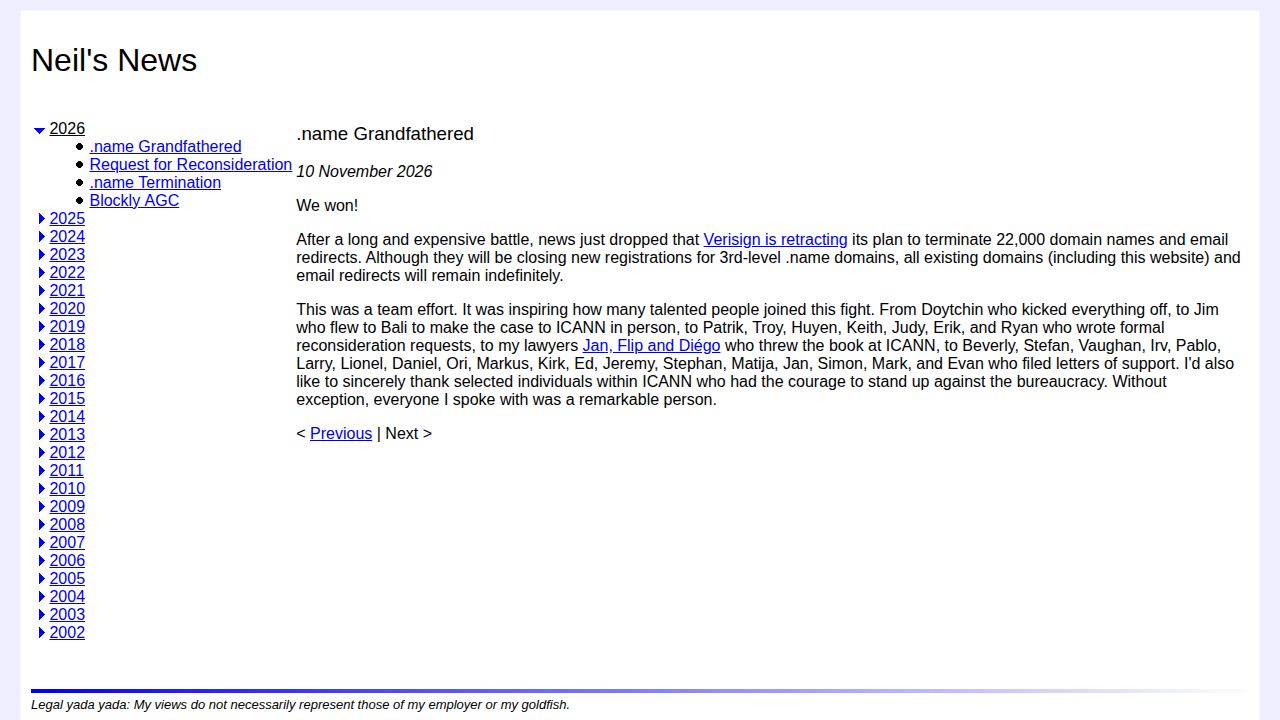
Verisign has officially retracted its plan to terminate approximately 22,000 domain names and associated email redirects under the .name extension. This decision follows a protracted legal and advocacy effort led by a coalition of domain owners and legal teams who successfully petitioned for a reconsideration of the termination.
The Grandfathering Agreement
The core of the resolution is a 'grandfathering' agreement, which distinguishes between legacy users and new applicants. Under this arrangement, all existing .name domains and their corresponding email redirects are protected from termination.
However, the .name extension is no longer open for expansion. Verisign will continue to block any new registrations for 3rd-level .name domains, effectively freezing the current ecosystem for existing holders.
“Verisign is retracting its plan to terminate 22,000 domain names and email redirects.”
— Neil Fraser: News: .name Grandfathered
A Collaborative Advocacy Effort
The reversal was the result of a coordinated campaign involving various stakeholders. The effort included formal reconsideration requests, personal advocacy at ICANN meetings, and a series of letters of support from a large group of individuals.
Legal teams also played a significant role by challenging the bureaucratic processes at ICANN. This multi-layered approach combined grassroots organizing with formal legal pressure to force a change in Verisign's original stance.
Impact on Domain Owners
For the thousands of owners affected, this news provides long-term certainty for their digital identities. Many of these domains have been in use for years, and the grandfathering ensures that these assets will not be suddenly revoked.
While the source does not specify the exact technical reasons why Verisign initially sought to terminate these domains, the successful appeal highlights the significant influence that organized owner advocacy can have on registry policies.
What Hacker News readers are saying
- Experience: One commenter shared their experience of owning a .name domain for nearly a decade without realizing its specific history, noting they had assumed it was a more recent gTLD. comment ↗
- Open question: Another user expressed confusion regarding the registration process, stating they were unable to find information because search engines were discarding the dot. comment ↗
Summarized opinions from the Hacker News thread, not verified facts. Read the full discussion ↗