Successful indoor vegetable gardening depends on balancing a complex web of interdependent environmental factors, where a deficiency in a single variable like light or nutrition can create a limiting factor that halts plant development. For urban growers, this requires moving beyond general gardening advice to manage specific metrics such as Daily Light Integral (DLI) and Electrical Conductivity (EC).

This chart illustrates the relationship between pH levels and nutrient availability mentioned in the text.
The Biological Mechanics of Growth
At its core, plant growth is driven by the conversion of energy. Plants perform photosynthesis to turn light energy, carbon dioxide, and water into storable carbohydrates, which they then use during respiration to fuel growth. This process is balanced by transpiration, where water and dissolved nutrients are pulled from the roots to the leaves through evaporation.
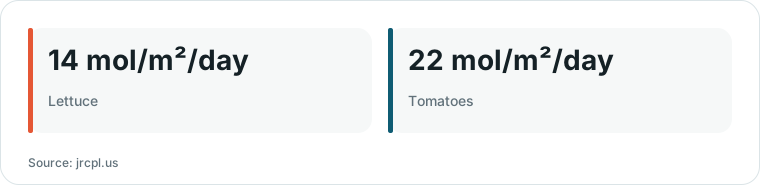
Chart drawn by HN Digest from figures reported by jrcpl.us; values are shown as written in the source.
Environmental parameters like humidity, wind, and temperature directly affect this transpiration rate. For instance, poor ventilation can lead to nutrient deficiencies because it disrupts the movement of water and minerals. Conversely, excessive ventilation can create a 'vicious cycle' where dry air increases transpiration too rapidly, potentially causing the plant's stomata to close and decreasing carbon dioxide exchange.
“Light is the single most important environmental parameter as it literally provides energy for plant growth.”
— Vegetable Gardening for Engineers
Quantifying Light and Nutrition
Light is the most critical parameter because it provides the raw energy for growth. Growers must distinguish between light quality—the distribution of wavelengths—and light quantity. While blue light promotes healthy stems and red light supports flowering, the primary metric for success is the Daily Light Integral (DLI), which measures the cumulative amount of Photosynthetically Active Radiation (PAR) reaching the plant in a day.
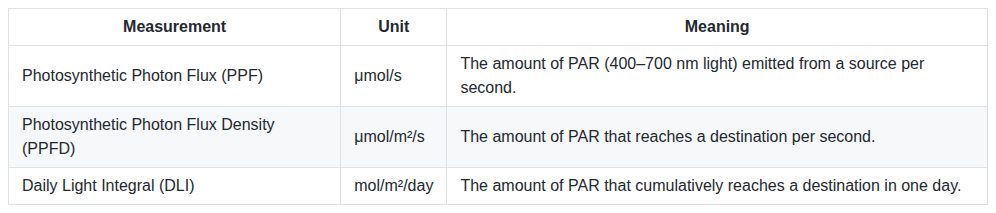
This table provides the specific DLI metrics referenced in the section on quantifying light.
Nutrition is managed through the intake of 17 essential minerals. Nitrogen, phosphorus, and potassium (N-P-K) are the primary macronutrients, with nitrogen being vital for leafy greens and phosphorus and potassium becoming more critical during the fruiting stages of crops like tomatoes. Growers use Electrical Conductivity (EC) meters to monitor the concentration of these dissolved mineral salts in the growing medium.

The diagram supports the explanation of how N-P-K requirements change during different growth stages.
Trade-offs and Urban Constraints
Indoor and balcony systems introduce specific constraints, such as limited space and the need for controlled oxygen levels in soil-less hydroponic setups. Temperature management also involves a significant trade-off: while higher temperatures can increase the speed of growth, they often decrease the quality of the produce, leading to weaker root systems and less flavorful fruit.
The guide notes that these technical principles are currently tailored for hydroponics and container gardening. It does not yet cover broader agricultural practices like composting, aquaculture, or permaculture, focusing instead on the precision required for small-scale urban environments.
What Hacker News readers are saying
- Experience: One commenter shared their experience with the ongoing challenges of pest management and disease, noting that different plants require different interventions each year. comment ↗
- Skeptical: Another user questioned the return on investment for vegetable gardening, arguing that the high costs of land and time often outweigh the value of the produce compared to store-bought options. comment ↗
- Experience: A commenter noted that while gardening can be a complex system for engineers to analyze, some aspects of life and nature are better left as chaotic systems that simply function. comment ↗
Summarized opinions from the Hacker News thread, not verified facts. Read the full discussion ↗