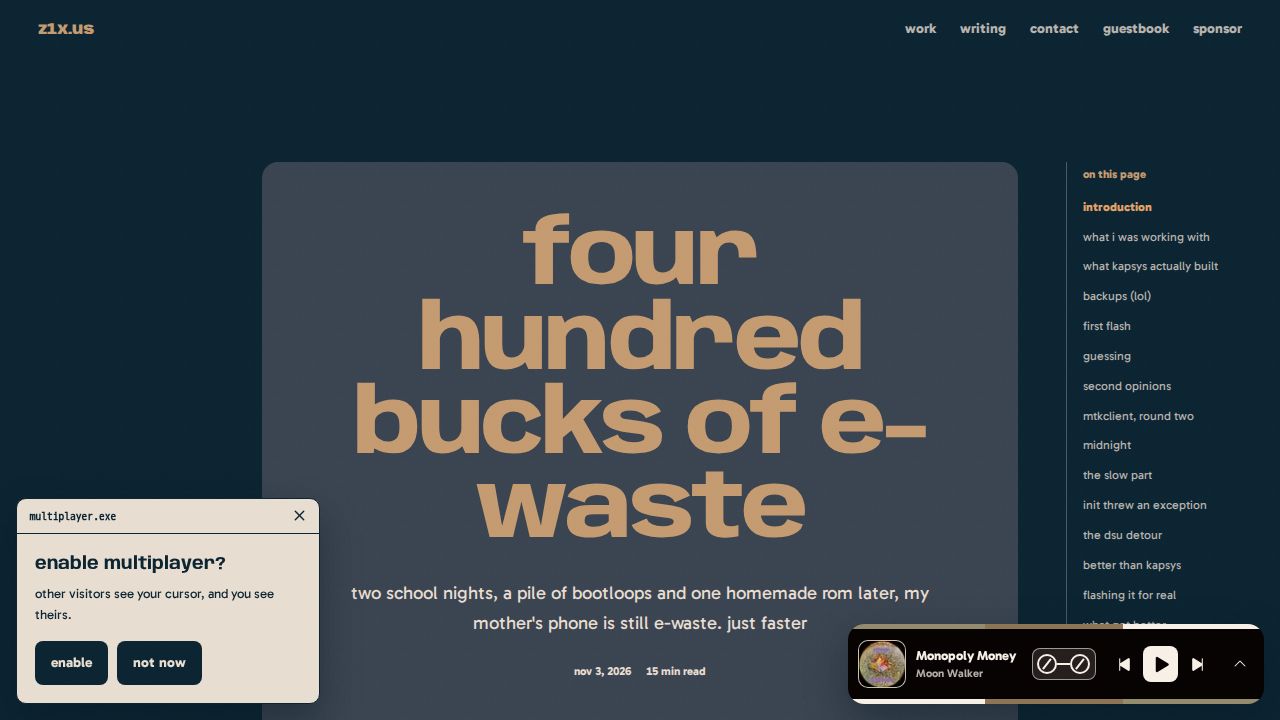
A developer recently completed a project porting Android 16 to a legacy keypad phone to provide a functional mobile device for their blind mother. This effort aimed to overcome the limitations of modern touch-centric interfaces by repurposing 'e-waste' hardware into a tool that supports screen-reader navigation through physical buttons.
The Porting Project
The project, documented in a blog post titled 'Four Hundred Bucks of E-Waste,' involved taking a legacy keypad phone and installing a modern version of the Android operating system. The goal was to create a device that works reliably for a blind user who requires a screen reader to navigate menus and applications.
The developer reported that the process required significant custom work to bridge the gap between the physical buttons and the modern software. This included writing a small application to handle the keypad, the home screen, and the keyboard functionality.
Technical Challenges and Solutions
A primary technical hurdle was ensuring that the physical buttons correctly triggered the actions expected by Talkback, Google's screen reader. One commenter, a blind Android developer, noted that Talkback responds to a specific set of keyboard commands, which can make the implementation less brittle if the buttons are mapped correctly.
The project also addresses a common issue for older users: 'obvious' UI elements often fail when system font sizes are increased to accommodate visual impairments. By using a physical keypad, the project bypasses many of these layout-breaking bugs, providing a more consistent navigation experience.
Industry Context and Trade-offs
The project highlights a contrast in how accessibility hardware is developed. While this project used modern software on old hardware, some commenters pointed out that many commercial devices for the blind, such as the Blindshell or BrailleSense Polaris, often run on very old versions of Android (such as Android 5) to maintain stability.
This creates a trade-off between the difficulty of custom porting and the industry's tendency to pin specialized devices on ancient software. The developer's work proves that modern Android can be adapted for these needs, but it requires a level of custom engineering that is rarely seen in mass-market products.
Unresolved Questions
While the project successfully established a functional device, some specific details remain unclear. For instance, it is not explicitly stated whether the final implementation uses T9 predictive text or voice input for text entry.
Additionally, the developer noted that they had not yet been able to release the project publicly or on platforms like XDA, leaving the specific hardware model and full technical specifications as unknowns for other developers who might wish to replicate the work.
Discussion Highlights
The Hacker News discussion centered on the feasibility and ethics of the project. One commenter, writing as e12e, suggested that the project proves Android is 'usefully more open' than iOS for such custom hardware-software porting.
Other commenters, such as kyrillos50, emphasized that building for older users reveals how much 'obvious' UI isn't, particularly regarding font scaling. Conversely, some users expressed frustration with the lack of capitalization in the blog post's formatting, though the developer, z1xus, acknowledged the difficulty of the project's scope.