Developer Josh Strange reports that his inbox has shifted from a source of community 'signal' to a flood of automated noise, where nearly all recent outreach consists of deceptive sales pitches. By using large language models (LLMs) to scan public history and craft personalized inquiries, automated systems can now mimic genuine human interest to bypass social norms and secure high-effort responses from engineers.
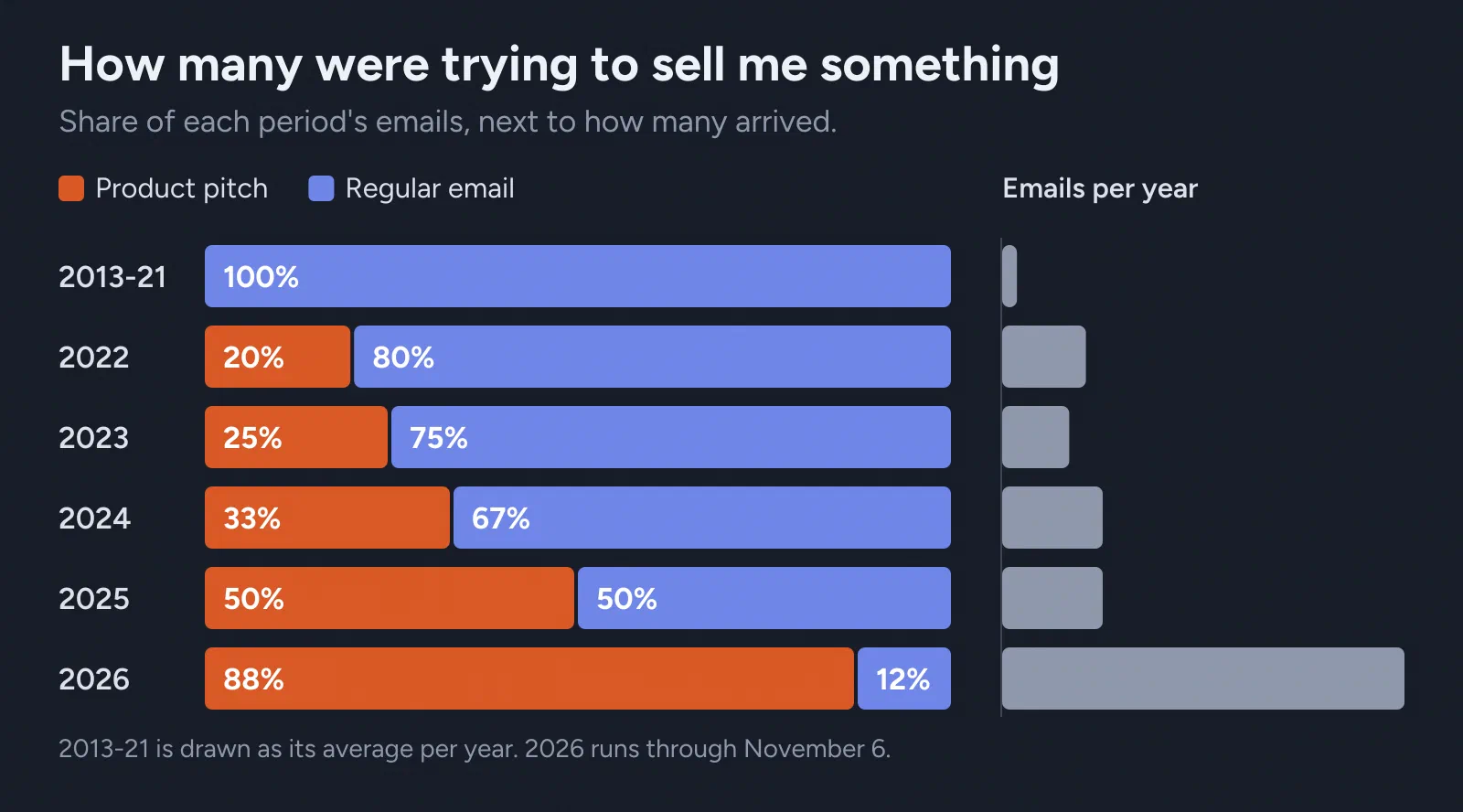
This chart quantifies the shift from community signal to automated noise described in the article's opening section.
The Mechanics of Deceptive Outreach
The primary mechanism of this new outreach is the use of LLMs to perform what is described as an 'amplification attack.' Instead of sending a generic cold email, automated systems scan a user's public history—such as Hacker News comments—and generate a message that includes a specific compliment and a relevant, open-ended question.
The goal is to secure a high-effort response from the recipient. Once the recipient provides a detailed answer, the sender pivots to a pitch, often using phrases like 'That’s close to what I’m building' or 'Would you have 15 min next week?' to transition into a sales conversation.
“It’s like having an amplification attack pointed at you, someone sends 2-3 sentences (sometimes more) with an open-ended question then I turn around and write 2-3+ paragraphs to answer the question, only to get a response that is pitching a product/service.”
— I Saw Your HN Comment
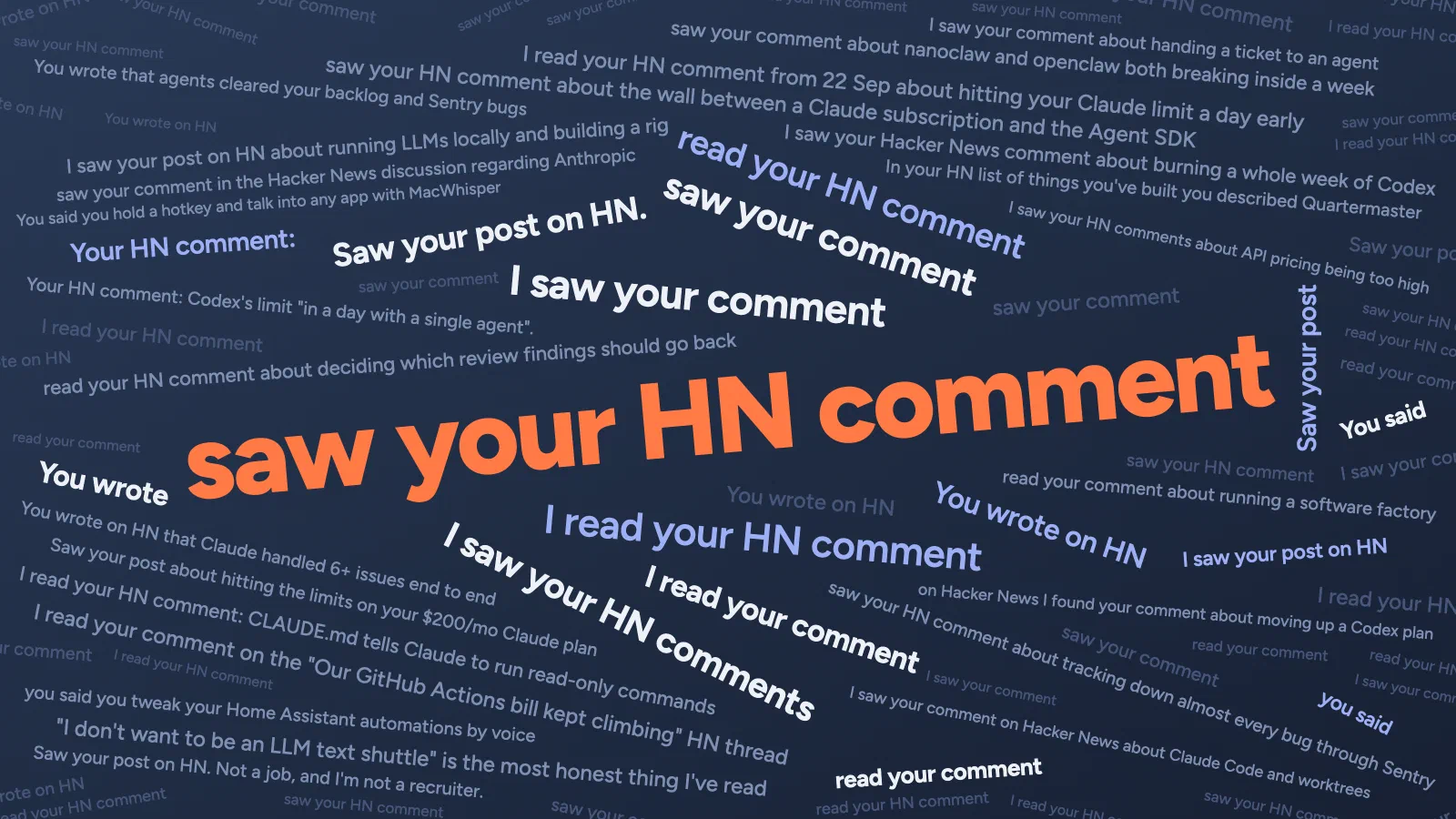
These images provide concrete examples of the 'amplification attacks' and deceptive outreach tactics discussed in the mechanics section.
The Erosion of Community Signal
For many in the tech community, these interactions were once a primary way to meet peers and find collaborators. The influx of LLM-generated content makes it increasingly difficult to distinguish between a genuine request for help and a setup for a marketing pitch.
This shift has led some community members to take down public-facing 'Office Hours' or direct contact links to avoid being inundated by automated systems. The result is a degradation of the 'serendipity' that previously defined these platforms.
Trade-offs and Defensive Strategies
To manage the noise, some developers have begun sending short, non-committal replies to see if a pitch follows. While effective at filtering, this creates a trade-off where users must treat every contact with a degree of distrust, potentially snubbing legitimate inquiries from real people.
While there is hope for future technical solutions like text watermarking to filter out LLM-generated content, the current reality is a manual process of 'separating the wheat from the chaff' in an increasingly automated communication landscape.
What Hacker News readers are saying
- Experience: Several commenters shared personal experiences of receiving automated emails that reference their specific comments before pivoting to a sales pitch or a request for a consulting gig. comment ↗
- Skeptical: One commenter expressed concern that the internet is shifting toward a state where interactions feel like one LLM being pitted against another, potentially making original human thoughts harder to verify. comment ↗
- Alternative: One user suggested that there are existing communities that actively reject LLM-generated content as an alternative to platforms where such content is prevalent. comment ↗
- Experience: A commenter noted that they had to remove an 'Office Hours' link from their blog because of the shift in social interaction and the influx of automated outreach. comment ↗
Summarized opinions from the Hacker News thread, not verified facts. Read the full discussion ↗