From voxel engines using Signed Distance Fields (SDFs) to AI-driven trading experiments, the current developer landscape shows a diverse range of projects balancing high-level automation with low-level systems engineering. These projects reflect a growing trend where AI is not just a standalone tool but an integrated component in everything from translating Renaissance texts to rewriting classic video games.
AI as a Tool for Content and Recreation
One developer reported using Claude Code to perform a complete rewrite of the game SimTower for web deployment. The process involved using Ghidra decompilations and AI-generated summaries of the original source code to replicate gameplay functionality in WASM.
In the humanities, AI is being used to translate the Renaissance. One project provides over 20,000 translations of classical texts, offering original images alongside AI translations to allow for manual verification.
Trading experiments also show AI's current limitations. One developer reported that in a 34-day paper-trading experiment, 25 of 28 AI-managed accounts underperformed compared to a fixed, human-written rulebook.
Infrastructure and Public Service Tools
Several projects focus on simplifying public services and data access. One developer built an open-source tool to convert clunky U.S. immigration PDFs into smart web forms with conditional logic.
Other infrastructure projects include a 'big data' charity in the UK that synthesizes datasets to identify human trafficking victims and detect illegal landlords.
Public transit software projects, such as OneBusAway, continue to scale, with recent deployments in university settings and new server software nearing version 1.0.
Niche Engineering and Privacy
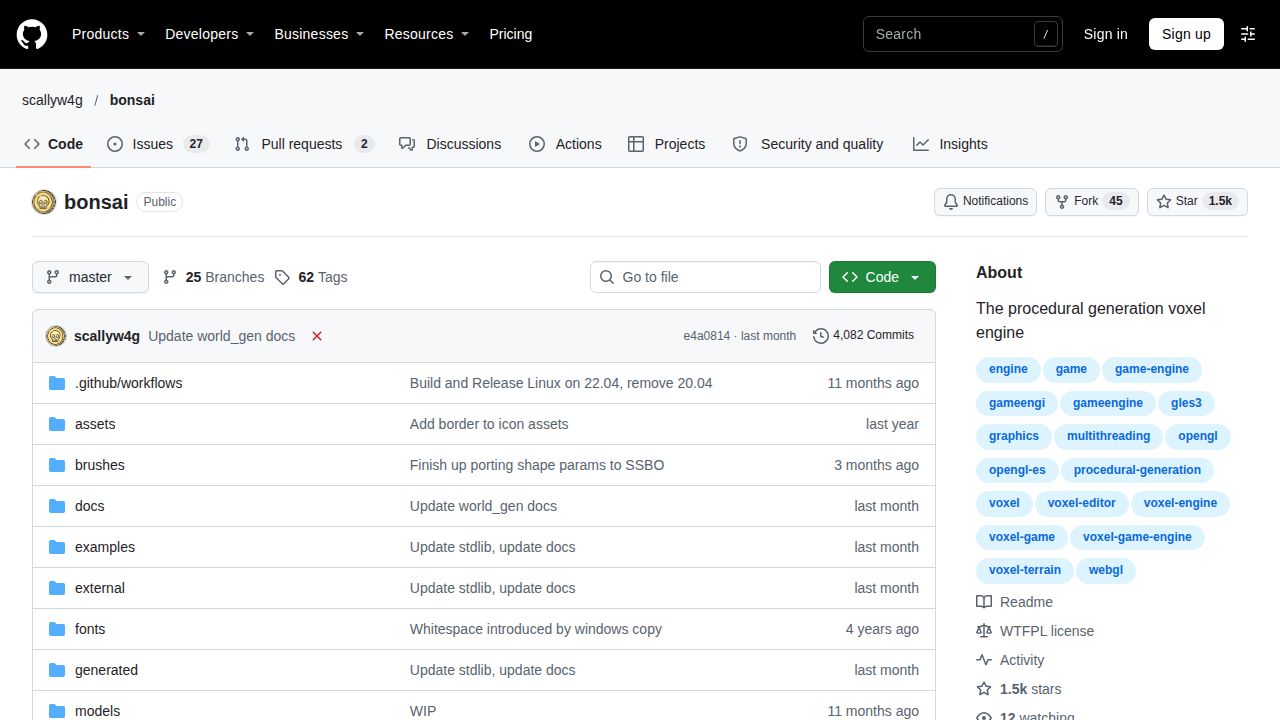
Technical projects include a voxel game engine called Bonsai, which represents the world as collections of density fields. These are projected into a voxel grid by a GPU shader to allow for smooth unions of arbitrary shapes.
Privacy-focused tools are also emerging, such as a paid, ad-free search engine that assigns users random account numbers to avoid data collection and offers source code to long-term customers.
Deterministic parametric furniture generators are being developed to encode woodworking intelligence, allowing users to batch-evaluate furniture designs based on sheet purchase costs.
Discussion of Social and Technical Trade-offs
Commenters on Hacker News discussed the practicalities of new social apps, with one commenter noting that 'passively declaring' an activity could solve the friction of coordination but faces the risk of low engagement.
Another commenter compared new social tools to Foursquare, noting that modern group chats often serve the same purpose of announcing availability to a small circle.
The discussion also touched on the 'Cambrian explosion' of survival games descended from Minecraft, highlighting a growing market for specialized voxel engines.
Uncertainties and Limitations
The success of AI-driven trading remains uncertain, as the best-performing AI account in one test was viewed as a 'lucky' outlier rather than a repeatable finding.
While AI can facilitate rapid software rewrites, the human element remains critical; one developer spent months 'nitpicking' behaviors to ensure the feel of a classic game was preserved.
The long-term viability of niche social apps depends on overcoming the 'coordination game' without creating new forms of social friction.