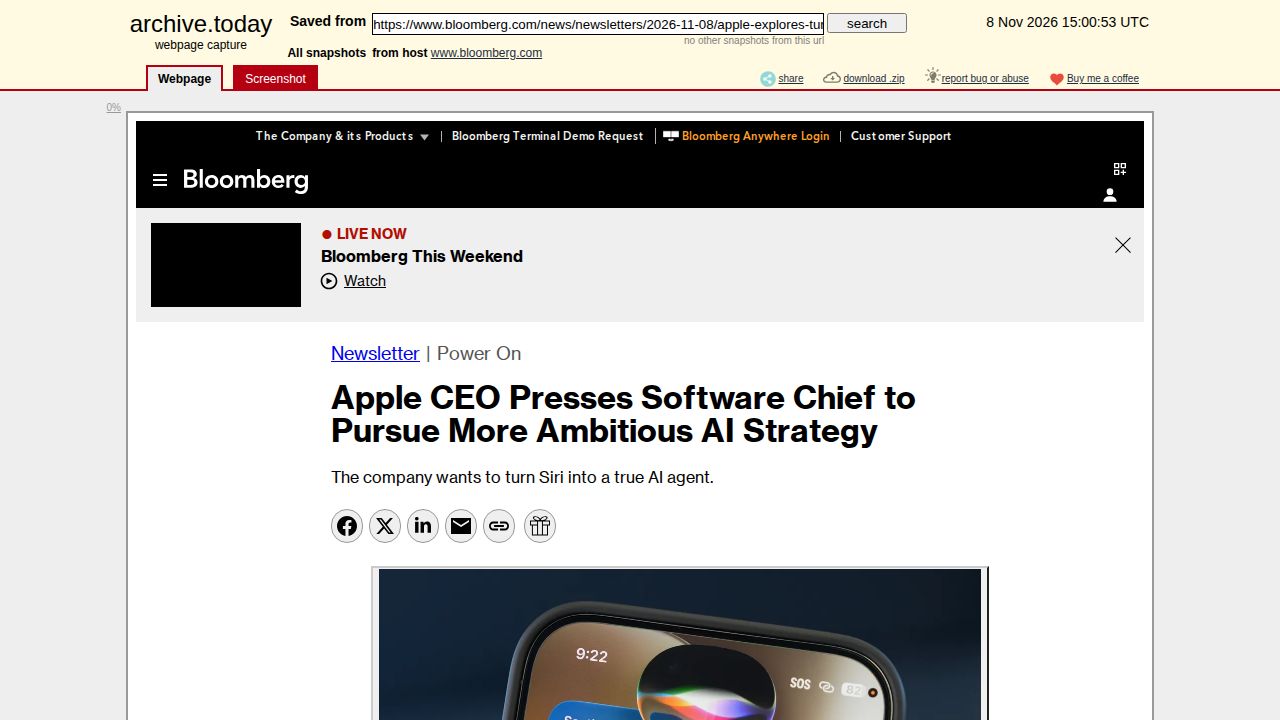
Apple's new CEO is pressuring software chief Craig Federighi to pivot the company's AI strategy toward creating an autonomous agent capable of completing complex tasks for users. This shift aims to move Siri beyond its current role as a reactive assistant into a proactive tool that can 'get things done,' potentially reshaping the user experience in upcoming software updates like iOS 28.
The Shift to Autonomous Agents
The primary goal of the new strategy is to transform Siri into an autonomous agent. Unlike the current model, where Siri responds to specific prompts, an agentic approach allows the AI to execute multi-step workflows on behalf of the user.
This transition is a central focus for the company's software leadership as they look to differentiate Apple's offerings in a crowded AI market. The goal is to move from a 'command-and-response' interaction to a 'goal-oriented' one.
“Apple’s new CEO is pressing software chief Craig Federighi to take a more ambitious approach to AI as the company looks to transform Siri into an autonomous agent that can get things done for users.”
— Apple CEO Presses Software Chief to Pursue More Ambitious AI Strategy
Internal Management and Planning Hurdles
The push for a more ambitious AI strategy faces internal structural challenges. Specifically, software chief Craig Federighi has a preference for planning over relatively short periods, typically 12 to 18 months.
This contrasts with the multi-year roadmaps favored by Apple's hardware organization. This discrepancy creates a potential friction point for executing a long-term, ambitious AI roadmap that requires sustained, multi-year development cycles.
User Skepticism and Technical Limitations
Despite the ambitious goals, some users have reported significant reliability issues with current Siri functionality. For example, users have noted instances where Siri fails to recognize notifications or provides incorrect information during hands-free use.
There is also ongoing discussion regarding Apple's technical position. While the company excels at on-device efficiency, some observers argue it lacks the 'frontier' model expertise of its competitors, leading to a reliance on third-party models and infrastructure.
Hacker News Discussion Summary
The original report by Mark Gurman sparked a discussion on Hacker News regarding Apple's trajectory. Commenters on Hacker News argued that Siri's primary requirement is basic utility, with some users citing specific failures in CarPlay and hands-free calling as evidence of current shortcomings.
One commenter, writing as 'xnx', suggested that Apple's path forward involves leveraging its massive customer base and capital to overcome a lack of deep AI expertise. Others, such as 'SpicyLemonZest', highlighted the tension between the software team's short-term planning and the need for a multi-year AI strategy.
Unresolved Questions and Trade-offs
A significant unknown remains regarding the specific technical architecture of the proposed 'autonomous agent' and which third-party models will power it. The trade-off involves balancing Apple's desire for high-quality AI with the costs of using external datacenters and models.
Furthermore, the success of this pivot depends on whether the software organization can successfully align its shorter planning cycles with the long-term requirements of a revolutionary AI overhaul.