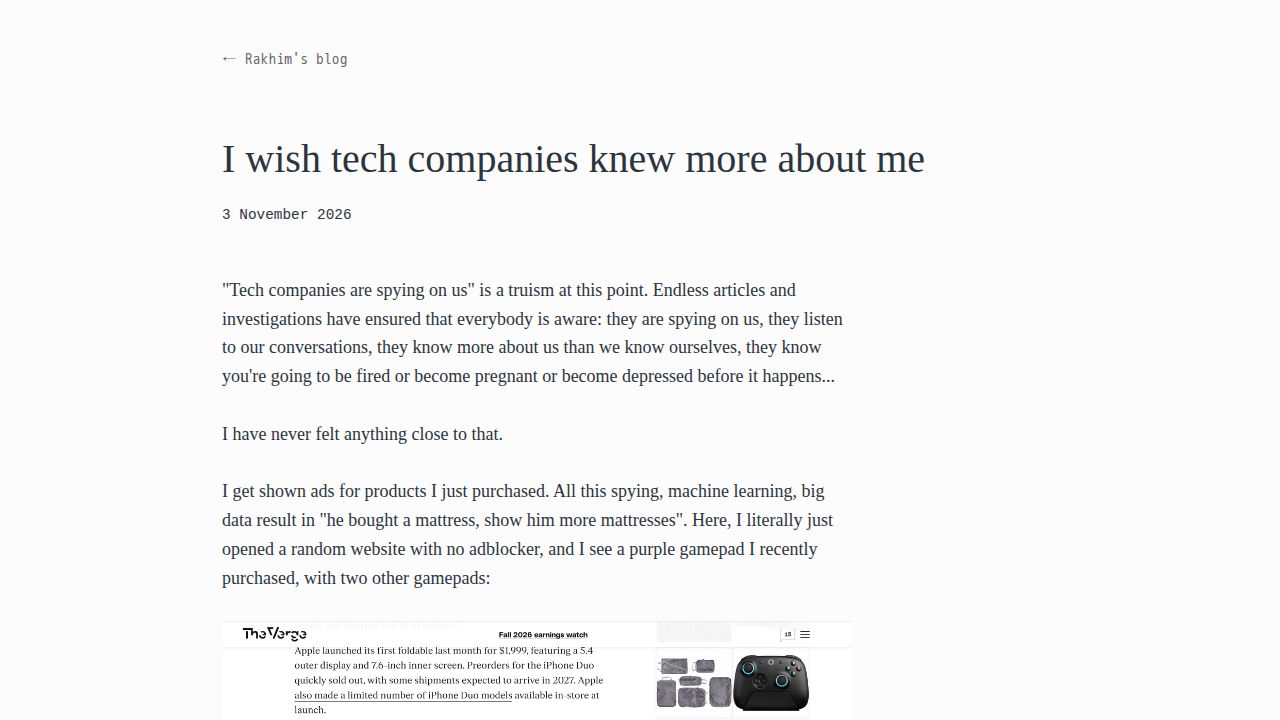
Modern digital life is defined by a paradox: tech companies possess vast amounts of personal data, yet the user experience often feels disconnected from that knowledge. For example, a user might be tracked extensively enough to be served ads for products they have already purchased, or receive marketing for services they have no intention of using. This suggests that while data collection is pervasive, the application of that data often remains 'reactive'—triggering a generic response to a recent action rather than reflecting a deeper understanding of the user's life and preferences.
Technical friction also arises when services prioritize geographic assumptions over explicit user settings. A user may have their system locale, browser language, and account settings all set to English, yet find themselves redirected to Finnish-language landing pages or forced into German-language interfaces when traveling or browsing from specific regions. These failures indicate a breakdown in how platforms prioritize data: instead of honoring the specific preferences a user has manually configured, systems may default to broad, location-based heuristics. This creates a frustrating experience where the software appears 'unaware' of the user's stated identity despite having access to their account profile.
Furthermore, machine learning algorithms often struggle to identify nuanced behavioral patterns. A user might consistently skip every vocal track in a techno playlist for years, yet the algorithm may fail to recognize this specific preference. Similarly, a single search for a specific appliance installation instruction might be misinterpreted as a long-term interest in home appliances, leading to a flood of irrelevant recommendations. This highlights a significant limitation in current predictive models: they often struggle to distinguish between a one-time utility need and a persistent consumer interest. While some argue that the goal of advertising is coercion rather than utility, the persistent presence of 'bad' recommendations suggests that the leap from tracking a user to truly understanding their context remains a significant hurdle for many platforms.