Kagi Search, a subscription-based search engine, is shifting toward a more accessible model by allowing anyone to use its service without an account. Users can now visit kagi.com and perform their first 50 searches for free; an additional 100 searches are provided upon registration. This move is designed to make it easier for users to recommend the service to friends and family, who previously faced a hard barrier to entry without a paid subscription.
The platform is positioning itself as an ethical alternative to major search engines, particularly in the education sector. Kagi recently issued an open letter criticizing the practice of corporate profits dictating educational tools, specifically citing a move by Google to turn off AI tools for school accounts. Kagi argues that education should not be 'held hostage' by advertising companies and offers itself as an alternative for schools seeking to avoid mandatory AI integrations that prioritize corporate profit over student needs.
Technically, Kagi is expanding its feature set with a redesigned Android app, a rebuilt voice search system, and a 'Quick Answer' button that allows users to toggle AI-generated summaries on or off. The service also includes a broader ecosystem of tools, such as Kagi News, Kagi Translate (which includes proofreading features), and a 'Smallweb' discovery mode intended to help users find personal blogs and niche corners of the internet. While Kagi emphasizes a 'human' experience free from 'AI slop,' some user feedback suggests that the AI assistant can be credit-intensive and that certain integrations, such as local maps for restaurants or stores, can still be inconsistent or hit-or-miss.
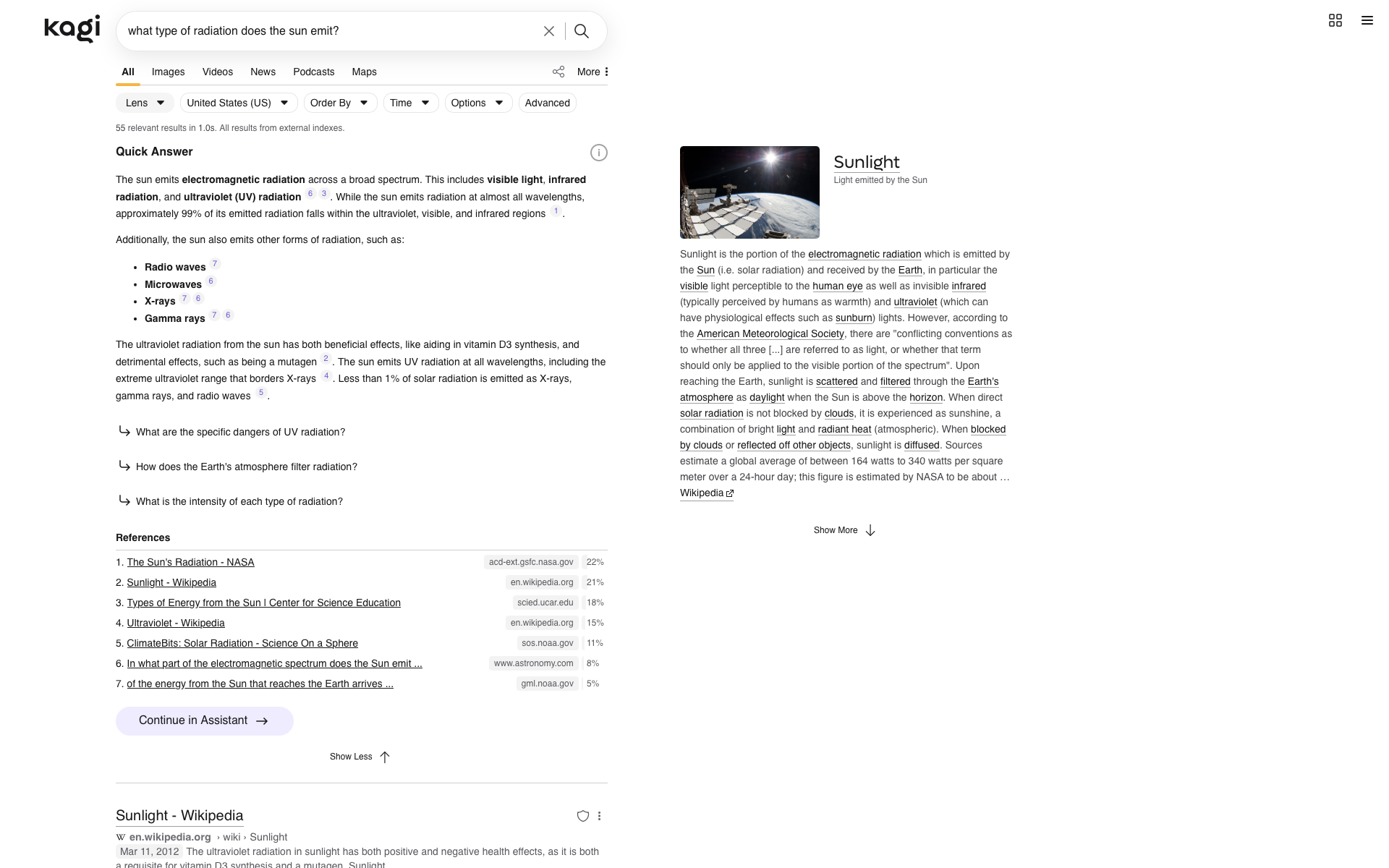
This visual supports the description of the 'Quick Answer' button and the AI-generated summaries mentioned in the third paragraph.
One notable distinction in Kagi's approach is its 'Quick Answer' logic. Unlike some competitors that may provide a confidently incorrect answer, Kagi's system is designed to state when it cannot provide a specific fact—such as a specific payday—and instead provides links to official sources like employment agreements or payroll departments. This reflects Kagi's broader philosophy of prioritizing accurate, user-controlled results over the high-volume, ad-supported models of traditional search engines.
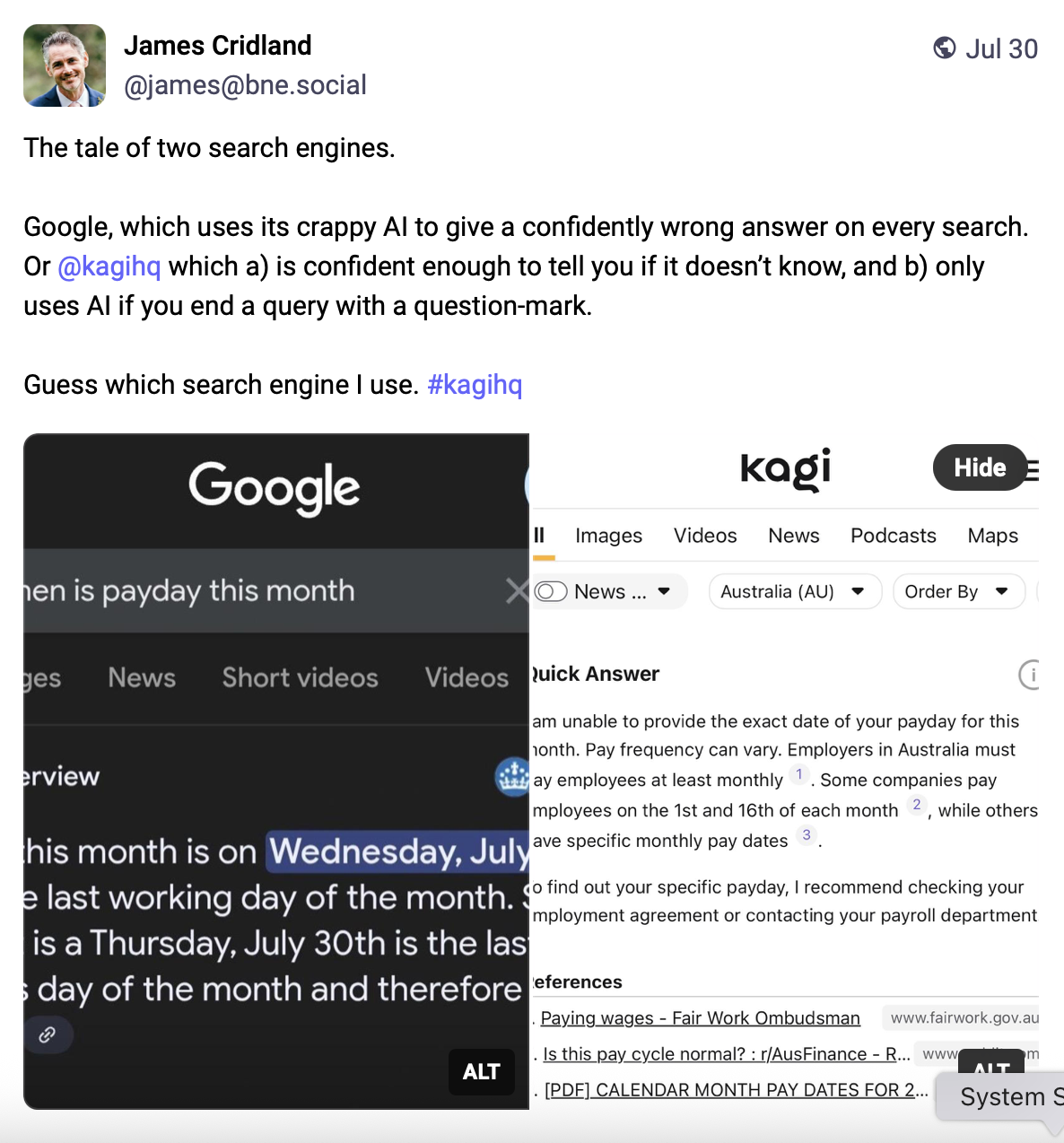
This image illustrates the specific 'Quick Answer' logic described in the final paragraph, where Kagi provides links to official sources rather than potentially incorrect data.