Firenook is an independent open-source project designed as a drop-in replacement for the official Firebase Local Emulator Suite. Developed in Rust, it aims to provide a more efficient local development environment for developers using Firebase services. It supports eight emulators—including Firestore, Authentication, Cloud Storage, Cloud Functions, Pub/Sub, Cloud Tasks, and Eventarc—while maintaining compatibility with the standard `firebase.json` configuration and existing Firebase SDKs. Developers can switch to Firenook by changing a single word in their startup script, as it uses the same ports and environment variables as the official suite.
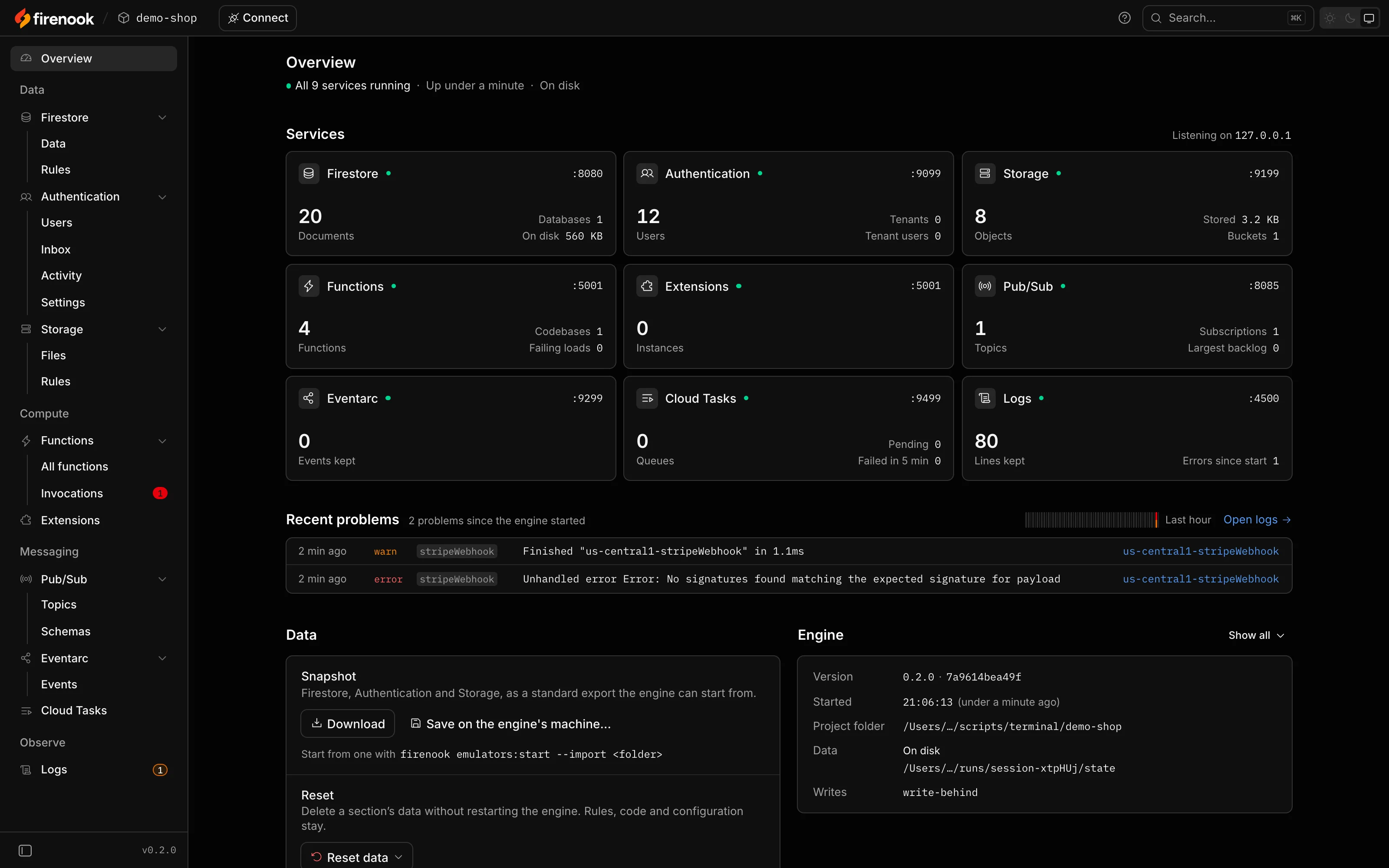
This image illustrates the console's Overview interface where developers can monitor the status of the various emulated services.
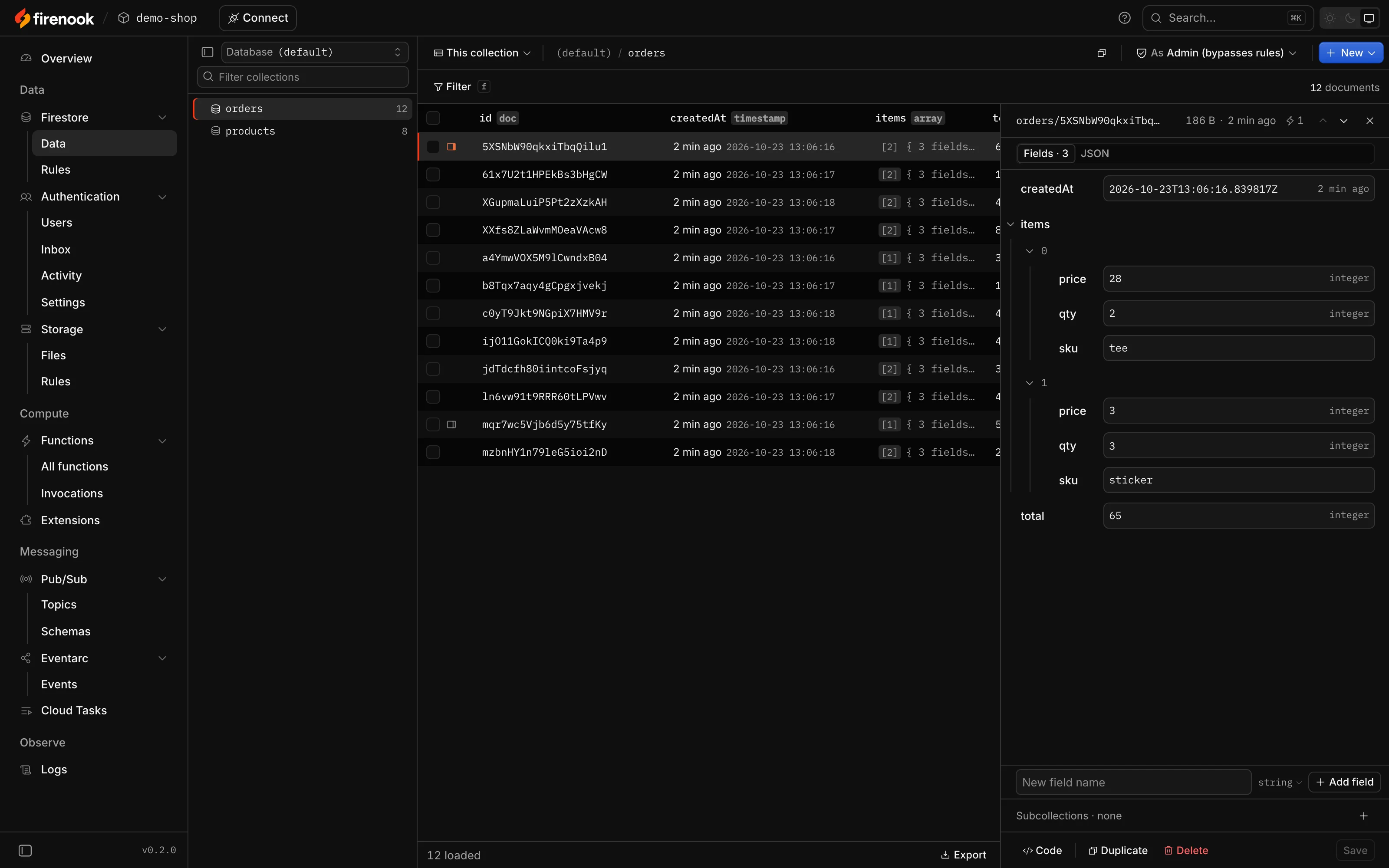
This visual demonstrates the Firestore emulator interface, one of the eight services supported by Firenook.
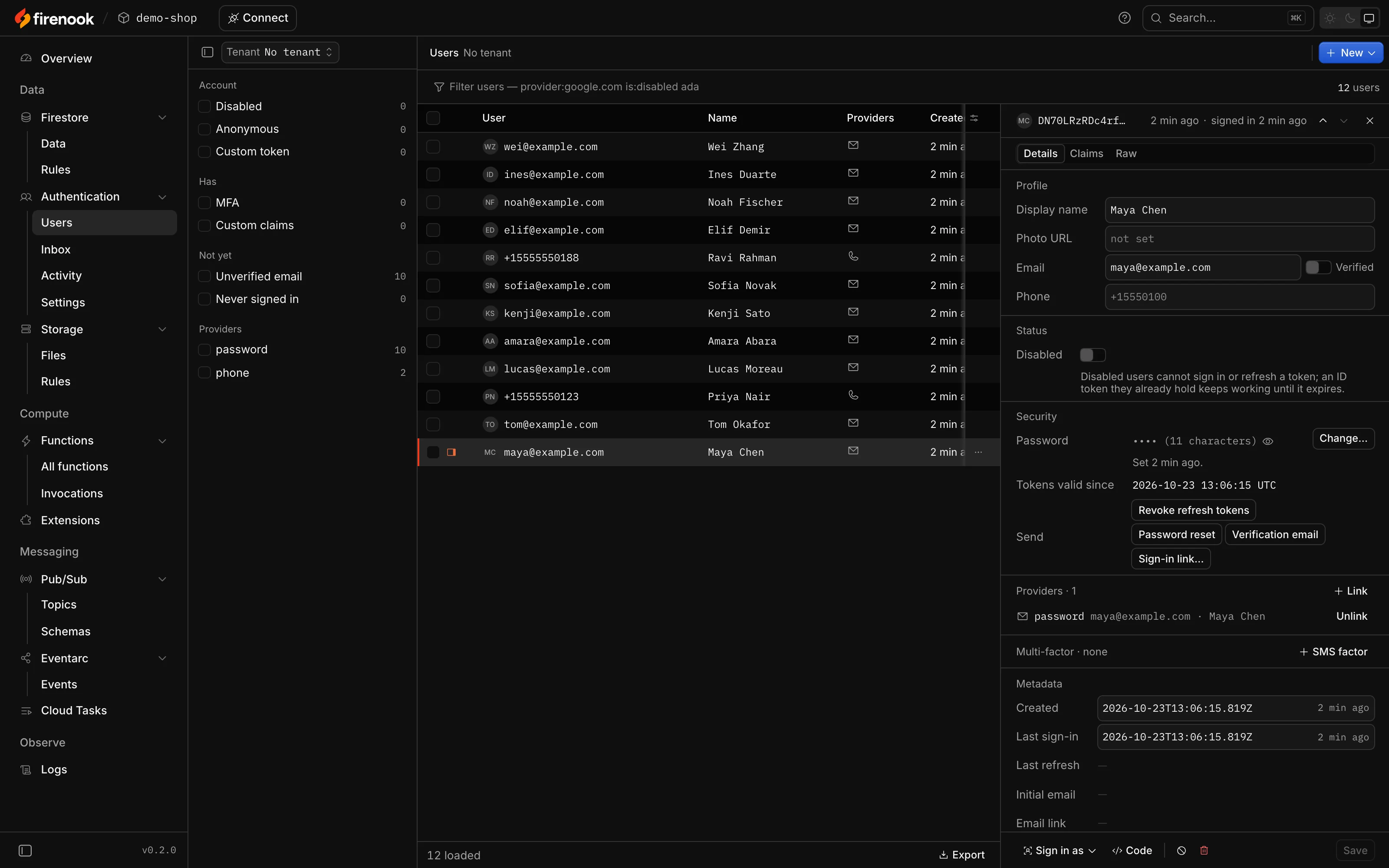
This image shows the Authentication emulator interface, which is part of the suite of services Firenook provides for local development.
The primary technical advantage of Firenook lies in its performance and resource efficiency. According to the project's benchmarks, Firenook achieves 40x faster median write speeds (5.1 ms compared to 208.2 ms) and uses 10x less memory at peak (2.11 GiB compared to 22.57 GiB) than the official emulator. These gains are attributed to its native implementation and a different data handling strategy: while the official emulator keeps all data in the Java heap, Firenook keeps data on disk and caches what it reads. This architecture also enables significantly faster restarts; Firenook can restart with saved data in approximately 0.59 seconds, whereas the official emulator requires an export and import cycle that can take over 30 seconds.
Despite these performance improvements, Firenook has specific functional boundaries. It does not emulate Realtime Database, Hosting, App Hosting, or Data Connect; while a `firebase.json` file that configures these services will still start, Firenook will issue a warning. Additionally, while it supports the official import and export formats, it is an independent project and not affiliated with Google. Because the performance data is provided directly by the Firenook project, these benchmarks represent the developer's internal testing rather than independent third-party verification. For production deployments, developers are still expected to use the official `firebase-tools` CLI, as Firenook is intended strictly for local emulation and does not include deployment commands.