By switching to aerial seeding, farmers like Matt Klein in Illinois can now establish cover crops weeks before harvest without running heavy tractors across their fields. This shift allows for the seeding of cereal rye and clover-radish mixes directly into standing corn, providing a method to manage soil health while avoiding the heavy machinery that typically causes soil compaction.
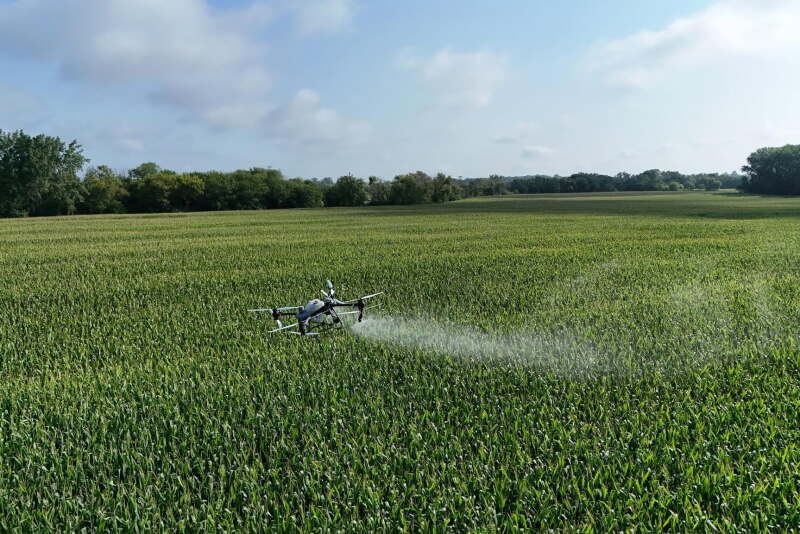
This image illustrates the primary method of aerial seeding described in the opening paragraphs.
Overcoming Ground Limitations
Traditional ground-based drills are often the gold standard for seed-to-soil contact, but they can become bogged down in wet conditions or cause significant yield loss in standing crops. Drones bypass these physical constraints by flying over the canopy, allowing for consistent speeds and broader accessibility.
University extension experts note that drones are particularly useful for reaching terraces and wet pockets. By seeding early—from late August through mid-October—farmers can ensure that cover crops have enough time to develop deep taproots before the ground freezes.
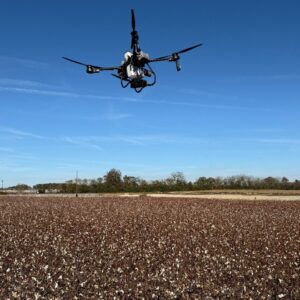
This provides a specific example of the technology in action, complementing the discussion on overcoming ground limitations.
“The aerial approach allows him to establish a cover crop weeks before harvest without running heavy tractors or drills across the field, limiting soil compaction.”
— Flying on Green: Why Farmers Are Turning to Drones for Cover Crop Seeding
Mechanics of Aerial Dry Spreading
Modern agricultural drones utilize a specialized dry-spreading system that can be swapped with liquid-solution tanks. This system includes a hopper, typically located near the center of the platform for weight distribution, and a metering mechanism to regulate the flow of seeds.
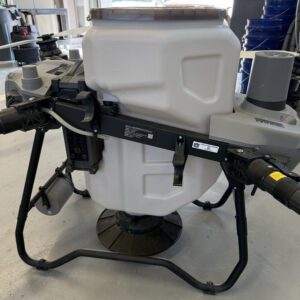
This image depicts the hopper mentioned in the mechanics section of the article.
The metering system can be either a gravity-fed gate with adjustable slots or an auger-type system that moves material from the hopper onto a spreading disc. These discs, which can be rotary or vertical with baffles, broadcast the seed across the swath at speeds controlled by the operator.
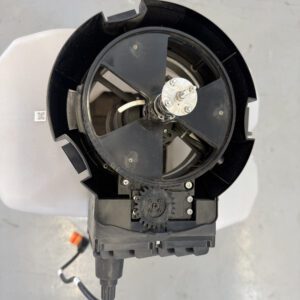
This illustrates one of the two metering systems described in the mechanics section.
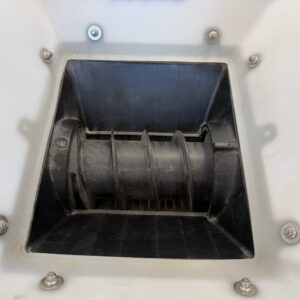
This illustrates the alternative auger-type metering system described in the mechanics section.
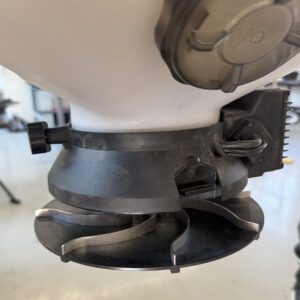
This shows one of the spreading disc types mentioned in the mechanics section.
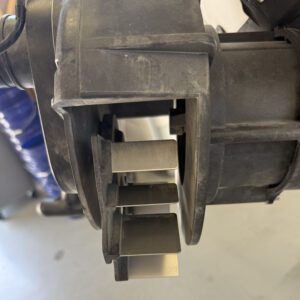
This shows the second type of spreading disc described in the mechanics section.
Economic Trade-offs and Logistics
While aerial seeding requires a shift in mindset because it does not 'drill' seeds into the soil, the math is increasingly viable for producers. Farmers have utilized USDA Natural Resources Conservation Service programs, such as the Environmental Quality Incentives Program (EQIP), to offset at least 50% of the upfront costs for seed or contracted services.
The primary trade-off is the reliance on broadcast spreading rather than direct soil insertion. However, farmers view the method as a long-term economic hedge, as cover crops can tie up nutrients and reduce future fertilizer input costs while improving soil structure over time.
What Hacker News readers are saying
- Alternative: One commenter argued that drones are better suited for spreading fertilizers or pesticides rather than seeds, noting that many crops require 'drilling' to be inserted into the soil. comment ↗
- Experience: Another user pointed out that certain crops like canola and grasses are well-suited for broadcasting and can produce excellent results using this method. comment ↗
- Skeptical: One reader expressed concern regarding the long-term availability of the specific DJI drone models used in the United States. comment ↗
Summarized opinions from the Hacker News thread, not verified facts. Read the full discussion ↗